
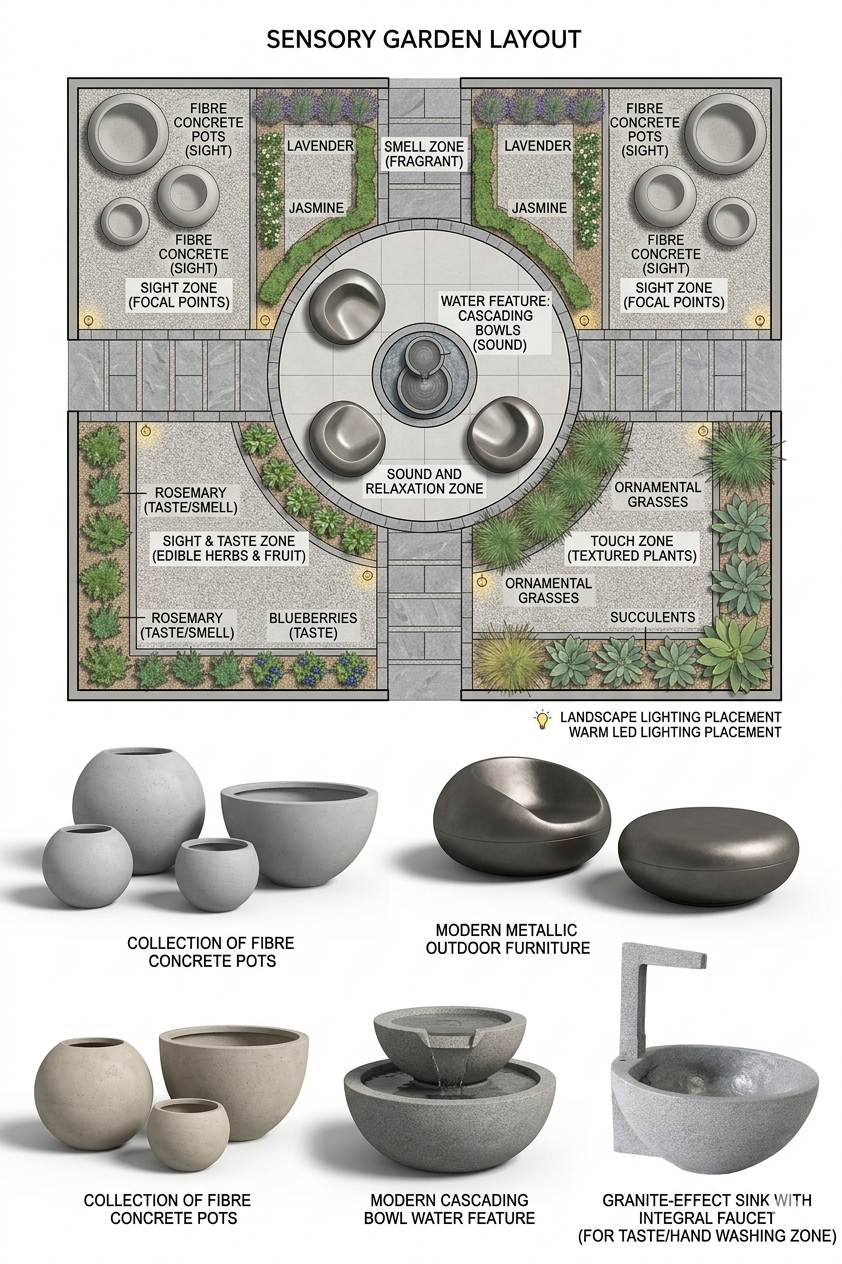
12 Ways to Create a Sensory Garden That Feels as Good as It Looks
A beautiful garden catches the eye. A sensory garden captures everything—sight, smell, sound, touch, and even taste.
This is how you turn an outdoor space from “nice” into something people experience.
And here’s the key insight
👉 The more senses you engage, the more value your garden delivers—without needing more space.
1. Layer with Fragrant Plants
Smell is the fastest way to create an emotional connection.
Add:
Lavender (calming)
Jasmine (sweet, evening scent)
Rosemary (fresh and functional)
Placement tip: Position near walkways or seating areas so the scent gets released when brushed against.
2. Use Texture to Invite Touch
A sensory garden should be interactive, not just visual.
Mix:
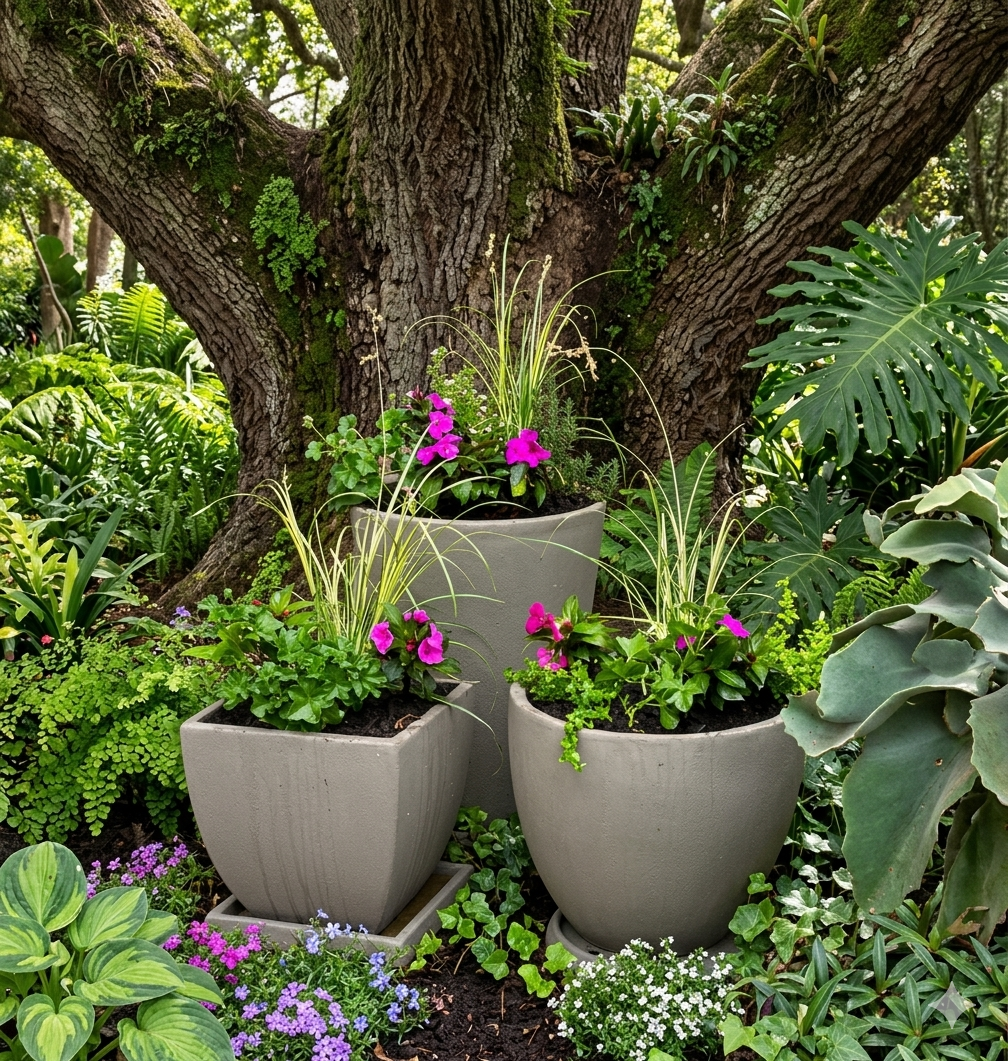
Smooth fibre concrete pots
Soft grasses
Rough stone features
This contrast makes the space feel alive.
3. Add the Sound of Water
Water features instantly elevate a garden from static to soothing.
Whether it’s a gentle trickle or a bold statement fountain, sound:
Masks traffic noise
Creates calm
Adds perceived luxury
4. Create Movement with Plants
Still gardens feel flat.
Use:
Ornamental grasses
Hanging plants
Light foliage that moves with the wind
Movement keeps the space dynamic without extra effort.
5. Play with Colour Psychology
Different colours trigger different moods:
Greens = calm and balance
Purples = relaxation
Reds/oranges = energy
Design intentionally instead of randomly mixing plants.
6. Incorporate Edible Elements
Engage taste by adding:
Herbs (mint, basil)
Fruit plants
Edible flowers
Now your garden isn’t just beautiful—it’s functional.
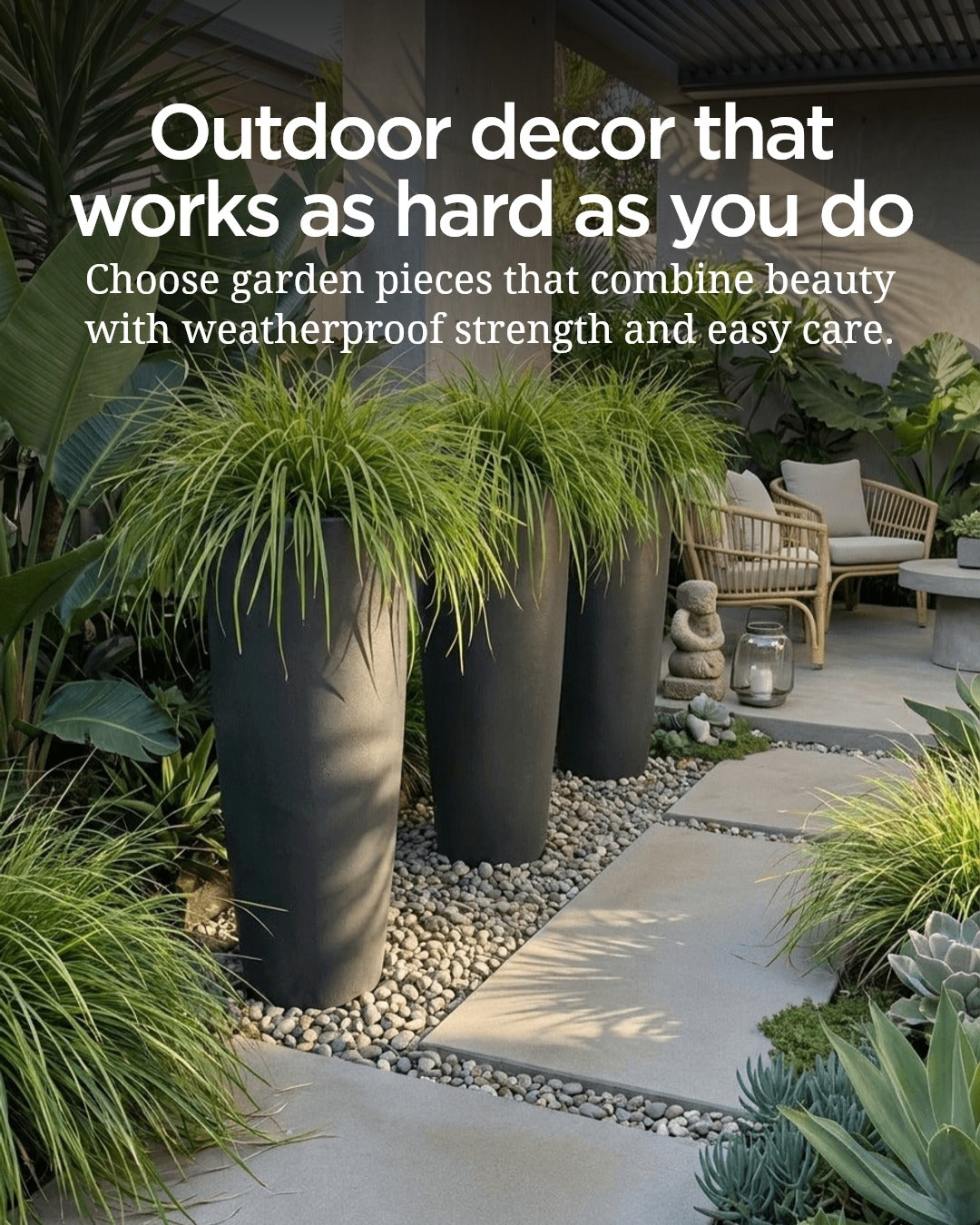
7. Use Statement Pots as Anchors
Your pots shouldn’t just hold plants—they should guide the experience.
Large fibre concrete pots:
Create structure
Define zones
Add a premium feel
8. Design for Barefoot Comfort
Think beyond shoes.
Add:
Smooth stone paths
Wooden decking
Soft lawn patches
This turns your garden into a full-body experience.
9. Layer Lighting for Night Appeal
A sensory garden shouldn’t disappear after sunset.
Use:
Soft warm lighting
Spotlights on feature pots
Pathway lights
Lighting extends usability and enhances mood.
10. Create Quiet Zones
Not every part of your garden should compete for attention.
Design a space with:
Minimal noise
Comfortable seating
Subtle scents
This becomes your reset zone.
11. Attract Wildlife (Naturally)
Birds, bees, and butterflies add:
Sound
Movement
Life
Choose plants that invite them in—it’s effortless sensory enhancement.
12. Keep It Low-Maintenance (This Is Critical)
If it’s hard to maintain, it won’t stay beautiful.
Choose:
Weather-resistant pots
Durable materials like fibre concrete
Plants suited to your climate
👉 A neglected garden kills the sensory experience faster than anything else.
Final Thought
A sensory garden isn’t about adding more—it’s about adding meaning to what’s already there.
When every element serves a purpose (visual, tactile, or emotional), your garden becomes a place people don’t just see…
They feel.

Leave a comment
This site is protected by hCaptcha and the hCaptcha Privacy Policy and Terms of Service apply.