
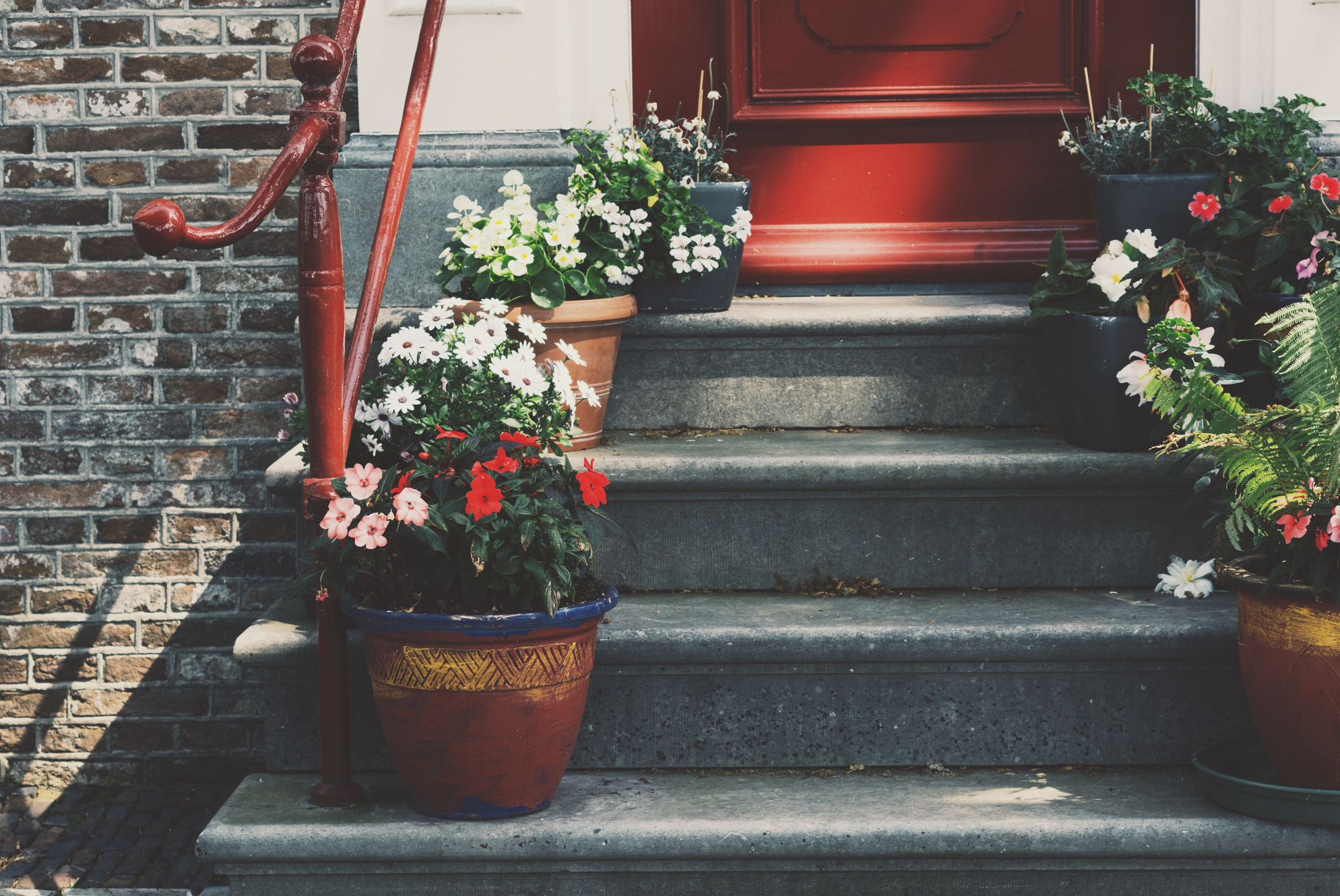
Can you use garden soil in pots? What actually happens if you do
The short answer
You can put garden soil in a pot, but it will not behave the way it does in the ground. Inside a container it compacts within weeks, loses the air spaces roots need, drains slowly after rain and then sets hard when it dries, so plants sit wet in summer storms and parched a week later. It also carries weed seed, cutworms, nematodes and fungal spores straight into a small space with nowhere for the plant to escape. If you have already filled a pot with it, tip it out, mix roughly one part of that soil with two parts bark-based outdoor potting soil and a scoop of compost, put pot filler in the base of anything large, and lift the pot onto feet so it drains. For new pots, skip the garden soil entirely and use a bark potting mix.
It is one of the most common questions we get at the nursery, usually from someone standing next to a big new pot doing the sums on how many bags it will take to fill. There is a pile of perfectly good soil in the garden. Why not use that? It is a fair question, and the honest answer is that you can, but you will spend the next two summers wishing you had not.
We have filled pots with garden soil ourselves, years ago, mostly to save money on large planters. What follows is what happened, why it happened, and what we do now instead. If you have a pot already full of clay from the flower bed, there is a rescue section further down that does not involve throwing everything away.
The short answer and the longer one
Garden soil is built for the ground. It has a deep profile underneath it, worms and roots and cracks that let water drain away and air move in, and it is constantly being worked by things you cannot see. Lift a spadeful of it into a pot and all of that infrastructure stays behind. What you have put in the pot is the mineral part, the sand and silt and clay, with a little organic matter, and on its own that settles into a dense block with very few gaps.
The North Carolina State Extension handbook is blunt about it in its chapter on plants grown in containers: field soils in pots hold too much water, have too little pore space for oxygen, are too heavy and can carry diseases, insects and weeds, which is why nurseries stopped using them decades ago. That matches what we see. It is not that plants cannot survive in garden soil in a pot. Some will. It is that almost everything about their life gets harder.
What happens in the first month
The first week or two look fine. Then you water, and the water sits on top for a while before it soaks in. After a Highveld thunderstorm the pot is waterlogged for a day, and the surface goes shiny and slick. A few dry days later the top has crusted and cracked, and the next watering runs down those cracks and out the drainage hole without wetting much in between, the same trick we describe in why pot plants dry out. The soil level drops a few centimetres as it settles. If you push a finger in, it meets resistance almost immediately.
The plant shows it slowly. Growth stalls, lower leaves yellow, and a plant that should be filling out by December is the same size it was in October. People often assume it needs feeding and add fertiliser, which does nothing because the roots are struggling for air rather than food. In a clay pot or a thin plastic one the swings between soaked and baked are even wider, which is part of why we prefer thick-walled concrete for anything that has to live outdoors.
Why a pot is not just a very small bed
Soil scientists describe a good growing soil as roughly half solids and half pore space, with the pores shared between air and water. In the ground that pore space is maintained by roots, worms, freeze and thaw, and by the sheer depth of soil below pulling water downward. In a pot there is nothing below the drainage hole but air, and water does not leave a fine-textured soil freely into air. It hangs there in a saturated layer at the bottom, and every time you water that layer creeps higher.
A container mix has to do by design what the ground does by nature. It needs coarse particles that will not pack together, enough organic matter to hold moisture without going soggy, and a structure that stays open after a hundred waterings. Composted bark does this very well, which is why nearly every good commercial mix in South Africa is built on it. Our article on the best type of soil for plants goes into texture in more depth if you want to understand what you are looking at when you open a bag.
The passengers you did not invite
Garden soil is alive, and not all of that life is welcome in a pot. Weed seed comes first. A pot filled from the bed will sprout a crop of blackjacks, khakibos and grass within a fortnight, and pulling them from a small container disturbs the roots of the plant you actually wanted. Cutworms, which curl up under the surface and chew seedlings off at the base overnight, travel in with the soil. So do nematodes, the microscopic root pests that stunt tomatoes and many other vegetables and that you cannot see until you pull a plant up and find knotted roots.
Fungal problems tend to follow. Wet, airless soil is exactly what root rots and damping-off fungi want, and a plant in a small pot has nowhere to grow away from them. In a bed a plant can send roots sideways into better ground. In a pot it is stuck with whatever you gave it.
Highveld clay and Cape sand fail differently
Not all garden soil fails the same way. The RHS summary of soil types describes clay as heavy, wet and cold in winter and baked dry in summer, and that is Gauteng and much of the Free State and KwaZulu-Natal midlands in a sentence. Clay in a pot does everything above, only worse, because it shrinks as it dries and pulls away from the pot walls, leaving a gap that water disappears down.
Sandy soil from the Cape Flats, the Garden Route or the Durban coast has the opposite problem. It drains beautifully for about a week, then the fine particles wash down and settle into a dense layer at the bottom while the top dries out in an afternoon. It also holds almost no nutrients, so whatever you feed washes straight through. Neither is a good starting point, but if you had to choose, sandy soil is the easier one to fix with compost and bark.
How to rescue a pot you have already filled
Do not panic and do not throw the soil away. If the plant is small enough to lift, take it out with as much root as you can, and tip the pot onto a tarp or a piece of board. Break the soil up with your hands or a fork, pull out the weeds and any grubs you find, and then mix it with fresh Bark Outdoor Potting Soil, roughly two parts fresh to one part garden soil, with a good scoop of bark compost stirred through. The bark opens the structure and the compost feeds it.
Check the drainage hole is clear and not sitting flat on a paved surface. A set of concrete pot feet lifts the pot a few centimetres so water can actually leave, which matters more with a heavier mix. If the pot is large, this is also your chance to put a hand's depth of Pot Filler in the base before the soil goes back. The broken concrete gives the bottom of the pot a free-draining layer and means less mix is needed to fill it. Replant, water thoroughly, and then leave it alone for a week. If the plant is too big to lift, you can still improve things by scratching out the top 10 cm of soil and replacing it with potting mix and compost, then mulching, but it is a patch rather than a fix.
A cheap mix that actually works
The reason people reach for garden soil is cost, so here is what we do to fill a large pot without spending more than we need to. Start with pot filler in the bottom fifth to quarter of the pot. It is broken concrete, it drains perfectly, it adds ballast so a tall pot does not blow over, and it means you are not paying for potting soil that no root would ever reach. Above that goes bark outdoor potting soil, and for hungry plants like vegetables, roses or citrus we mix in about one part bark compost to three or four parts potting soil.
Indoors the recipe changes. Outdoor mix is too coarse and holds too much water for a plant sitting in a saucer in a warm room, so use Indoor Potting Soil, which is finer and lighter. Succulents, aloes and cacti go the other way entirely and want a gritty, fast-draining Succulent Mix that dries within a day or two. One of the commonest mistakes we see is a jade plant or an aloe sitting in rich, moisture-holding soil and slowly rotting from the base.
When a little garden soil is fine
There are a few situations where garden soil earns its place. A very large trough or raised planter that is open to the ground underneath behaves more like a bed than a pot, and there a third of good garden loam mixed with bark and compost is reasonable and cheaper. A tall pot in a windy spot can take a layer of heavy soil low down purely for weight, provided the root zone above it is proper mix. And if you are growing something like a fruit tree that will live in a very big pot for years, a small proportion of clay-rich soil helps the mix hold nutrients over a long time. In every one of these cases the garden soil is a minor ingredient, never the whole recipe, and the drainage layer at the base is not optional.
If you are standing next to that big new pot right now, our advice is to skip the wheelbarrow of garden soil and start with the right bags. Pot filler for the base, bark potting soil for the bulk, compost for the food, and a lighter or grittier mix for indoor plants and succulents. All of it is in our soils and pebbles range, and once the pot is filled properly you will not have to think about it again for years.
Fill it right the first time
Pot filler for the base, bark outdoor potting soil for the bulk and compost for the food, all in one range built around the potting soil your plants actually need.
Shop potting soil →Frequently asked questions
Can I use garden soil in a pot?
You can, but it compacts, drains poorly, dries into a hard block and brings weed seed and pests into a small space. Plants grow slowly and often struggle with root rot. A bark-based potting mix is a much better choice.
Why does garden soil compact in pots?
In the ground, worms, roots and the deep soil below keep it open. In a pot those are missing, so repeated watering settles the fine particles into a dense layer with too little air space for roots to breathe.
How do I fix a pot already filled with garden soil?
Tip it out, remove weeds and grubs, and mix roughly one part garden soil with two parts bark outdoor potting soil and a scoop of compost. Add pot filler to the base of a large pot and stand it on pot feet before replanting.
What is the cheapest way to fill a large pot?
Put pot filler (broken concrete) in the bottom fifth to quarter, then fill with bark outdoor potting soil mixed with a little compost. You use less potting soil and drainage improves.
Can I mix garden soil with potting mix?
In small amounts, yes. Up to about a third garden loam in a very large trough or planter is fine when blended with bark potting soil and compost, provided there is a free-draining layer at the base.

Leave a comment
This site is protected by hCaptcha and the hCaptcha Privacy Policy and Terms of Service apply.