
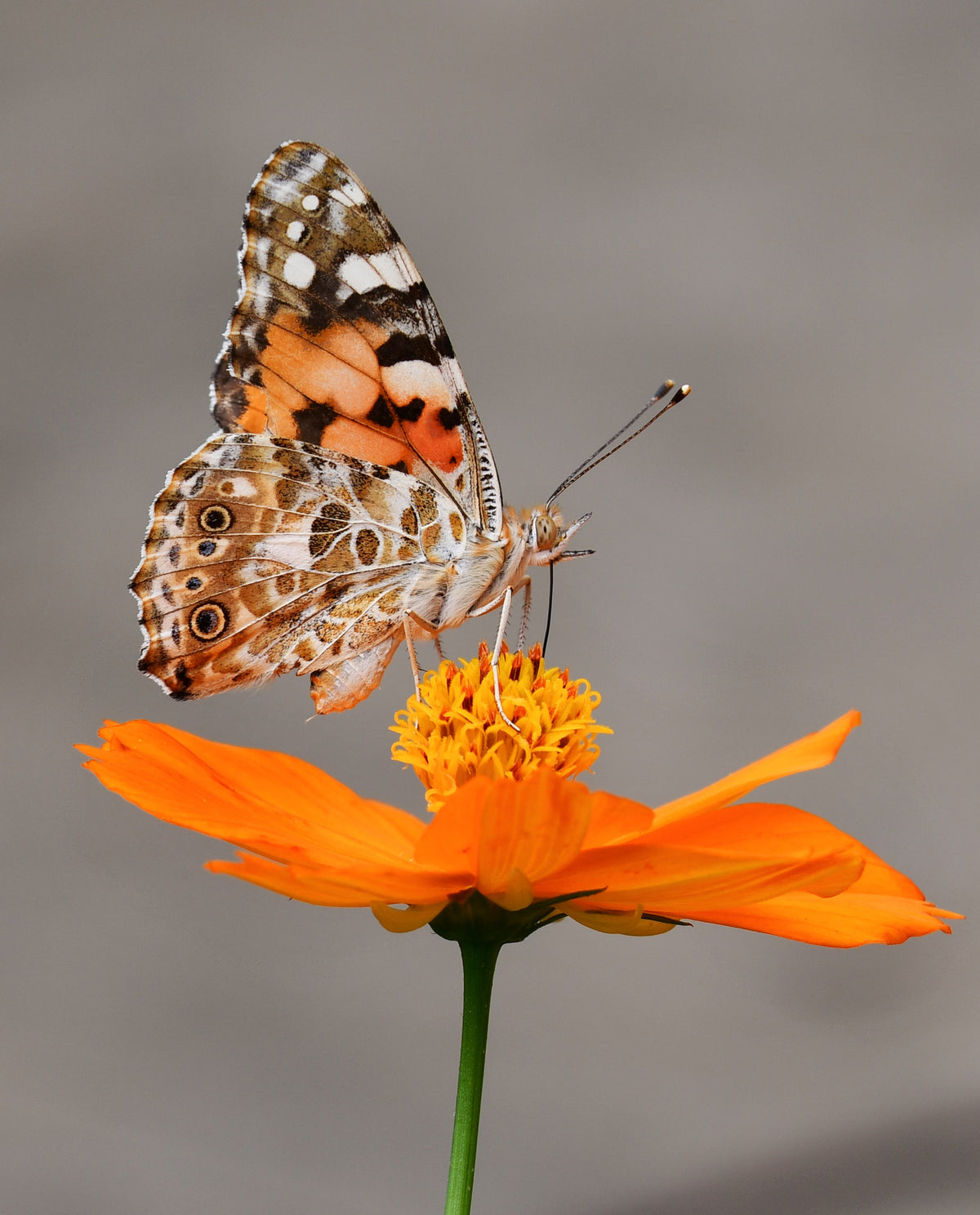
How to attract butterflies to a South African garden, even a small one
The short answer
To attract butterflies to a South African garden you need two kinds of plants, not one. Nectar plants such as Buddleja saligna, Scabiosa, Plectranthus and wild dagga feed the adults, but butterflies only settle and breed where their caterpillars have something to eat. Citrus swallowtails lay on lemon and other citrus, African monarchs on milkweed (Gomphocarpus), and the garden acraea on the wild peach, Kiggelaria africana. Add a sunny, wind-sheltered spot, a flat stone to bask on, a tray of damp sand to drink from, and stop spraying insecticide. A balcony with a potted lemon, a trough of milkweed and a few sun pots of Scabiosa and Felicia does all of this in a few square metres.
There is a moment every summer, usually a still afternoon in December, when the brown-veined whites come through Gauteng in their thousands, all heading north-east, and for a day or two every garden in the province has butterflies whether it deserves them or not. The rest of the year is a fairer test. Some gardens have citrus swallowtails gliding through the whole season and African monarchs drifting over the fence every morning. Most have a few painted ladies in spring and not much else. The difference between the two is not size, or money, or even how many flowers there are. It is whether the garden feeds caterpillars.
We planted our first proper butterfly corner at the nursery years ago with a bed of the usual nectar plants and waited. Butterflies visited, drank and left. It was only when we put in a wild peach and let the milkweed seed itself around that they started to stay, because they had somewhere to lay eggs. That is the single idea this article is built around, and it works just as well in three big pots on a balcony as it does in a garden.
Butterflies need two kinds of plants, and most gardens only plant one
An adult butterfly needs nectar, and it is not fussy about where it gets it. A caterpillar needs the leaves of a particular plant or family of plants, and it is extremely fussy. The female butterfly spends her life looking for those specific host plants to lay on, and she will pass over a garden full of flowers that has none. So the nectar plants bring butterflies in for a drink, and the host plants are what make them stay and come back next year. LepSoc Africa, the Lepidopterists' Society of Africa, has been saying this for decades and it is still the most under-used piece of advice in South African gardening. It also means you have to accept chewed leaves. A host plant that never gets eaten is not doing its job.
Three butterflies you can host almost anywhere in the country
The citrus swallowtail, Papilio demodocus, is the big yellow and black butterfly that sails through gardens from the Cape to Limpopo, and its caterpillars eat citrus. If you have a lemon, orange or naartjie tree, even a young one in a pot, you already have a host plant. The caterpillars start out looking like bird droppings and end up fat and green with eye spots, and on a mature tree they do no real harm. A lemon in a big pot on a stoep is one of the best butterfly investments you can make, and doubles as fruit, which is why it heads our list of the easiest fruit trees to grow in pots.
The African monarch, Danaus chrysippus, is the orange and black one with white-spotted wingtips that flaps slowly because nothing wants to eat it. Its caterpillars feed on milkweeds, and the indigenous balloon milkweed, Gomphocarpus physocarpus, is the easiest to grow. SANBI's PlantZAfrica page on Gomphocarpus physocarpus explains how the caterpillars take up the plant's toxins and become poisonous themselves, which is the whole reason the monarch can afford to fly so lazily. It is a soft, fast, slightly untidy shrub that seeds itself, and it is happy in a deep trough in full sun.
The garden acraea, Acraea horta, is the smaller orange butterfly with see-through wingtips that most Highveld and Cape gardeners have seen without knowing its name. Its host is the wild peach, Kiggelaria africana, a tough indigenous tree that the PlantZAfrica entry for Kiggelaria africana notes is often stripped bare by the caterpillars as part of a natural cycle before it flushes again. Plant one and within a season or two you will have clouds of acraeas and the birds that come to eat the caterpillars, which is a second garden show for the price of one tree. In a very large pot a wild peach can be kept small for years.
Nectar through the whole season
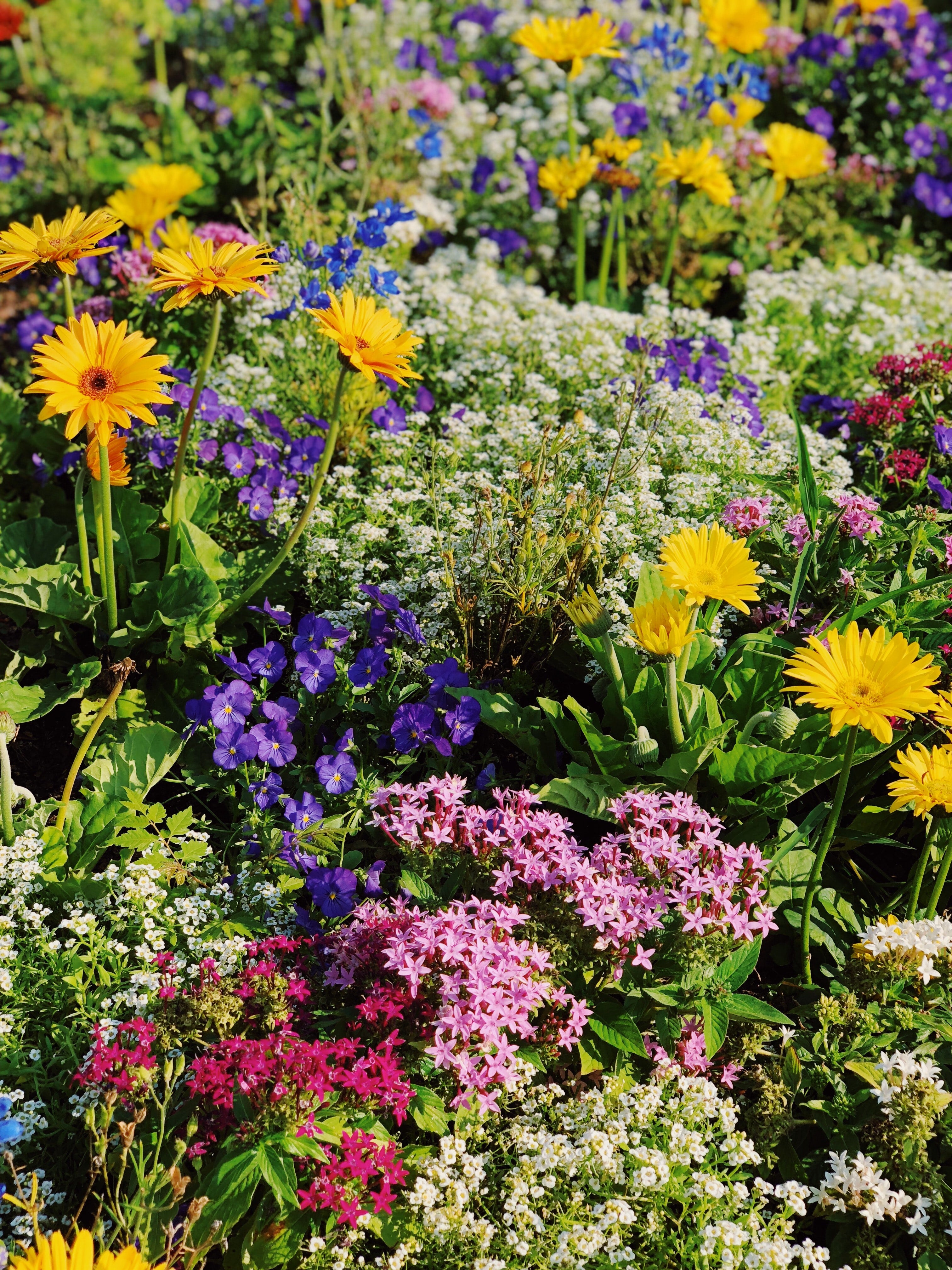
A butterfly garden that only flowers in October is a butterfly garden for three weeks. Plan for spring, high summer and autumn separately. In spring, the false olive, Buddleja saligna, covers itself in cream honey-scented flowers and is probably the single best indigenous nectar shrub we know of; the PlantZAfrica page on Buddleja saligna covers how to keep it in bounds, because it wants to be a small tree. For summer, Scabiosa, Felicia, the blue Cape daisy and the smaller salvias flower for months in full sun and suit pots well. For autumn, when most gardens are fading and the butterflies are still flying, Plectranthus lights up the shade with purple spires and wild dagga, Leonotis leonurus, puts up its orange whorls in the sun. Lavender, zinnias and pentas are not indigenous but butterflies use them happily, and there is no purity test in a home garden. What matters is that something is flowering every month from September to May. The indigenous plants care guide covers the growing needs of most of the plants named here.
Almost all of these are also first-rate bee plants, so a butterfly garden is a pollinator garden by default. If you want to plan for both, our planting for bees article names the plants that do double duty.
Sun, shelter and somewhere to drink
Butterflies are cold-blooded and cannot fly until their wing muscles warm up, so they want morning sun and shelter from wind. A nectar bed against a north- or east-facing wall, out of the afternoon Highveld wind, will have butterflies two hours before an exposed bed does. Give them a flat, dark stone or a paver in the sun to bask on; on cool spring mornings you will find them sitting on it with their wings spread. They also drink, but not from a bird bath, which is too deep. Fill a shallow drip tray with coarse sand, keep it damp, and add a pinch of salt or a slice of overripe fruit. This is called puddling and the swallowtails in particular will use it every day in summer. Tuck it among the pots where the cats cannot ambush it.
Put the sprayer away
This is the hard one. Every caterpillar is a future butterfly, and every insecticide, including the organic pyrethrum ones, kills caterpillars as efficiently as it kills aphids. If you want butterflies, you cannot spray, and you have to make peace with the odd chewed leaf. In practice a garden with birds, ladybirds, wasps and praying mantises sorts out its own aphids within a few weeks of the spraying stopping. Where you must control something, do it by hand: hose aphids off, pick off the odd cutworm at night, and let the rest be. Our article on the best plants for pest control covers the companion plants that do that work for you without chemicals.
A balcony with pots absolutely counts
Butterflies do not know the difference between a bed and a pot. A sunny third-floor balcony in Rosebank or Sea Point can support the same three butterflies as a suburban garden with the right planting. The recipe is a lemon tree in the biggest pot you can manage, 60 centimetres or more across, from our bigger pots range; a trough of balloon milkweed for the monarchs; and two or three sun pots of Scabiosa, Felicia and a small salvia for nectar. If the balcony is shaded for part of the day, swap one of the sun pots for a Plectranthus. Concrete matters more up there than anywhere. Our pots are cast from Fibre Concrete Mix, which keeps roots cooler than plastic in full sun and does not topple in the wind that funnels between buildings. Stand them on concrete pot feet so the balcony drains and put a tray of damp sand for puddling in the sunniest corner. The balcony collection is chosen for exactly this kind of space.
Where to put the pots as the seasons turn
Most of the plants named here are tough, but a young lemon or a milkweed in a pot will be knocked back by a hard Highveld frost, and one of the quiet advantages of a pot garden is that you can move it. In June, shuffle the tender pots against a north wall or under the eaves and leave the wild dagga and the Buddleja where they are. In the Cape, the problem is winter waterlogging rather than cold, so make sure every pot has a layer of pot filler and stands on feet through the rains. By September, when the first swallowtails appear, move everything back into the open sun. If you want a shortcut to the summer nectar pots, our pre-planted sun range is planted here with the sun-loving perennials that butterflies use, ready to stand out on the day it arrives.
A butterfly garden in South Africa comes down to a few decisions: host plants as well as flowers, a sunny sheltered spot, water they can actually reach, and no spraying. Whether that lives in a garden bed or in six pots on a balcony matters not at all to the butterflies. For the nectar side of the equation, the planted sun pots are the fastest way to have something flowering, and visited, this season.
Nectar pots, planted and ready
Sun-loving perennials that butterflies actually visit, planted here in Fibre Concrete Mix pots that stay put in the wind, in our pre-planted sun range.
Shop planted sun pots →Frequently asked questions
Which plants attract butterflies in South Africa?
For nectar, Buddleja saligna, Scabiosa, Felicia, salvias, Plectranthus and wild dagga (Leonotis leonurus). For breeding, plant host plants: citrus for the citrus swallowtail, milkweed (Gomphocarpus) for the African monarch and wild peach (Kiggelaria africana) for the garden acraea.
What do citrus swallowtail caterpillars eat?
The leaves of citrus trees, including lemon, orange and naartjie, even young trees in pots. On an established tree they do no lasting harm and each one becomes a large yellow and black swallowtail.
Can I attract butterflies to a balcony?
Yes. A potted lemon tree, a trough of balloon milkweed and a few sun pots of Scabiosa, Felicia and salvia in a sheltered, sunny spot will bring in the same species as a garden. Add a shallow tray of damp sand for them to drink from.
Do butterflies need water in the garden?
They drink from damp ground rather than open water. Keep a shallow tray of coarse sand moist in a sunny spot, with a pinch of salt or a slice of overripe fruit, and swallowtails will use it daily in summer.
Should I spray for aphids if I want butterflies?
No. All insecticides, including organic pyrethrum sprays, kill caterpillars. Hose aphids off by hand and let birds, ladybirds and wasps do the rest, which they will within a few weeks of the spraying stopping.


Leave a comment
This site is protected by hCaptcha and the hCaptcha Privacy Policy and Terms of Service apply.