
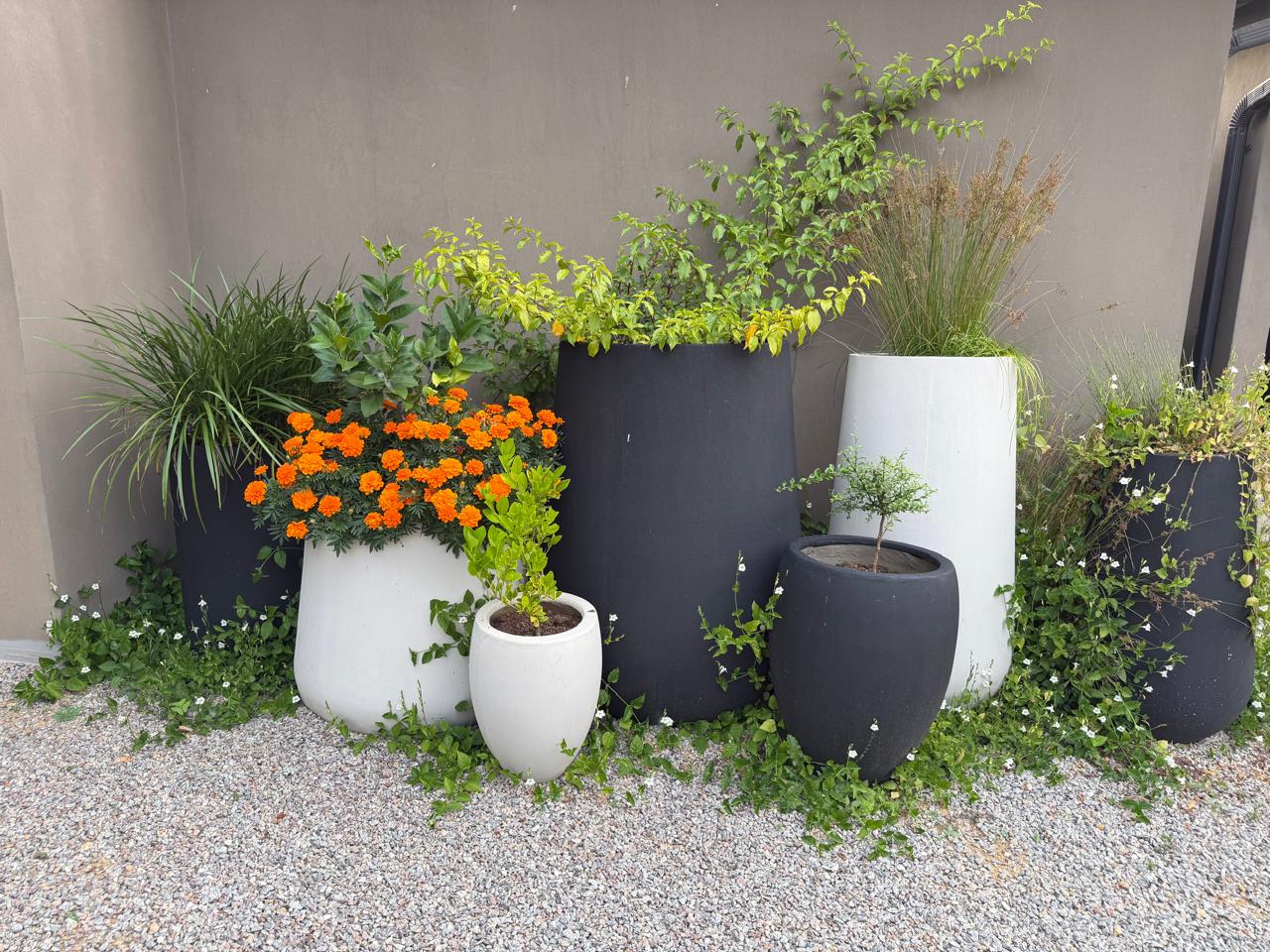
How to style a garden with pots, mixing shapes, colours and textures
Most gardens do not look flat because of the plants. They look flat because the pots are all doing the same thing. Same height, same shape, same finish, lined up like a row of soldiers along a wall. Change how you arrange them and you can lift a plain patio or a tired corner in an afternoon, without buying a single new plant.
The trick is that good pot styling is not really about taste or having an eye for it. It runs on a few simple ideas you can lean on every time. Once you know them, grouping pots stops feeling like guesswork and starts feeling obvious.
Start with a through-line
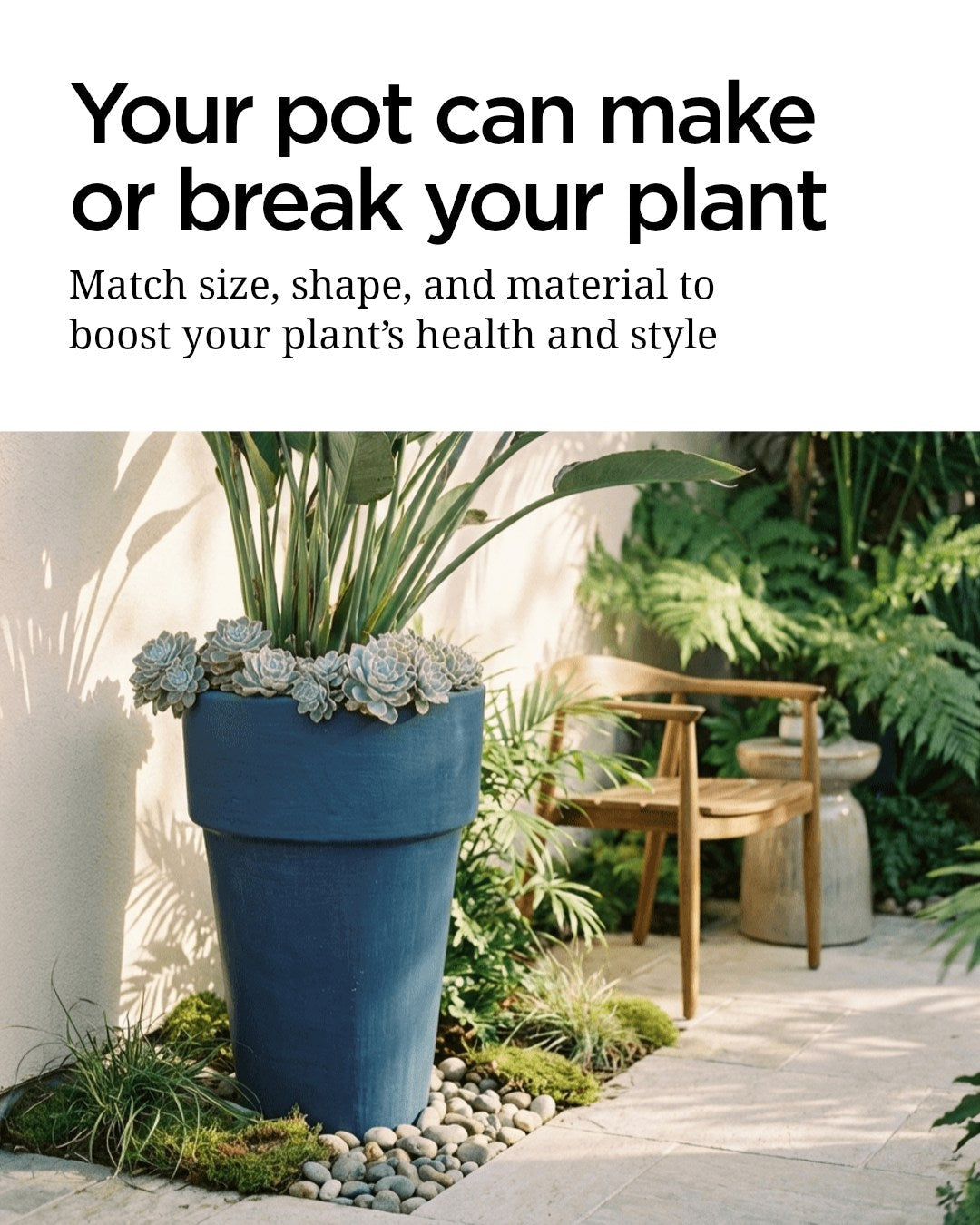
The single thing that separates a considered display from a cluttered one is a through-line, some quiet thread running through the whole group. Usually it is either one material or one colour family. You might keep every pot in the same concrete finish and let the shapes and sizes vary wildly. Or you might mix materials freely but hold them all to soft, earthy tones. Either works. What rarely works is varying everything at once, different colour, different finish, different shape, all fighting for attention.
This is why a set of pots from one range tends to look so settled together. They already share a finish, so you are free to play with everything else. If you are starting a grouping from scratch, our concrete pot range gives you that shared thread to build around.
Height is your biggest lever
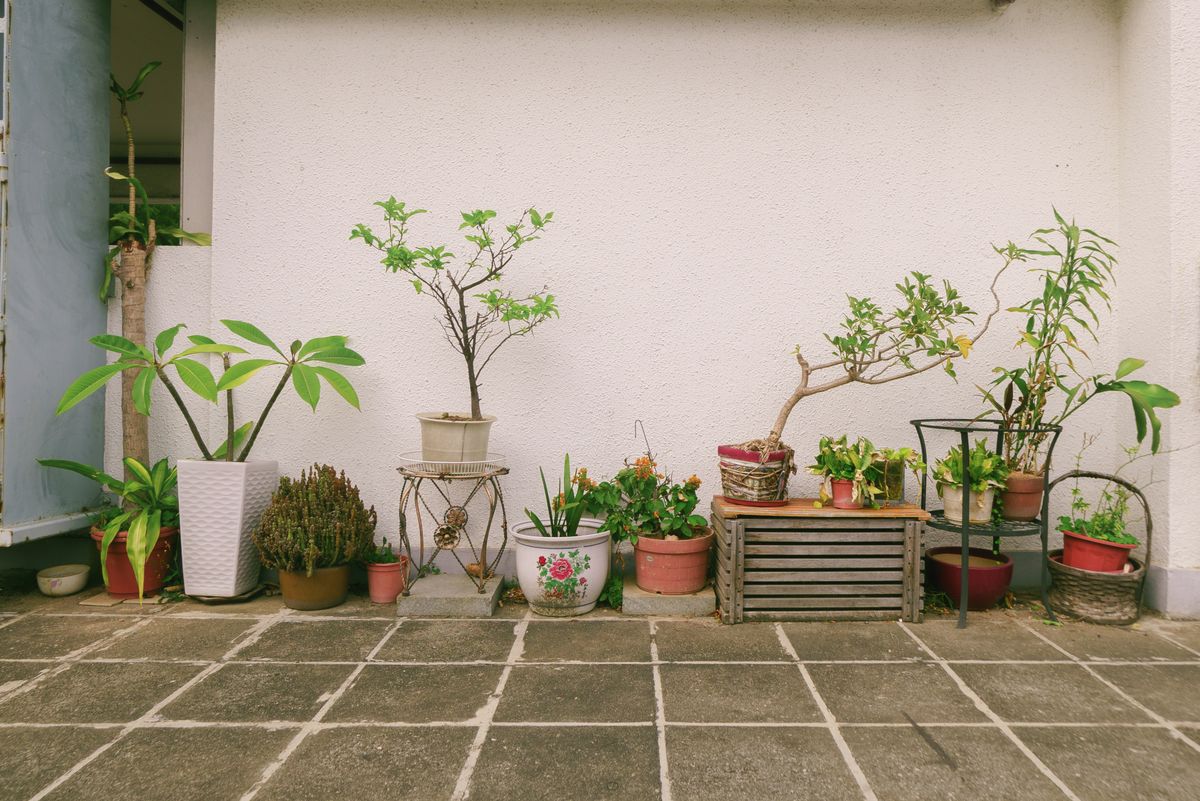
If you only change one thing, change the height. A group where every pot is the same height reads as a wall. Give it a tall pot at the back, a couple of mid ones, and something low at the front, and suddenly your eye has somewhere to travel. It feels alive.
You do not need to buy tall pots to get tall points. A pot on a plant stand, a sturdy upturned crate, or the edge of a step all lift a plant into a new tier for free. Look at how the group below leans on exactly that, a tall textured pot, a plant raised on a stand, a low one at ground level, all in the same little run.
Style your space with pots
Mix shapes, colours and heights from our full range of handmade concrete pots.
Shop concrete pots →Group in odd numbers, and let it be uneven
Threes and fives look more natural than twos and fours. It is an old florist's rule and it holds up in the garden too. A pair of matching pots either side of a door has its place, that formal symmetry can be lovely, but for a relaxed grouping, odd numbers stop things looking staged. Cluster them close, let them overlap from the front view, vary the gaps. A group that is a little uneven feels like it grew there rather than being arranged with a ruler.
Mix shapes, but keep something constant
Shape is where you get to have fun. A tall cylinder next to a round bowl next to a low trough gives you contrast and interest. The reason it still looks intentional and not messy comes back to the through-line. Because the finish or the colour is holding steady, the eye reads the different shapes as variety rather than chaos.
Rounded pots feel soft and calm, good for a restful corner. Square and angular pots feel sharper and more modern, good for a clean contemporary look. Tall narrow pots draw the eye up and suit a slim gap or a spot that needs height. You can browse by shape if it helps you picture a grouping, the round, square and feature pot ranges are a good place to start, and there is more on getting shape and colour to sit together in how to create a stunning container garden.
Texture does a lot of quiet work
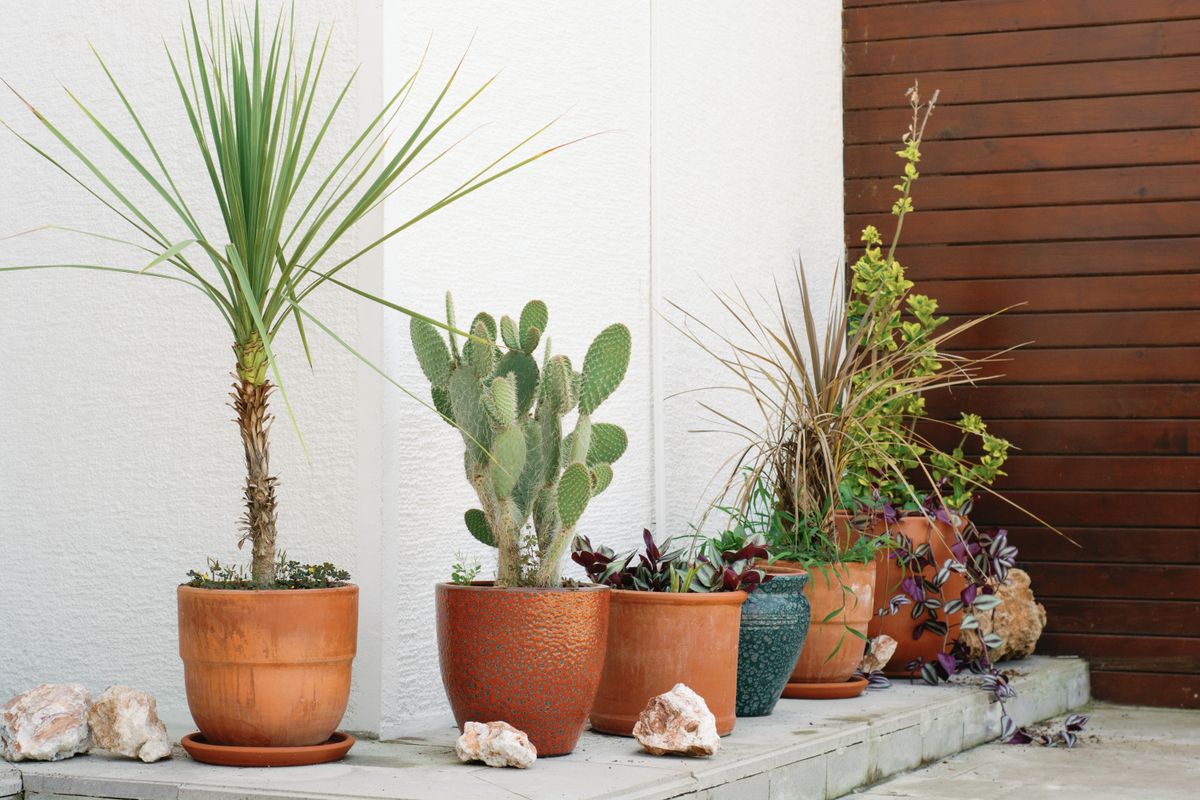
Texture is the detail most people never think about, and it is often what makes a grouping feel rich rather than plain. There is the texture of the pot itself, the soft matte of raw concrete, the slight roughness of terracotta, the gloss of a glazed finish. And there is the texture of the plant, a spiky aloe against a soft trailing plant, broad glossy leaves against fine grasses.
The move that almost always lands is to repeat one material and let the textures within it and the plants on top carry the variety. In the terracotta grouping here, the pots all belong to the same family, so nothing clashes, yet the mix of a tall spiky plant, a rounded cactus and soft trailing greenery keeps it interesting.
Let the pot be quiet or let it be the star, not both
Colour is where gardens most often go wrong, usually with too much of it. A good rule is to pick who the star is. Either the pots stay quiet in neutral, earthy tones and let the plants and flowers bring the colour, which is the safest and most timeless choice, or you make one bold pot the deliberate centrepiece and keep everything around it calm. What tires quickly is five loud pots in five different colours all shouting at once.
Neutral concrete tones are forgiving for this exact reason. They flatter almost any plant, they sit happily against most walls and paving, and they age gracefully instead of dating. If you want a pop, let it be one considered thing rather than the whole set.
Scale it to the space you have
A common mistake in a small garden is to reach for lots of little pots, which ends up looking busy and somehow makes the space feel even smaller. Fewer, larger pots almost always work better. They give the plants room to grow into something substantial, they cut down on fiddly watering, and they read as calm rather than cluttered. There is more on this in how to make a small garden look bigger, and if you are not sure what size suits a particular plant or corner, choosing the right size garden pot for your space walks through it.
Bigger pots do come with a bit more to think about, weight and placement mostly, and our larger pots range is worth a look if you are anchoring a corner or framing an entrance.
Think about where it actually lives
The prettiest arrangement in the world falls apart if it is fighting its spot. A windy balcony or an exposed corner wants pots with real weight so nothing topples, which is one of the quiet advantages of concrete, it simply stays put. A hot sun-baked wall wants plants and pots that can take the heat. And anything you might want to move with the seasons is easier to plan before you plant it, not after. If you like to work these things out on paper first, our Garden Planner helps you match plants to the sun, water and space you are dealing with.
The honest short version
Pick a through-line and hold it. Vary the height more than anything else. Group in odd numbers and let it be a little uneven. Mix shapes freely as long as the finish or colour stays steady. Repeat a material and let texture carry the interest. Keep the colour restrained, one star at a time. And scale up rather than down, especially in a small space. That really is the whole craft of it.
If you want to see how all of this looks in real South African gardens rather than in theory, our customer gallery is full of groupings people have put together at home, and it is honestly the best inspiration there is. Steal shamelessly.

Leave a comment
This site is protected by hCaptcha and the hCaptcha Privacy Policy and Terms of Service apply.