
How to style houseplants indoors: pots, groupings and light
The short answer
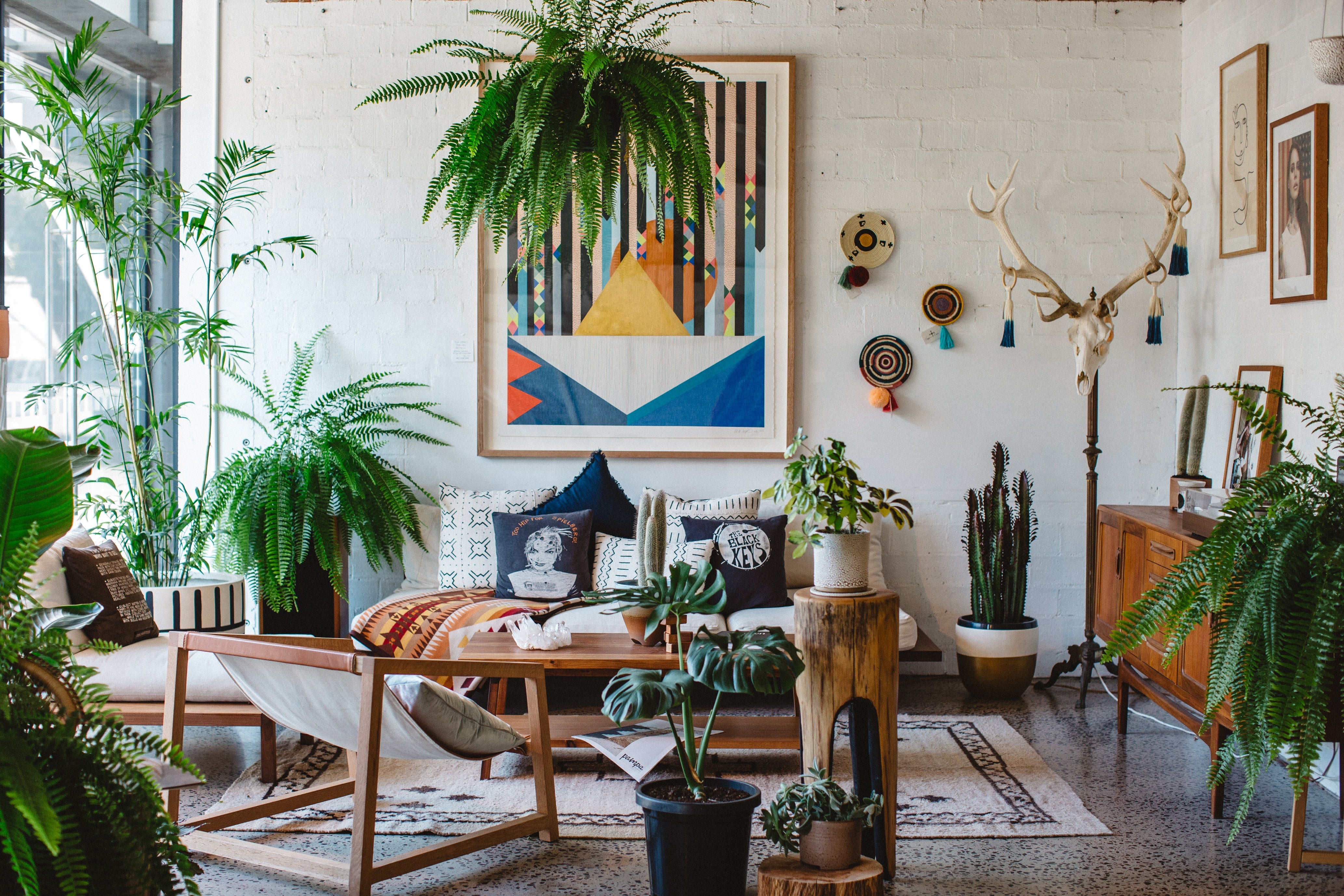
Styling houseplants well is mostly about three decisions made in the right order. First read the light, because a plant in the wrong spot looks bad within a month no matter how good the pot is; in South Africa the bright windows face north and the gentle ones face south. Then group plants in odd numbers with clearly different heights, a tall one, a middle one and a trailer, so the eye moves. Finally keep every pot in one finish family, such as pale concrete, and vary the shapes rather than the colours. Put a drip tray under anything on a wooden floor, use a plant stand to lift a floor plant to eye level, and choose lightweight pots for shelves and bookcases where a full concrete pot is too heavy.
Walk into a house where the plants look effortless and you will find that nothing about it was effortless. Someone worked out where the light falls, chose plants for those spots, and then made a few quiet decisions about pots that tie the whole room together. We do this every week when we plant up indoor displays for the nursery and for customers, and the same handful of rules works in a Centurion townhouse, a Sea Point flat and a farmhouse in the Midlands.
This article is those rules, in the order we actually apply them. Light first, then plants, then grouping, then pots. Do it in that order and you will spend less money and kill fewer plants. Do it in reverse, buying a beautiful pot and then finding a plant to fill it and a corner to put it in, and you get the sad fiddle-leaf fig in the dark hallway that every second house in South Africa seems to have.
Start with the light, not the look
Most houseplant advice online is written for the northern hemisphere, where the bright windows face south. Here it is the reverse. A north-facing window in Gauteng or the Cape gets the strong light, an east window gets gentle morning sun, west gets harsh afternoon sun that will scorch most tropical foliage in summer, and a south-facing room is the low-light room. The University of Maryland Extension's guide to lighting for indoor plants has a useful table of light levels with plant examples, and if you swap north for south when you read it, it applies perfectly here. Light also drops off much faster than people expect. A plant two metres back from a window is getting a fraction of the light of one on the sill, which is why the spot that looked bright to you turns out to be dim to a plant.
A quick test that does not need a meter: hold your hand a hand's width above where the plant will sit, at midday. A sharp shadow means bright light, good for succulents, citrus and most flowering plants. A soft shadow with blurry edges is medium light, which suits the bulk of foliage houseplants. Barely any shadow means low light, and you are limited to the tough ones like zamioculcas, snake plant and some philodendrons. Our houseplant care guide matches the common plants to those three levels.
Group in odd numbers, and give the group a reason
Three plants together look considered. Two look like a pair of bookends and four look like a queue. It is an old design rule and it holds because odd numbers stop the eye settling into symmetry and keep it moving between the plants. A group also needs a reason to be where it is, which usually means anchoring it to something: the end of a sofa, the corner of a room where two walls meet, the side of a doorway or the run of a windowsill. A group of three floating in the middle of a wall looks lost. Push it into a corner and it suddenly looks intentional. Keep the pots close enough to touch each other, or nearly. Plants spaced evenly apart read as separate objects, while plants overlapping slightly read as one planting.
Vary the heights so the eye has somewhere to go
The easiest group of three is one tall plant, one at roughly half its height and one trailer that spills over its pot. A rubber plant or a strelitzia at chest height, a peace lily or calathea at knee height and a pothos or string of hearts trailing from a pot in front. If you only own medium plants, borrow height from the pot or from a plant stand. A simple stand lifts a floor plant to eye level, gets it out of the cold draught along the floor in winter, and fills the awkward vertical gap between the sofa arm and the ceiling that makes rooms feel unfinished. It is the same empty vertical space that makes a flat garden feel flat, only indoors.
Leaf shape does the same job as height. Put a plant with big glossy leaves next to one with fine, feathery foliage and a third with strappy upright leaves and the group has texture even if all three are the same green. For a starting set of plants that mix well and are hard to kill, the ten easy houseplants for a jungle home article is where we send most beginners.
Keep every pot in one finish family
This is the rule that separates a collection from a jumble. A room full of plants in a mix of terracotta, glossy glazed ceramic, plastic and a woven basket looks busy however good the plants are. Pick one finish and stick to it across the whole room. Pale grey concrete is the one we use most because it sits quietly against white walls, timber and dark green foliage alike and does not fight with anything. Then vary the shape and size freely within that finish: a cube next to a rounded egg pot next to a tall cylinder reads as deliberate because the surface is the same. The full thinking on this, including how many colours a room can carry before it tips over, is in how to balance pot colours and shapes.
The exception is one accent. A single black or coloured pot in a room of grey ones becomes a focal point. Two accents compete and three is a jumble again.
Trays under everything on a wooden floor
We have replaced enough water-stained floorboards and swollen laminate to be firm about this. Every indoor pot needs a saucer or drip tray, and on a wooden or laminate floor the pot should stand on the tray rather than directly on the boards, because concrete pots breathe moisture through their base. Our drip trays are cast in the same concrete as the pots so they disappear visually. Empty the tray after watering rather than letting the plant sit in it, which is both a floor rule and a plant rule, since roots standing in water is the fastest way to lose a houseplant. Use a proper indoor potting soil that drains freely and the tray will rarely be more than damp.
Shelves and bookcases are where lightweight pots earn their place
Some of the best houseplant moments are up high: a trailer spilling off the top of a bookcase, a small fern on a floating shelf, a row of succulents along a kitchen shelf. A full-size concrete pot filled with wet soil weighs more than most shelf brackets are rated for, and a heavy pot on a high shelf is also the one that eventually comes down. This is exactly what our lightweight décor range is for. It gives you the same concrete look at a fraction of the weight, so a shelf can carry three or five small pots without a second thought, and a pot can go up on a wall bracket or a hanging shelf. Keep the plants up there to the ones that tolerate less light and less frequent watering, because you will water a shelf less often than a floor pot, and choose trailers so the pot itself half disappears behind the foliage.
One big plant beats five small ones in a big room
Small pots dotted around a large, high-ceilinged room make it look cluttered rather than green. A single generous plant in a generous pot, a strelitzia, a big monstera or a ficus in a pot 50 or 60 centimetres across, holds a room on its own and makes the furniture look intentional. If you want colour without the work, the pre-planted shade pots are planted here and ready to stand in a bright room straight away.
Living with the arrangement
Plants grow towards the window, so turn each pot a quarter turn every time you water and the group stays balanced instead of leaning. Wipe dust off the large leaves every month or two; the University of Georgia's guide to growing indoor plants with success notes that a layer of dust cuts the light a leaf can use, and it shows in dull foliage before anything else. Water less in winter, when growth slows and heaters dry the air, and more in the humid summer months. The RHS houseplants advice hub is a reliable place to check the specifics for any plant you bring home. If the group stops looking right, it is almost always because one plant has outgrown its place, and the fix is to swap that plant to a floor pot and put a smaller one in its spot rather than start again.
Styling houseplants is a nursery skill more than a design one: read the light, pick plants that suit it, then group them in threes with different heights and pots that share a finish. The floor pots can be as heavy and solid as you like. The shelves, brackets and high corners are where our lightweight pots come in, so you can carry the same concrete look all the way up the wall.
The concrete look, up on the shelf
Same pale concrete finish as our floor pots at a fraction of the weight, so shelves, brackets and high corners can carry plants safely, in our lightweight pots.
Shop lightweight pots →Frequently asked questions
Which window is best for houseplants in South Africa?
North-facing windows get the brightest light in the southern hemisphere, east gets gentle morning sun, west gets harsh afternoon sun, and south-facing rooms are the low-light rooms. Most advice online is written for the northern hemisphere and has this reversed.
Why should houseplants be grouped in odd numbers?
Odd numbers stop the eye settling into a symmetrical pair or a row and keep it moving between the plants, which reads as relaxed and intentional. Three is the easiest group: one tall plant, one medium and one trailer.
Should all my indoor pots match?
Keep every pot in one finish family, such as pale concrete, and vary the shapes and sizes within it. A single accent pot in a different colour works as a focal point; more than one starts to look busy.
Can I put a concrete pot on a wooden floor?
Yes, but always stand it on a drip tray. Concrete breathes moisture through its base and will stain or swell timber and laminate over time. Empty the tray after watering rather than leaving the plant standing in water.
What pots are safe for shelves and bookcases?
Lightweight décor pots. A full-size concrete pot with wet soil is heavier than most shelf brackets are rated for. Lightweight pots give the same look at a fraction of the weight and suit trailers and small ferns up high.

Leave a comment
This site is protected by hCaptcha and the hCaptcha Privacy Policy and Terms of Service apply.