
5 easy herbs to grow in pots
The short answer
Mint, parsley, rosemary, basil and oregano are the five herbs most worth growing in pots, and each one wants a slightly different container. Mint spreads by runners so it needs a pot of its own, never a shared trough. Parsley has a taproot and wants depth, at least twenty five centimetres. Rosemary is the long term resident and needs the biggest pot of the five, with gritty free draining soil. Basil is a summer plant that a Highveld frost will end, so grow it in a warm bright spot and pinch out flowers to keep the leaves tasting good. Oregano is the toughest and stays neat and bushy in a container. Give all five drainage, a tray underneath if they stand on paving, and harvest them hard, because cutting is what keeps a herb producing.
Herbs are the one thing in a garden that pays you back the same week. Put a small plant in a pot in September and by October you are cutting handfuls into supper and wondering why you ever bought those sad plastic packets. They are also the easiest place to start if you have never grown anything, because a herb in trouble tells you within days and the fix is usually simple.
These five are the ones we hand to people who want a kitchen garden and have a balcony, a stoep or a patch of paving to put it on. Mint, parsley, rosemary, basil and oregano cover most of the cooking you actually do, and between them they keep something green going all year. What follows is how each behaves in a pot in South African conditions, and what size container each one honestly needs, because that is the part most guides skip.
Start with the pot, not the plant
The single biggest reason potted herbs fail here is that the pot is too small. A pretty little pot on a windowsill holds maybe a litre of soil, which on a hot February afternoon dries out completely between breakfast and lunch. The plant wilts, recovers, wilts again, and by March it is woody and bitter. That was never a watering problem, it was a volume problem.
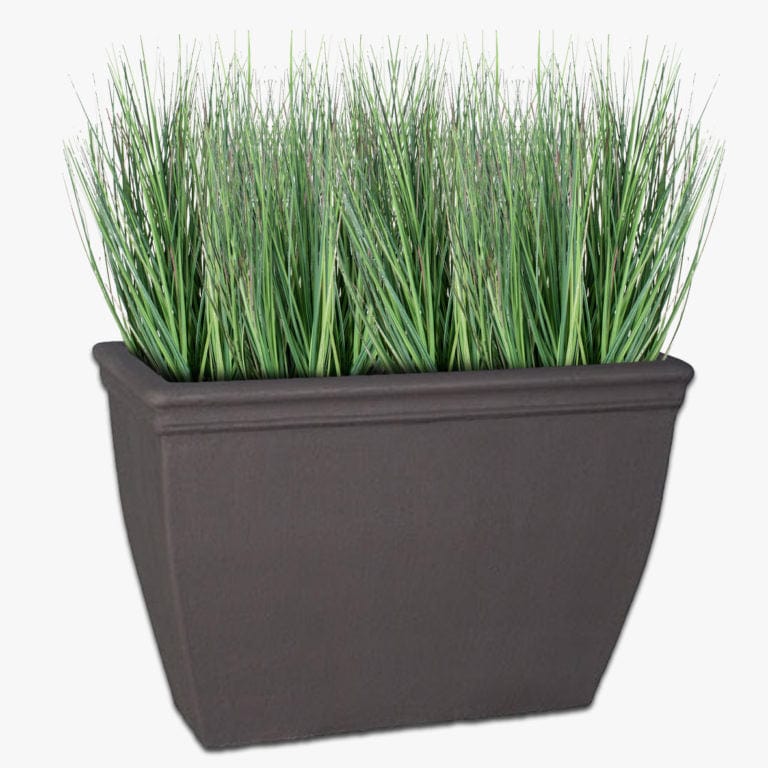
Give each herb at least twenty centimetres of depth and a similar width, more for rosemary. A Cube pot is what we point people at for a single herb, because the straight sides give real root volume instead of tapering to nothing at the base. For a run of several herbs, the Curo trough holds three or four plants in a line along a wall or a stoep edge, and it is far easier to water than four separate pots.
Our pots are hand-cast from Fibre Concrete Mix, which matters for herbs more than it does for a houseplant. Thick cast walls buffer the soil against heat, so the root zone stays several degrees cooler than the same soil in a black plastic nursery bag on a hot patio. Stand the pot on a drip tray if it is on paving, and fill it with Bark Outdoor Potting Soil rather than soil from the garden, which compacts and drowns roots in a container.
Mint
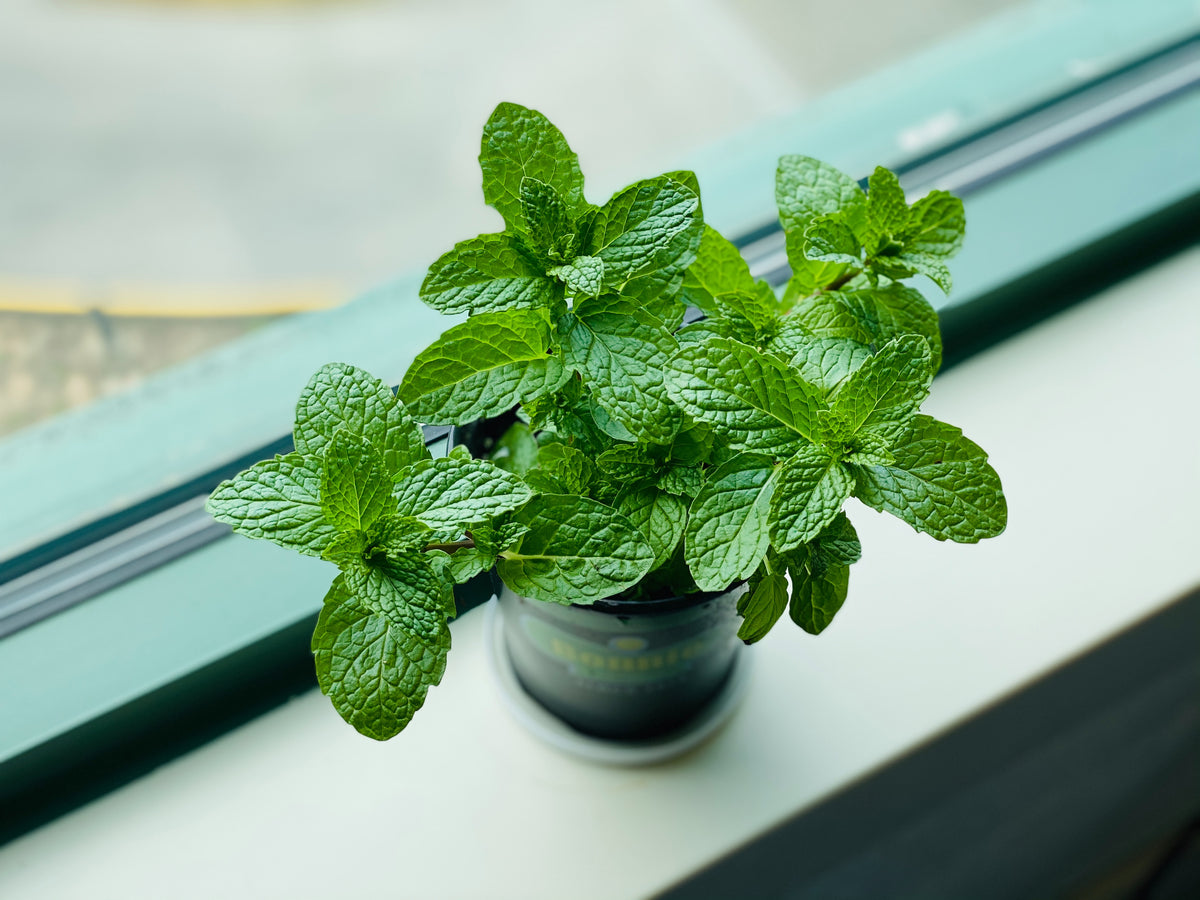
Mint is the reason pots exist. Planted in a bed it travels by underground runners, comes up through the lawn, appears in the neighbour's paving, and once established you will never fully remove it. In a container it is a delight.
It wants more water than the other four and is happier out of the full afternoon sun, so morning light with afternoon shade keeps the leaves soft rather than tough. Peppermint, spearmint, chocolate mint and apple mint all grow the same way but will crowd each other, so give each its own container. The RHS guide to growing mint is good on the differences between them.
Our recommendation is a Cube pot on its own, standing clear of the soil rather than sunk into a bed, since runners will find a drainage hole and escape through it. Every second spring, tip the plant out, cut the rootball in half with a bread knife and replant one half in fresh soil. It looks brutal and it comes back stronger. Mint also makes the best fresh tea of any herb here, and our guide to growing herbs for tea covers what to grow alongside it.
Parsley
Parsley is the herb most often planted in a pot that is too shallow. It grows a taproot, so it wants depth more than width, and a container under twenty five centimetres deep gives you a plant that never thickens up and then bolts in its first hot spell. Get the depth right and one plant feeds a household for most of a year.
Flat leaf parsley has the stronger flavour, curly holds up better as a garnish, and both grow identically. It is a biennial, so it makes leaf in the first year and then flowers and dies in the second. Plant a replacement every spring and you will never be without it. Four to six hours of sun is plenty and in a Gauteng summer it is happier with afternoon shade, and the RHS notes on growing parsley cover the sowing timing well. A deep Cube pot suits one plant, or give it an end of the Curo trough. Keep the soil evenly moist rather than swinging between soaked and bone dry, since that swing is what triggers early bolting.
Rosemary
Rosemary is the long term resident. Treated properly it becomes a small shrub that lives for years, and it is the only one of these five that sails through a Highveld winter without protection. It is also the one most often killed by kindness, since it comes from dry Mediterranean hillsides and genuinely resents wet feet.
Give it full sun and the sharpest drainage you can manage. Mix a couple of handfuls of our Succulent Mix into the potting soil, water deeply but only when the top five centimetres are dry, and never leave it standing in a tray of water. It needs the biggest pot of the five because it will be there for a decade, so start with the largest Cube you have room for. The RHS guide to growing rosemary is worth reading on pruning.
Prune it lightly every spring, taking the tips and never cutting into old bare wood, because rosemary does not reliably reshoot from bare stems. That trim is what keeps it bushy rather than a sprawling woody thing with green only at the ends.
Basil
Basil is a summer plant and nothing else. The first proper frost turns a healthy plant to black mush overnight, so on the Highveld it runs from October to April and then you start again. Knowing that saves the annual disappointment of watching a beautiful plant die in May and assuming you did something wrong.
While it is going it is the most productive of the five. It wants full sun, rich soil and steady water, closer to what mint asks for than rosemary. The job that matters is pinching out flower spikes the moment they appear, because once basil flowers the leaves turn bitter. Pinch the growing tips too and one plant becomes bushy instead of a single tall stem. The RHS guide to growing basil covers the varieties, and Genovese is still the one for pesto.
Basil earns a spot in the Curo trough alongside parsley and oregano, since all three want similar water. Two or three plants together produce enough to actually cook with, which one never does.
Oregano
Oregano is the toughest of the five and the one that improves in a pot. In open ground it sprawls into a groundcover and the flavour thins. Contained, kept a little hungry and given full sun, it stays compact and the leaves get noticeably more pungent, which is what you want on a pizza.
It wants free draining soil, full sun and less water than you think, closer to the rosemary regime than the basil one. Do not feed it much, because rich soil produces lush leaves with almost no oil in them and oil is where the flavour lives. Greek oregano is stronger than common oregano if you have the choice. It sits happily at the sunny end of a Curo trough or in a Cube of its own, spilling gently over the rim as it grows, and it comes again after a hard cut back.
Watering, where most potted herbs die
Herbs in containers are killed far more often by too much water than too little, and the mistake is almost always watering on a schedule instead of by feel. Push a finger into the soil to the second knuckle. Damp, leave it. Dry, water until it runs from the drainage hole, then stop. That is the whole method and it self corrects for hot weeks and cool ones.
Group herbs by thirst rather than convenience. Mint and basil together, rosemary and oregano together, parsley somewhere in between. A trough where one plant wants daily water and its neighbour wants weekly is a problem you built into the planting, and no amount of care afterwards fixes it.
Harvest hard, and harvest often
Most people treat a herb plant as an ornament and snip a few leaves nervously. Herbs respond to cutting the way a lawn responds to mowing. Take a third at a time, cut just above a pair of leaves rather than leaving a stub, and the plant branches from that point and comes back thicker. A herb you never cut goes woody, flowers and stops.
Cut in the morning once the dew has gone, when the oils are at their strongest. Freeze surplus basil as pesto and dry the oregano and rosemary, since both keep their flavour dried far better than parsley or mint. If the harvest goes well, our guide to growing food in pots is the natural next step.
Where to stand the pots
Put them where you cook. It sounds obvious and it is the advice most ignored, because a herb pot at the bottom of the garden gets used twice and then forgotten. A few steps from the kitchen door is right, close enough that you will walk out barefoot in the middle of making supper.
Four to six hours of sun suits all five, rosemary and oregano in the sunniest corner and mint and parsley at the softer end. Leave a hand's width between pots so air moves, and turn each a quarter turn every few weeks so they grow evenly. Our fuller piece on setting up a kitchen herb garden covers positioning in more detail.
Get the pot right and these five are close to unkillable. A Curo trough by the kitchen door with parsley, basil and oregano in it, a Cube of mint on its own and a big Cube of rosemary in the sunniest corner will feed you for years. Our herb and vegetable pot range has the depths and shapes these five actually need.
The right pot for each herb
Troughs for a mixed herb run and Cube pots for mint and rosemary are all in our herb and vegetable pot range.
Shop herb pots →Frequently asked questions
What size pot do herbs need?
At least twenty centimetres deep and wide for most herbs, twenty five or more for parsley because of its taproot, and the largest pot you can manage for rosemary since it grows into a long lived shrub.
Can I grow all five herbs in one pot?
Not comfortably. Mint takes over anything it shares a pot with, and rosemary and oregano want far less water than basil and mint. Parsley, basil and oregano share a trough well, mint and rosemary want their own pots.
How much sun do potted herbs need?
Four to six hours of direct sun a day. Rosemary and oregano want the sunniest spot you have, while mint and parsley are happier with morning sun and afternoon shade in a hot Highveld summer.
Why does my basil die every winter?
Basil is frost tender and an annual in most of South Africa. A single Highveld frost will kill it, so treat it as an October to April plant and grow a fresh one each spring.
How often should I water herbs in pots?
By feel rather than on a schedule. Push a finger into the soil and water only when it comes out dry, then water until it runs from the drainage hole. Overwatering kills far more potted herbs than drought.


20 comments
Love the idea of the pot
Eloise
Thanks for all the information. Will make planting herbs so much more rewarding
Marlene Jones
Interesting and very informative.
Mmabatho
I love herbs,with this information I will start my own garden.
Phumzile Nkosi
Herbs
Paul Bergh
Great stuff
I love it
Many thanks for your site, am trying to get a herb garden going
Sylvia Sauerman
Thanks for sharing dear I’m going to start my pot shack garden and stop always buying herbs at the supermarket sometimes I don’t have money to buy and it’s a must to cook every day
Dikomo
Thank you, this was really informative.
Mpho
Thanks for sharing your knowledge & wisdom on the subject. ⚘️
Leon Goldstein
I’m interested in herbs
Julie Beggs
Need to know more about herb potting mix.
Could do with a recipe for a good general mix.
Bill Wendelstadt
Also planned to grow hervs in a pot
Elize Wucherpfennig
thx for info
Elize Wucherpfennig
Hi, I’ve be reading on herbs and planning start a garden.
Tlhoni
I am very gratefull for Every tip I can get to establishing a healthy garden
Dorothy Warner
Excellent adviceř
Ana Maria Lourens
So 👍
Lana Greyling
Hey CC Potgieter, thank you for the comment. Glad you’re enjoying the blogs
Mike
Excellent advice
CC Potgieter
Leave a comment
This site is protected by hCaptcha and the hCaptcha Privacy Policy and Terms of Service apply.