
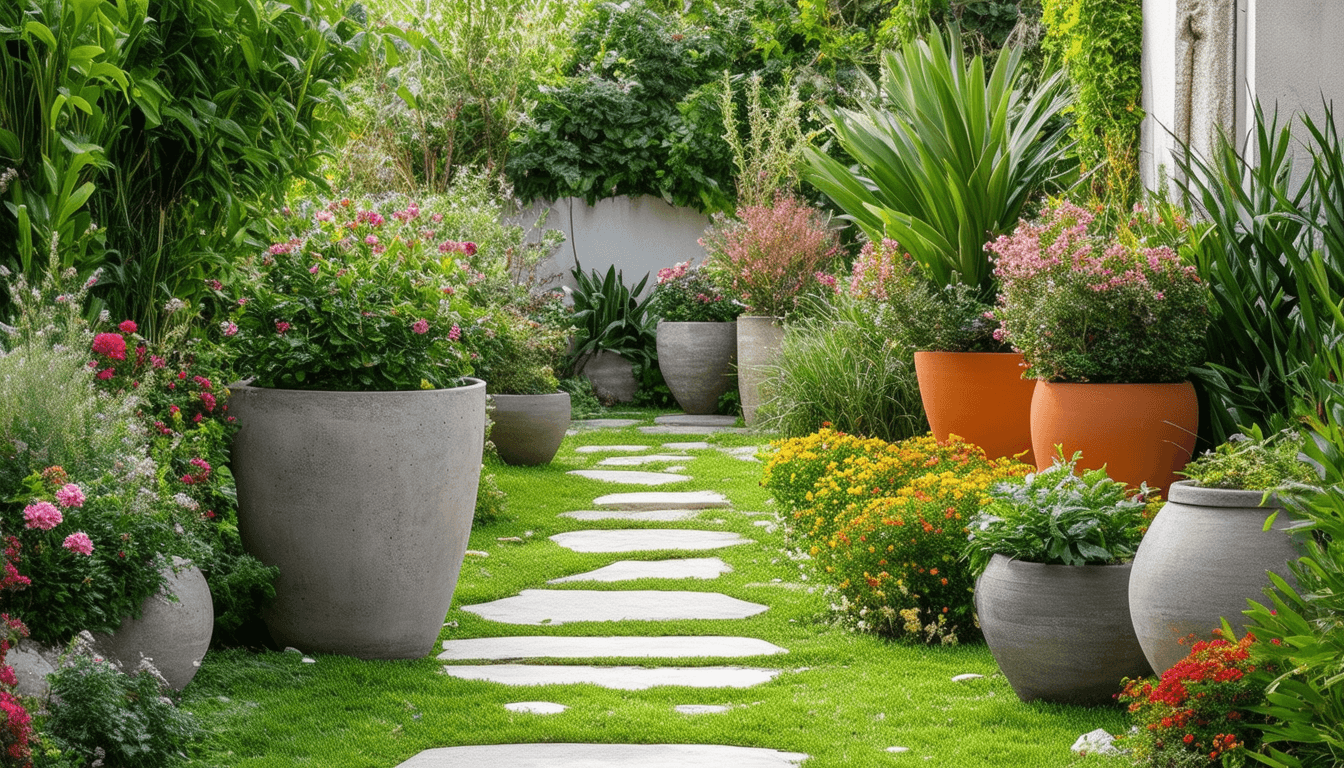
Why pots are the water-wise way to garden in South Africa
The short answer
Growing in pots is one of the simplest ways to cut garden water use in South Africa. Every litre goes straight to the roots instead of soaking into a bed, and you can see exactly when a pot needs water by pushing a finger 2 to 3 cm into the mix. A thick-walled concrete pot buffers the soil against heat so it dries slower than a thin black plastic pot, and a pot can be moved into afternoon shade when a heatwave or restrictions bite. A moisture-holding potting mix, a layer of pebbles or bark on the surface, a drip tray to catch what runs through, and tough plants like spekboom, jade plant and lavender finish the job. Together these mean a patio of pots can carry through a dry month on a fraction of what a lawn drinks.
Most of us in South Africa have lived through at least one serious water scare. Cape Town's Day Zero countdown in 2018, the Nelson Mandela Bay dams nearly running dry, the rolling Gauteng restrictions when Rand Water cannot keep the reservoirs full through a hot week. In each case the garden was the first thing people were told to stop watering, and the lawn and the herbaceous border took the hit. The pots on the patio, oddly, did fine.
That is not luck. A plant in a pot lives in a small, controlled world, and a small world is easy to look after with very little water. Here at the nursery in Centurion our display pots run through January heat on a watering can, while the open beds around them need a hose. This is why we keep telling people who are worried about water to garden in containers, and how to do it so the saving is real rather than theoretical.
Every litre lands where the roots are
When you water a bed, a good part of the water goes where there are no roots at all. It spreads sideways into the paths, drains down below the root zone, and evaporates off a wide surface before the plant can use it. A pot has a fixed volume of soil and a fixed set of roots in it. The water you pour in either gets used or drains out the bottom, where a saucer can catch it, so almost none is wasted on soil that has nothing growing in it.
It also takes the guessing out. The RHS advice on watering plants wisely is to water containers when the mix is dry 2 to 3 cm below the surface and to water slowly and thoroughly rather than little and often. In a pot you can check that with a finger in ten seconds. In a bed you are usually watering the whole thing because one corner looked dry, which is where the waste creeps in.
A concrete pot keeps its cool
Not all pots save the same amount of water, and the material matters more than most people think. A thin black plastic pot in full sun heats up quickly, and hot soil loses water fast. The North Carolina State Extension handbook chapter on plants grown in containers notes that porous unglazed clay loses moisture faster than non-porous materials, and that small, dark containers in sun need watering most often. Terracotta wicks water straight out through its walls. Plastic bakes.
Concrete sits in a comfortable middle. Our pots are hand cast from a fibre-reinforced mix and the walls are thick, so they take a long time to warm up on a January afternoon and a long time to cool at night. The soil inside stays at a steadier temperature and dries more slowly. On a hot day you can put your hand on one of our pots and one of the black nursery bags the plants arrive in and feel the difference immediately. The bag is hot to the touch. The concrete is merely warm. That gap is water you did not have to add.
You can move a pot out of the worst of it
A bed is where it is. When the Highveld hits 35 degrees in a dry October, or the berg wind strips the Cape for three days, plants in the ground have to endure it and you have to water them through it. A pot can simply be shifted. Pull it a metre back under the eaves for the afternoon. Group several pots together so they shade each other's sides and create a small humid pocket. Move the herbs closer to the kitchen door where you will actually notice them wilting. Concrete pots are heavy, so we tend to move ours at the start of summer and again at the end rather than daily, but even that seasonal shuffle cuts watering noticeably. Our Lightweight Décor range exists for the people who want to move things more often.
The mix does half the work
Garden soil dug into a pot compacts and either sheds water off the top or turns to mud that suffocates roots. A proper outdoor potting mix built on composted bark holds water like a sponge while still letting air through, and that balance is what keeps a plant going between waterings. We fill our own display pots with Bark Outdoor Potting Soil and add a few handfuls of Bark Compost for anything hungry. For succulents and aloes the opposite is true, they want to dry out quickly, so use a gritty Succulent Mix and water far less.
One thing catches people out. If a pot has been allowed to dry completely, the mix shrinks away from the sides and water runs straight down the gap and out the bottom without wetting the root ball at all. The plant looks watered and is not. We wrote about this in why pot plants dry out, and the fix is to stand the pot in a tray of water for half an hour so it soaks up from below.
Mulch the surface, even in a pot
Bare potting soil in the sun loses a surprising amount of water straight to the air. The RHS guide to mulches and mulching is written for beds but the principle carries over exactly. A layer of 3 to 5 cm on the surface keeps the soil cooler, slows evaporation and stops the mix splashing out in a thunderstorm. In pots we like White Pebbles because they look finished, reflect heat rather than absorbing it, and do not blow away. Bark chips work too and break down slowly into the mix. Either way, leave a small gap around the stem so it is not sitting against something damp.
Choose plants that shrug off a dry fortnight
The biggest saving of all comes from what you plant. South Africa has an extraordinary range of indigenous plants that evolved for exactly the conditions we are trying to garden through. Spekboom, Portulacaria afra, grows happily in a pot, takes hard pruning and can go weeks without water once established. Jade plant, Crassula ovata, is nearly as tough and flowers in winter when little else does. Aloes, cotyledons, wild garlic, pelargoniums and lavender all suit pots and all want less water than you think.
The catch with these plants is that they hate wet feet more than they hate drought, so the pot must drain and the mix must be gritty. We have a longer note on caring for succulents in pots, and the succulent planters in our range are chosen for wide, shallow shapes that suit them. Mixing a few of these with thirstier plants also lets you water selectively. Give the tomatoes their drink and walk past the aloes.
Catch what falls and what runs through
When the summer storms do arrive, pots are easy to put to work. Stand them where the roof runoff lands for an afternoon and they get a proper soak for free. Whatever drains out of the bottom can be caught in a drip tray and left for the plant to draw back up, which is exactly what you want on a patio anyway to protect the tiles. Grey water from rinsing vegetables or the last of the kettle, once cool, goes straight into a pot without any of the plumbing that a bed would need. None of this is complicated. It just becomes habit once the water is going into something with edges.
Where pots fit in a bigger water-wise plan
We would not suggest paving the whole garden and filling it with containers. Trees, groundcovers and a well-mulched indigenous bed all have their place in a garden that copes with restrictions, and there is more on that in our guide to creating a water-wise garden in South Africa. But the thirsty parts of most gardens, the annual colour, the herbs, the vegetables and the one plant you are sentimental about, do far better in pots when the taps are throttled. You can see them, reach them, water them precisely and move them out of the heat.
The pot itself is the foundation for all of it. A heavy, thick-walled concrete pot keeps the roots cool, holds moisture longer than clay or plastic, and will still be standing when the next restrictions come around. Have a look through our concrete pots, pick the size that suits what you want to grow, and the rest of the water saving follows from there.
Grow more on less water
Thick-walled, hand-cast concrete keeps roots cool and soil moist for longer, so start your water-wise garden with the right concrete pot.
Shop concrete pots →Frequently asked questions
Do potted plants use less water than garden beds?
Generally yes. Water goes only to soil with roots in it, you can see exactly when a pot is dry, and a pot can be moved into shade during heat. A bed loses water to paths, deep soil and a wide bare surface.
Which pot material holds water best in hot weather?
Thick-walled concrete or glazed ceramic. Unglazed terracotta wicks water out through its walls and thin black plastic heats up fast in full sun, so both dry out sooner than a concrete pot of the same size.
How do I know when a pot needs water?
Push a finger 2 to 3 cm into the mix. If it is dry at that depth, water slowly until it runs out the drainage hole. If it is still damp, wait. Wilting in the early morning is a sign of real drought stress.
Should I put pebbles on top of potting soil?
Yes, a 3 to 5 cm layer of pebbles or bark cuts evaporation, keeps roots cooler and stops the mix splashing out in storms. Leave a small gap around the stem.
What are the best water-wise plants for pots in South Africa?
Spekboom (Portulacaria afra), jade plant (Crassula ovata), aloes, cotyledons, wild garlic, pelargoniums and lavender all suit pots and cope with weeks between waterings once established, provided the pot drains freely.

Leave a comment
This site is protected by hCaptcha and the hCaptcha Privacy Policy and Terms of Service apply.