
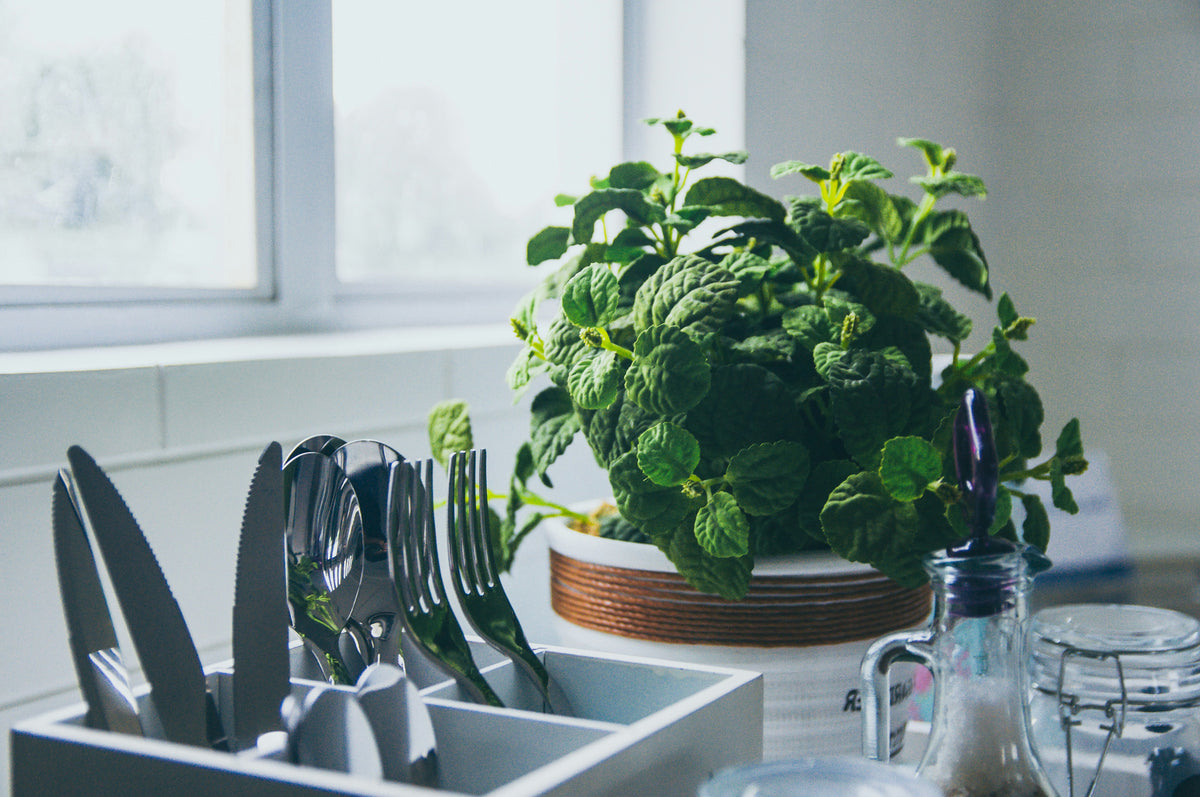
A kitchen herb garden in pots: which pot, which herbs, and how to keep them going
The short answer
A kitchen herb garden in pots works when the container is at least 20 to 30 cm deep, has a real drainage hole, is filled with potting mix rather than garden soil, and stands where it gets six hours of direct sun, which in South Africa usually means a north facing spot or just outside the kitchen door. Keep Mediterranean herbs (rosemary, thyme, sage, oregano) in their own gritty, fast draining pot and water sparingly, and group the thirsty herbs (basil, parsley, coriander, chives) in a deep trough with steady moisture. Mint always gets a pot to itself. Feed lightly, pick often and never take more than a third of a plant at once. Basil dies at the first Highveld frost, coriander prefers winter, and parsley, chives, thyme and rosemary carry on year round.
Most kitchen herb gardens die in the first six weeks, and it is almost never because the person forgot about them. Usually the opposite. The pot was too shallow, the basil and the rosemary were sharing it, the whole thing sat on a windowsill that only got two hours of real sun, and it was watered lovingly every single day until the roots gave up. We see the same story at the nursery all the time, and the fix is mostly about choosing the right container before you buy a single plant.
So this guide starts with the pot. Depth, drainage, where it will stand and what goes in it. Then we get to the herbs themselves, which ones can live together and which need their own space, and how to keep the whole thing going through a Highveld winter or a wet Cape one. If you want the plant by plant detail, our five easy herbs to grow in pots covers that side, and this piece is the one to read first.
Depth first: 20 to 30 cm, not the cute little pot
The single most common mistake is a pot that is too shallow. Herbs look small on the shelf at the garden centre, but most of them root far deeper than you would guess. Basil, parsley and coriander want at least 20 cm of soil to be comfortable. Rosemary, sage and anything that will live for more than one season want 30 cm and will thank you for more. A shallow pot dries out in hours on a hot day, heats up like a frying pan in afternoon sun, and leaves the roots with nowhere to go, so the plant bolts, yellows or simply stalls. If you are choosing between a wide shallow bowl and a narrower deep pot, take the deep one every time. Our size chart lists the internal depth of every pot we cast so you can check before you order.
Drainage, and why we go on about it
A herb pot needs a hole in the bottom. Not gravel in the base of a sealed pot, not a layer of stones, an actual hole that water runs out of. Herb roots sit in the top layer of soil, and if water pools underneath them the roots rot within a week or two and the plant collapses even though the leaves looked fine the day before. Every pot we make is cast with a drainage hole, and we sell drip trays and pot feet separately so the water can leave and the surface underneath stays clean. Indoors, a tray is non negotiable. Outdoors, feet alone are usually enough and they stop the hole sealing against a tile or paving slab.
The soil does the other half of the drainage work. Garden soil in a pot compacts into a brick and holds water badly, so use a proper container mix. Bark Outdoor Potting Soil is what we use for herbs on a stoep or balcony, and it drains fast enough for rosemary while still holding moisture for the basil.
Six hours of sun, honestly counted
Nearly every culinary herb wants at least six hours of direct sun a day, and the kitchen windowsill very often does not deliver that. Stand there at nine in the morning, again at midday and again at three, and see whether the light is actually falling on the sill or just brightening the room. A north facing window in South Africa is the sunny one. East gets gentle morning light, which basil enjoys but rosemary finds thin. South facing sills are shade, however bright they feel.
If the kitchen cannot give you six hours, the answer is not a sadder herb garden, it is a pot just outside the kitchen door. A trough on the stoep or a couple of pots on the paving right by the entrance means you still step out in your socks to pick parsley, and the plants get the light they need. The RHS guide to growing basil puts it plainly: warmth and sun are what basil wants, and it sulks without both.
Two families of herbs, two pots
This is the part that saves the most plants. Herbs split into two rough groups with opposite needs, and they should never share a container. The Mediterranean group is rosemary, thyme, sage, oregano and marjoram. They come from dry, stony hillsides, they want full sun and a gritty, fast draining mix, and the quickest way to kill them is kindness with the watering can. The RHS notes on rosemary are clear that wet roots, especially in winter, are what finish it off.
The thirsty group is basil, parsley, coriander, chives, mint and rocket. These want steady moisture, richer soil and a little afternoon shade in the height of a Gauteng summer. Put them together in one deep pot or trough and water freely. Put the Mediterranean herbs in another pot, mix a couple of handfuls of coarse sand or fine gravel into the potting soil, and water only when the top few centimetres are dry. Mint gets its own pot regardless, because it will spread through anything it shares and choke the rest by Christmas. Our guide to growing food in pots runs through the same idea for vegetables, where it matters just as much.
A trough on the windowsill or by the door
For a real kitchen herb garden, one long trough beats five little pots. It holds far more soil, so it dries out slower and the roots have room to spread sideways. It also lines up neatly along a sill, a balcony rail or the edge of a step. Our Premium Curo trough is the one we plant up most often for this: long, deep enough for parsley and basil, cast from Fibre Concrete Mix so it can stand outside in full sun and frost without cracking or fading, and heavy enough that a summer thunderstorm will not tip it over. Plant the tall herbs at the back, the parsley and coriander in the middle, and let thyme or oregano spill over the front edge in a separate trough of its own if you want the two groups side by side. The rest of the trough collection gives you shorter and longer options for the space you have.
Soil, feeding and the pinch
Fill the pot with fresh potting mix, not last year's tired soil, and settle the plants at the same depth they were in their nursery bags. Water well, then leave them alone for a few days to root in. Herbs do not want heavy feeding, and overfed basil and parsley grow lush and flavourless. A liquid feed at half strength every three or four weeks through summer is plenty for the thirsty group, and the Mediterranean herbs can go the whole season on nothing more than fresh soil.
What they do want is picking. Pinch the growing tips of basil every week and it branches into a bush instead of racing up to flower. Cut parsley and coriander from the outside stems in, never from the centre. Take thyme and oregano as short sprigs from the top and they thicken up. Illinois Extension's page on harvesting herbs gives a good rule of thumb: never take more than a third of the plant at once, and pick in the morning for the best flavour. The kitchen garden that gets used is the one that thrives.
Winter, frost and the herbs that sulk
On the Highveld, the first frost in May will turn basil black overnight, and there is nothing to be done except sow again in September. Coriander, on the other hand, loves our cool dry winters and bolts to seed the moment the summer heat arrives, so grow it from autumn to spring and let it go over in December. Parsley, chives, thyme and rosemary carry on through a Gauteng winter without fuss, and a trough against a sunny north wall is a warmer spot than open paving. In the Cape, the problem is the opposite: months of winter rain that leave Mediterranean herbs sitting wet. Move those pots under an eave and let them dry out between showers. Pots make all of this easy in a way that beds never can, because you can simply pick the plant up and move it. Once your herbs are established, our companion article on growing herbs for tea is the natural next read, because mint and lemon verbena follow exactly the same rules.
Start with two containers. One deep trough for the thirsty herbs you cook with every day, and one pot with grittier soil for the rosemary and thyme. Put them where the sun actually falls, water the two differently, and pick often. Every pot in our herbs and vegetables range has the depth and the drainage hole this guide keeps coming back to, which is really the whole secret.
Deep pots, proper drainage
Every pot in our herbs and vegetables range has the depth and drainage hole your kitchen herbs need, starting with the Premium Curo trough.
Shop herb pots →Frequently asked questions
How deep should a pot be for herbs?
At least 20 cm for basil, parsley and coriander, and 30 cm or more for rosemary, sage and other perennial herbs. Shallow pots dry out too fast and overheat in afternoon sun.
Can I plant rosemary and basil in the same pot?
It is best not to. Rosemary wants dry, gritty soil and full sun, while basil wants steady moisture and richer soil. In one pot, one of them will always be unhappy.
How much sun does a kitchen herb garden need?
Most culinary herbs need about six hours of direct sun a day. In South Africa a north facing window or a spot just outside the kitchen door is usually the best place.
Do herb pots need drainage holes?
Yes. A layer of gravel in a sealed pot does not replace a hole. Water must be able to run out, so use a pot with a drainage hole and stand it on a drip tray indoors or pot feet outdoors.
Which herbs survive winter in pots in South Africa?
Parsley, chives, thyme, rosemary, sage and oregano carry on through a Highveld winter. Basil is killed by the first frost, and coriander actually grows best from autumn to spring.

Leave a comment
This site is protected by hCaptcha and the hCaptcha Privacy Policy and Terms of Service apply.