
Less is more, why one great statement planter beats a dozen small pots
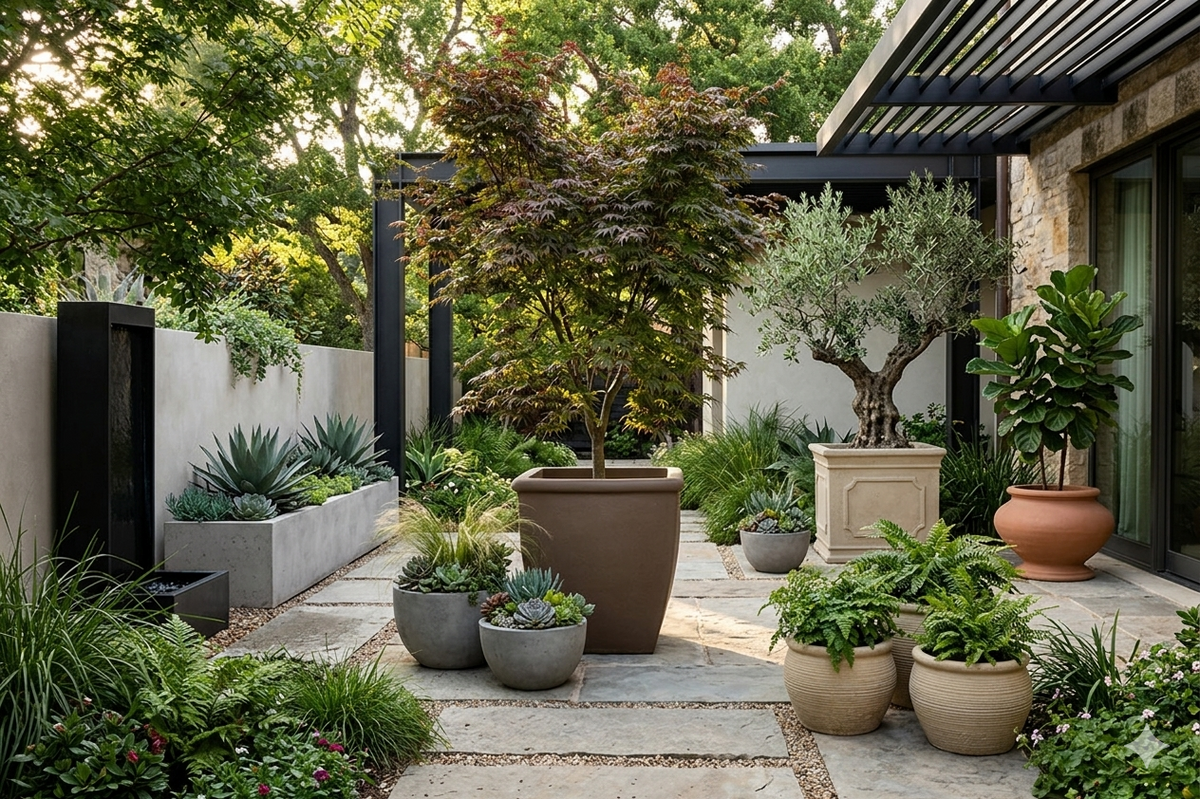
Walk into a garden with a dozen little pots dotted about and something feels restless, even if you cannot say why. Walk into one with a single, beautifully chosen planter holding its own in a corner, and it feels calm and considered. The difference is not money, and it is not more plants. It is editing. One great pot almost always does more for a space than ten small ones fighting for attention.
This is the bit that feels counterintuitive when you first hear it, so let's unpack why it works, and how to choose the one pot that earns its place.
Why clutter reads as busy, not full
A scatter of small pots gives the eye nowhere to rest. Each one is a little event, so the space becomes a lot of small events with no clear focus, and that busyness is what registers as untidy. It also tends to look smaller and more crowded than it is, and it quietly multiplies the work, more watering, more feeding, more dead heading, more things to keep alive. A single strong planter does the opposite. It gives the eye an anchor, a place to land, and everything around it settles into a supporting role.
The power of one focal point
Designers lean on focal points because they organise a space without any effort from the person looking at it. Your eye goes to the strong thing first, then relaxes. In a garden or on a patio, one substantial pot with real presence becomes that anchor. It draws the attention deliberately, which means the plain wall behind it, the paving around it, the smaller things nearby, all stop competing and start framing. You are not adding more, you are giving what is there a point.
How to choose the pot that carries it
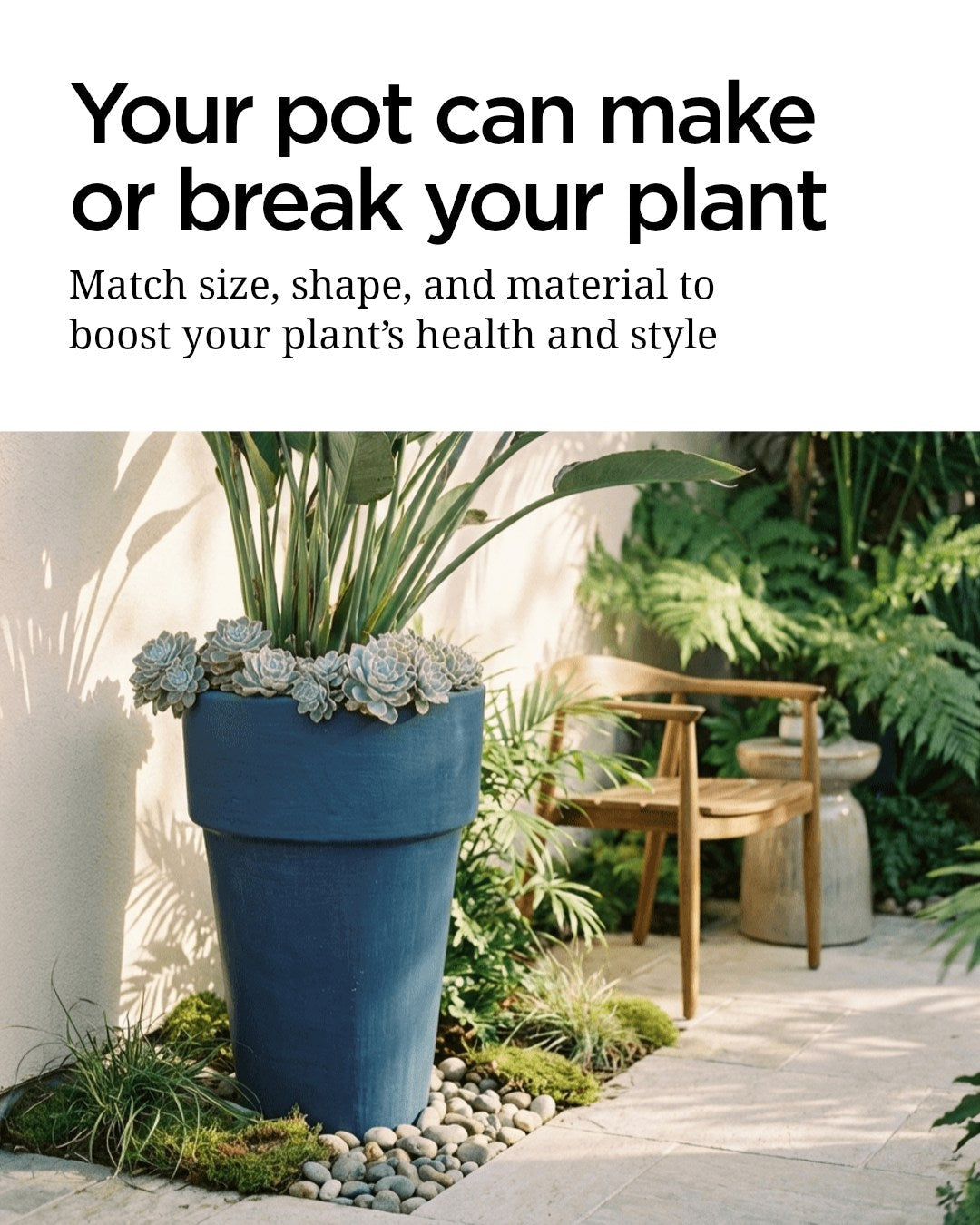
A statement planter earns the title through scale and simplicity, not fuss. Go bigger than feels sensible, because a pot that is slightly too large reads as confident while one that is slightly too small reads as timid. Keep the shape clean and the colour quiet, a strong simple form in a neutral tone has far more presence than something busy or brightly patterned, and it will still look right in five years. Then give it the right spot, flanking an entrance, anchoring the corner of a patio, marking the turn of a path, or sitting where it frames a view. Our feature pots and larger pots are chosen with exactly this job in mind.
What to put in it
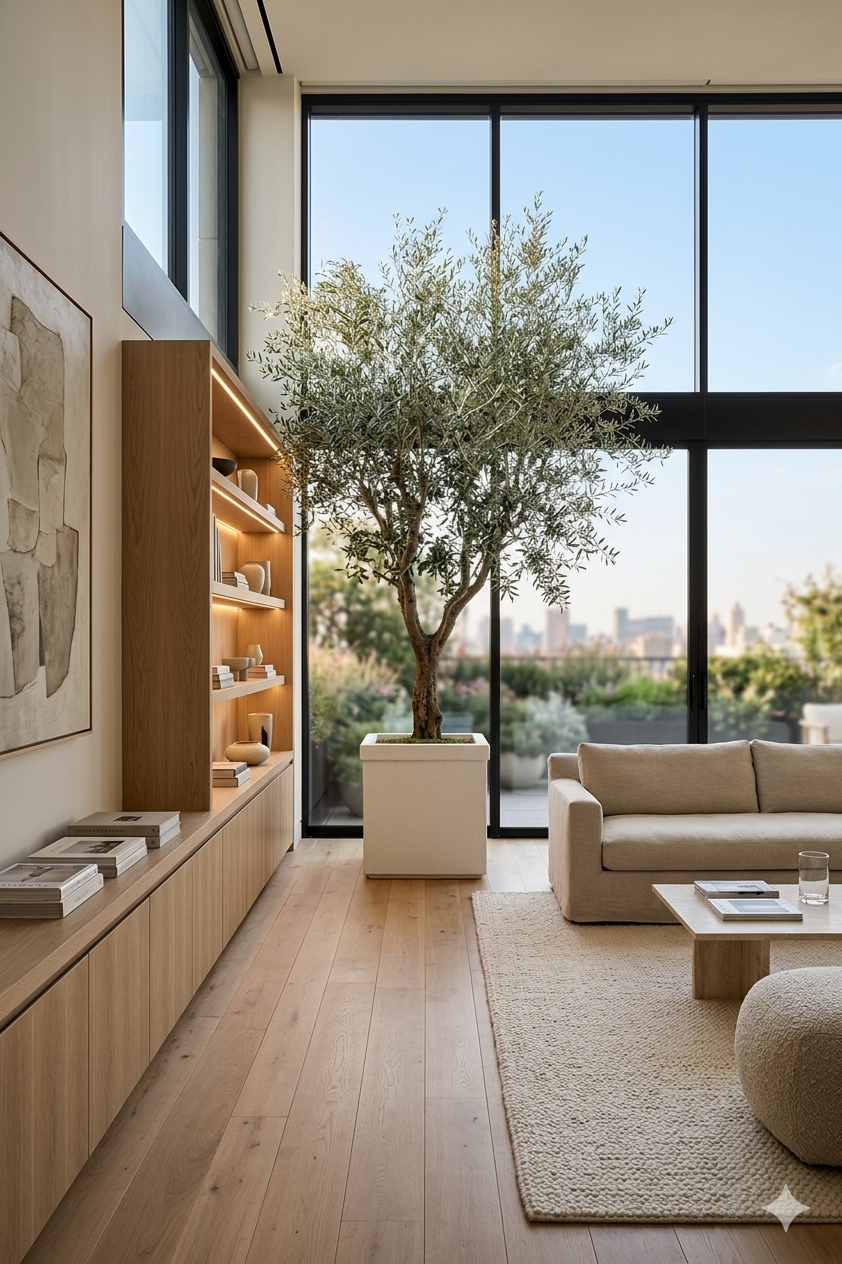
Resist the urge to cram it. A statement planter usually looks best with one confident plant that suits its scale, a small tree, a bold architectural specimen, a single sculptural shrub, or a simple restrained combination that still reads as one gesture rather than a mixed bunch. The pot and the plant should feel like a single object, not a container of odds and ends. If you are unsure what fits a particular pot and spot, which pot suits your plant and space walks through matching the two.
Have the courage to edit down
Here is the practical move most people skip. Before you buy anything, take things away. Clear out the tired little pots, the impulse buys that never thrived, the odds and ends that accumulated over the years. Give the space some breathing room. Very often you will find it looks better already, and then one considered planter is all it needs to feel finished. Negative space is not empty space, it is what lets the good things stand out.
If this way of thinking clicks, our guide to styling a garden with pots shows how to hold the same calm when you do want a small grouping, and how to make a small garden look bigger leans on exactly this less is more thinking to open a space up.

Leave a comment
This site is protected by hCaptcha and the hCaptcha Privacy Policy and Terms of Service apply.