
Fibre concrete vs terracotta and clay pots: which is better for South Africa?
The short answer
Terracotta is cheap, breathes through its walls and ages beautifully, which makes it a good choice for small indoor pots, herbs on a kitchen sill and plants that hate wet feet. Outdoors in South Africa it struggles. Its porous walls soak up water that freezes on Highveld winter nights and flakes or cracks the pot, it dries out in a single hot afternoon, and it chips easily. Fibre concrete is ordinary concrete with fine fibres mixed through it so the pot resists cracking, handles frost, full sun and thunderstorms, and keeps soil cooler and moister for longer. It costs more upfront and weighs more, so plan where a big pot will stand before you fill it. For anything large, permanent or in full sun, fibre concrete is the better long-term buy.
We make concrete pots, so you might expect this to be a one-sided piece. It is not, because we also keep terracotta at home and there are jobs it does better. The point of comparing the two is to help you put the right pot in the right place, and the honest answer is that a South African garden usually needs some of each. What follows is what we have learnt from casting pots and watching them live outdoors through Highveld frost, summer hail and Cape winter rain.
If you have not read it yet, our concrete pots explained guide covers what our pots are made of and how to care for them, and we have a broader piece comparing concrete, plastic and fibreglass pots. This one narrows the question to concrete against clay.
What terracotta gets right
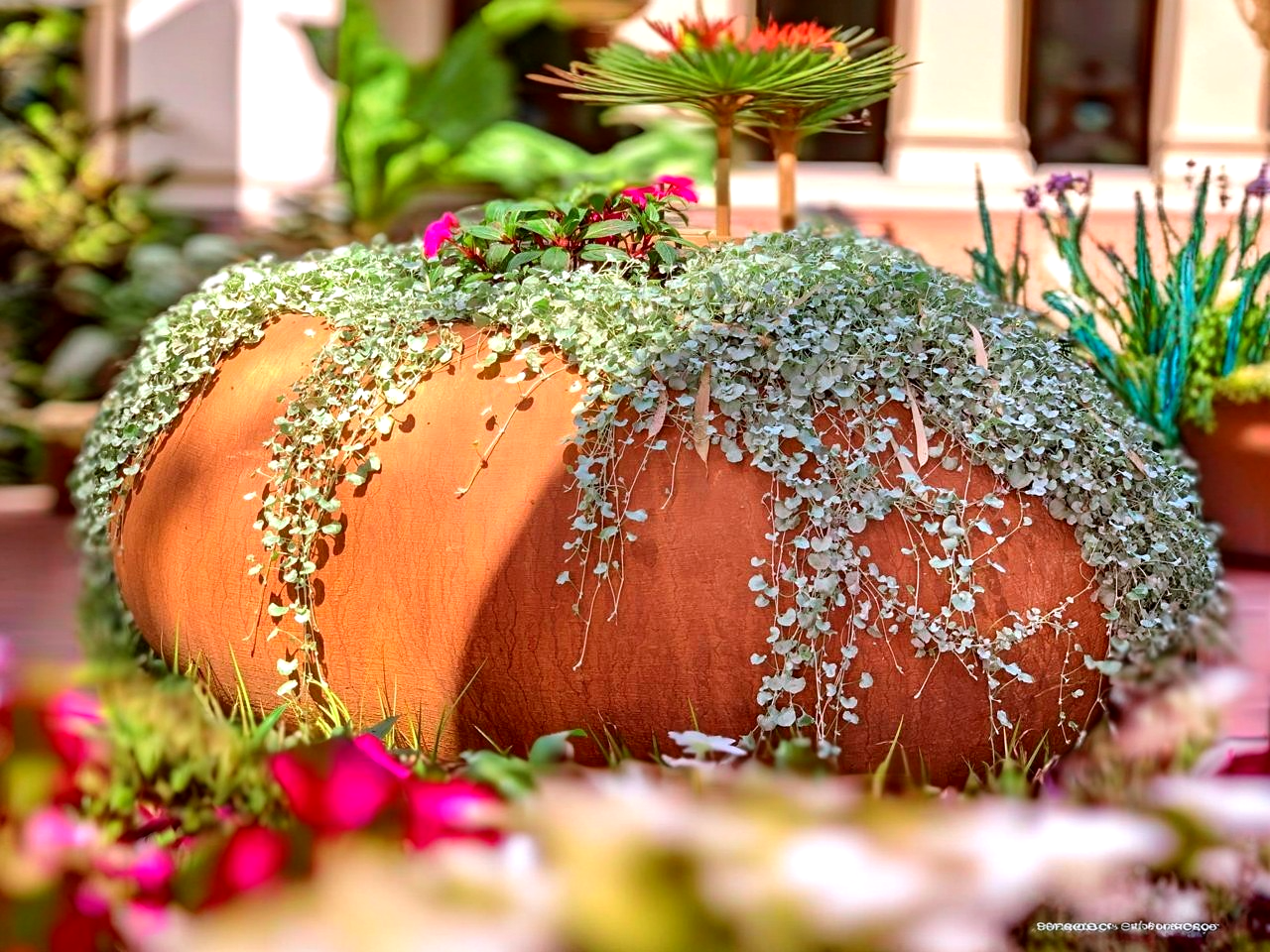
Terracotta is fired clay, unglazed, and its great quality is that it breathes. Water and air move through the walls, so the soil inside dries evenly and roots get oxygen from the sides as well as the top. For anyone who tends to overwater, that is a real safety net. A pelargonium or a rosemary bush in a clay pot is very hard to drown. Terracotta is also cheap, widely available in small sizes, and it weathers into a soft, chalky patina with a bloom of salts and a bit of moss that many people love. Nothing else looks quite like an old clay pot on a Karoo stoep.
Indoors it is excellent. On a windowsill or a shaded patio the breathability keeps herbs and succulents healthy, and the light weight makes it easy to move a pot to the sink for watering. For seed trays, cuttings and small plants that will be repotted within a year it is hard to beat on price.
Where terracotta struggles in South Africa
The same porous walls are the problem outdoors. In the Highveld winter a terracotta pot absorbs water from the soil inside it and from dew, and on a night that drops to minus three, which Centurion, Johannesburg and Bloemfontein manage regularly in June and July, that water freezes and expands. The RHS page on frost damage notes that terracotta containers can be cracked by frost, and we see it every spring: a flake off the rim, a hairline crack down one side, or a pot that has simply split in two around a rootball frozen solid. The finer and cheaper the clay, the sooner it happens.
In summer the porosity works against you in a different way. The North Carolina State Extension handbook on growing plants in containers groups clay and terracotta as porous materials that lose moisture faster and need more frequent watering than non-porous pots. On a 34 degree January afternoon a small terracotta pot in full sun can go from damp to dry between breakfast and supper. Add the chipping that happens every time a pot is knocked with a rake or a wheelbarrow, and the fact that large terracotta pots are rare and expensive here, and you can see why most of the clay pots in South African gardens are small and living in the shade.
What fibre concrete actually is
Concrete is cement, sand and stone bound together. On its own it is enormously strong under compression, which is why it holds up buildings, but it is brittle when pulled or bent, and a pot wall is constantly being pulled by expanding roots, wet soil and temperature swings. Fibre concrete solves this by mixing fine fibres through the wet concrete so that when a micro-crack starts, the fibres bridge it and stop it spreading. The engineering literature on fibre-reinforced cement composites describes decades of this in civil construction, where fibres are added precisely to improve toughness and control cracking.
Our pots are hand cast from our own Fibre Concrete Mix, which is exactly this idea applied to a garden pot. The fibres are invisible in the finished surface but they are what let us cast a thinner, lighter wall than plain concrete would allow while ending up with a pot that is stronger, not weaker. It is why we are comfortable saying our pots are made for full sun, rain and frost rather than hoping they survive them.
Sun, rain and frost, side by side
Frost is where the two materials separate most clearly. Concrete absorbs far less water than terracotta and the fibre reinforcement stops the small amount that does freeze from opening a crack. We leave planted concrete pots out through every Highveld winter without wrapping them. The pot that does crack in frost is almost always one that was filled with wet clay soil right to the rim with no drainage, which is why we wrote how to plant a concrete pot to reduce cracks.
In summer the thick concrete wall acts as a buffer. It warms slowly through the day and cools slowly at night, so the soil inside stays at a steadier temperature and dries more slowly than in either clay or thin plastic. Hail bounces off it. Thunderstorm rain does not soak the walls. UV does not fade or embrittle it the way it does plastic. A concrete pot in the same spot as a terracotta one will need watering perhaps half as often in January, and it will not be in pieces by August.
Weight, and the honest part about it
Concrete is heavy. Fibre reinforcement lets us cast walls thinner than solid concrete, but a large pot is still a two-person lift when empty and immovable when full. That weight is a virtue in wind and a nuisance if you like rearranging. The practical answer is to decide where a big pot will live, stand it on concrete pot feet so it drains and does not stain the paving, put a layer of Pot Filler in the base, and only then fill and plant it. The pot filler is broken concrete, so it drains freely and means you buy less potting soil to fill the space no roots will reach.
For balconies, rooftops and anyone who moves pots seasonally, our Lightweight Décor range gives the concrete look at a fraction of the weight. Terracotta, to be fair, wins on portability in the small sizes, which is another reason it suits herbs and houseplants.
Watering habits change with the pot
Because terracotta wicks moisture out through its walls, plants in it need checking daily in summer and can dry out in a day if you miss them. Concrete holds moisture longer, so the risk shifts the other way: overwatering. The fix is simple. Make sure every concrete pot has a clear drainage hole, lift it on feet, use a free-draining bark potting mix, and water only when the top few centimetres are dry. A drip tray under a pot on a patio catches the run-through and protects the tiles. For succulents and aloes in concrete, use a gritty mix and water sparingly, because the pot will not help you dry the soil the way clay does.
How each one ages
Terracotta ages quickly and, at first, beautifully. The white bloom of salts, the green of moss on the shaded side, the softening of the colour all happen within a couple of seasons. The trouble is that the same process that gives the patina is the surface slowly breaking down, and after a few frosty winters the flaking starts. Concrete ages more slowly. New pots have a slightly chalky, uniform look which weathers over a year or two into a softer grey with faint tide marks where water has run. Moss and lichen take to it in shade. It can also be painted or sealed if you want a colour, and the finish will still be there in a decade. Neither material looks better with a rim missing, but only one of them keeps its rim.
What they cost over ten years
A terracotta pot is cheaper on the day. A fibre concrete pot of the same size costs more, sometimes a good deal more in the larger sizes. Over a decade outdoors on the Highveld the picture changes, because the terracotta pot is likely to be replaced two or three times through frost damage and chipping, and each replacement means repotting a plant that had settled. A concrete pot bought once is still there, and the plant in it has not been disturbed. At the coast, where frost is not a factor, terracotta lasts longer and the gap narrows, though the fast drying in summer and the chipping remain. If you are buying a big statement pot, the maths favours concrete almost everywhere in the country.
Which to choose for which job
Use terracotta for small pots indoors, for herbs and succulents on a shaded sill, for anything you repot every year or two, and for plants that hate wet feet if you know you are heavy-handed with the watering can. Use fibre concrete for anything that will stand outdoors year round, for large pots and trees, for full sun positions, for windy corners where weight helps, and for the pot that anchors a view and has to look right for twenty years. Our large garden pots guide helps with sizing if you are going big.
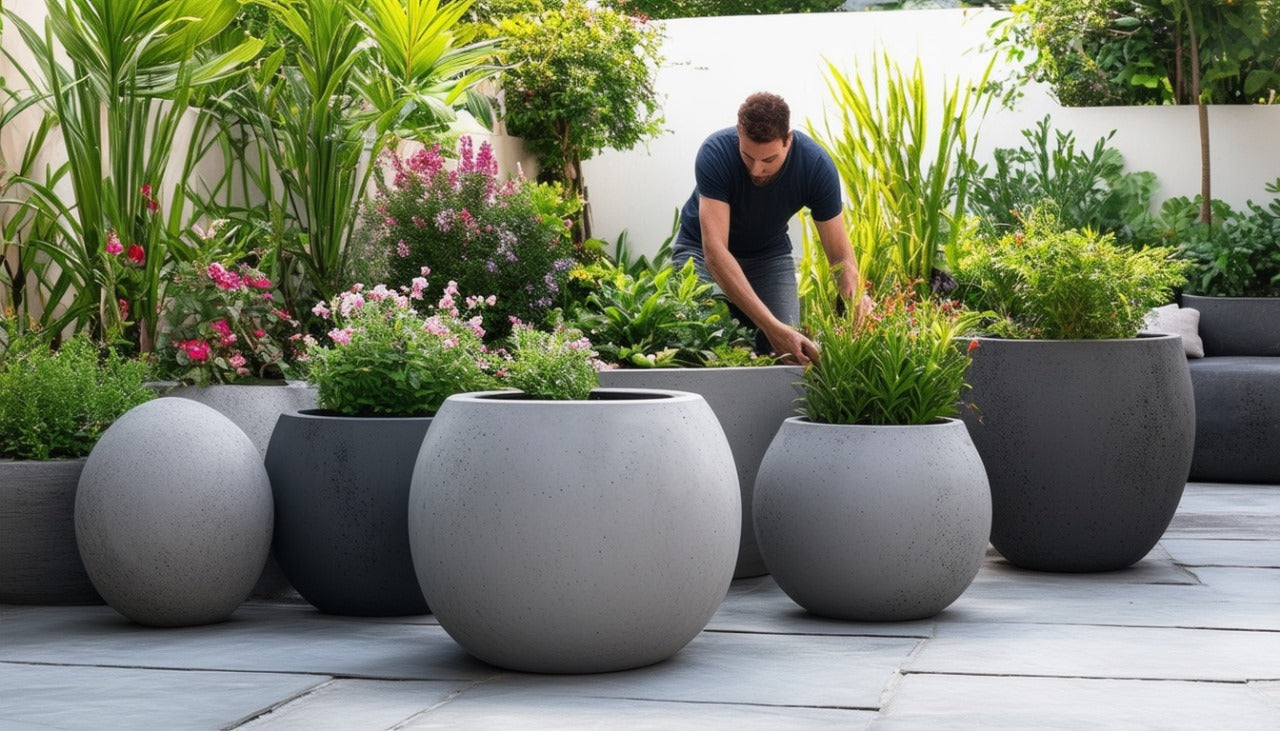
Most gardens end up with both, the clay pots clustered near the kitchen door and the concrete ones holding the structure of the garden. If you are ready to put something permanent in the ground, have a look through our concrete pots. Every one is hand cast from our Fibre Concrete Mix and built for exactly the frost, sun and storms that this country throws at a garden.
Built for frost, sun and storms
Hand cast from our Fibre Concrete Mix and left outdoors through every Highveld winter, each one is a concrete pot made to last decades.
Shop concrete pots →Frequently asked questions
Do terracotta pots crack in frost?
Yes. Unglazed terracotta absorbs water, and when that water freezes on a cold Highveld night it expands and flakes or cracks the pot. Fibre-reinforced concrete absorbs far less water and its fibres stop small cracks spreading.
What is fibre concrete?
Ordinary concrete with fine fibres mixed through it. The fibres bridge micro-cracks so the pot resists cracking and can be cast with thinner, lighter walls than plain concrete while being stronger.
Do concrete pots dry out slower than terracotta?
Yes. Terracotta wicks moisture out through its porous walls and can dry in a day in summer. Concrete is far less porous and its thick walls buffer heat, so the soil stays moist longer and needs watering less often.
Are concrete pots too heavy to move?
Large ones are heavy once filled, so place them before planting and stand them on pot feet for drainage. A lightweight decor range gives the same look for balconies, and small terracotta stays the easier choice for portable herb pots.
Which is better for full sun in South Africa, clay or concrete?
Fibre concrete. It does not fade or embrittle in UV, keeps roots cooler, holds moisture longer and shrugs off hail and frost. Terracotta in full sun dries out quickly and is best kept for shaded or indoor spots.

Leave a comment
This site is protected by hCaptcha and the hCaptcha Privacy Policy and Terms of Service apply.