
Concrete garden furniture in South Africa: an honest buying guide
The short answer
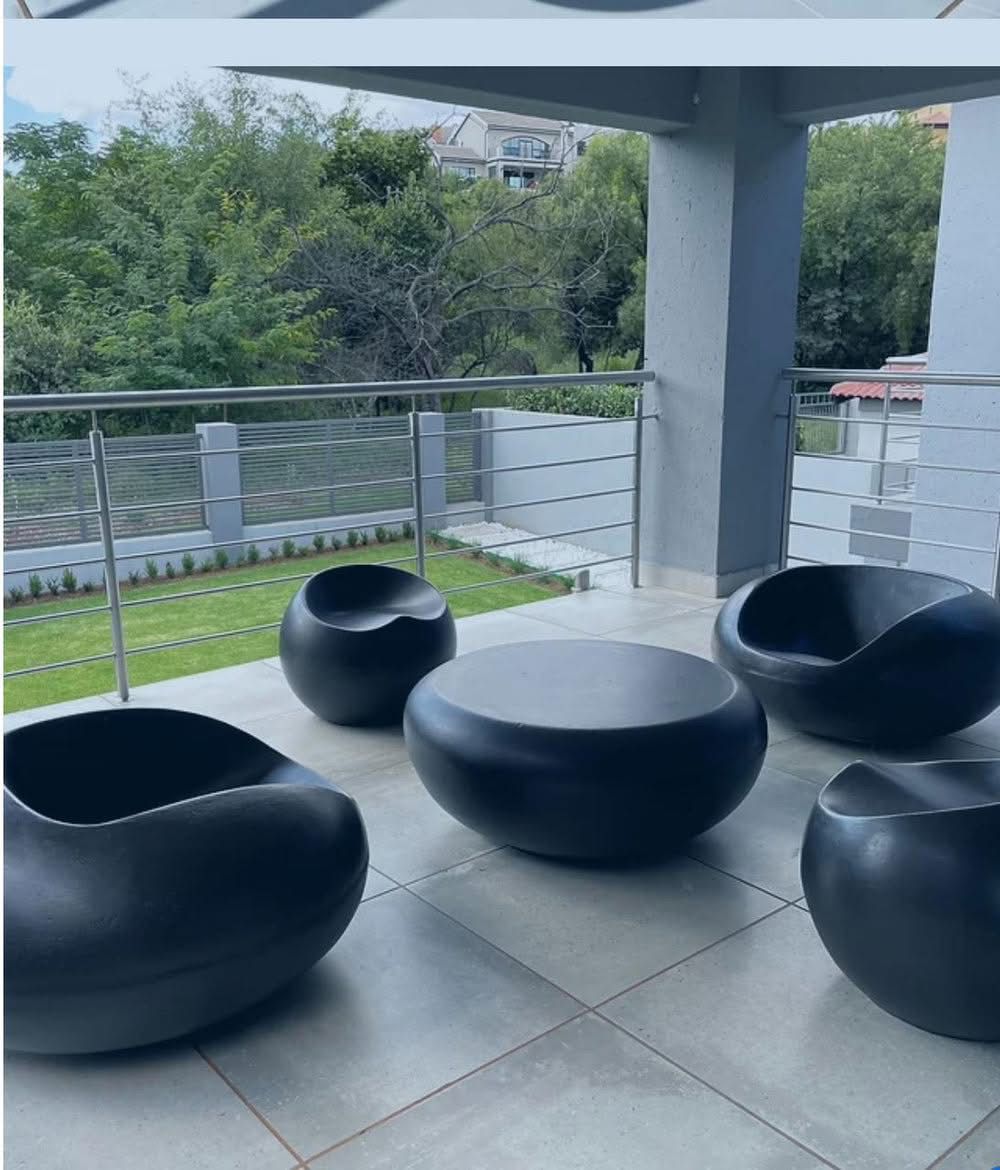
Concrete garden furniture suits South African gardens because it does not rust, rot, fade or blow over, and it never needs to be carried indoors for winter. Hand-cast pieces like a pair of Ball or Bubble Chairs with a round Coffee Table make a classic conversation set, benches work along walls and pools, a Concrete Pool Lounger lives poolside, and concrete balls and mask sculptures act as accents. The seats are firm, so add outdoor cushions you can hose down. The honest trade-off is weight: decide on a level, permanent spot before delivery, because this is not furniture you move on a whim. Care is a rinse and mild soap, never a pressure washer up close, and a soft patina over the years is normal. Choose one chair and a table for a small patio, and benches, a lounger and accents to anchor a big lawn.
Most garden furniture in South Africa has a short life. Wooden benches grey and split after a couple of Highveld summers, steel rusts through where the paint chips, and the plastic set from the hardware store ends up in the pool every time the wind picks up. If you have replaced a patio set more than once, you already know the problem. Concrete is the slow, stubborn answer to it.
We cast concrete furniture by hand in Centurion, and we have done it for long enough to know exactly what the material is good at and where it asks something of you. This guide is the honest version: what pieces exist, how people actually use them, how to make them comfortable, and the one big trade-off you need to plan around before anything arrives at your gate.
Why concrete suits a South African garden
Start with the weather. Our sun is brutal on anything with a painted or oiled surface, our summer thunderstorms arrive sideways, and on the Highveld the frost gets into every joint and crack over winter. Concrete does not mind any of it. There is nothing to rust, nothing to rot, no cushion frame to warp and no need to drag anything into the garage in June. Our pieces are cast from our Fibre Concrete Mix, which is fibre-reinforced and noticeably stronger and more durable than ordinary concrete, made for full sun, rain and Highveld frost, indoors or out.
Then there is the wind. Anyone gardening in the Cape or on an open estate knows the sound of a plastic chair skittering across the paving at two in the morning. Concrete stays exactly where you put it. That same quality is quietly useful for security too. A concrete bench is not something anyone lifts over a wall on a Friday night, so it is one of the few things you can leave in a front garden or beside a boundary without a second thought.
The pieces, and how people actually use them
The classic set is a pair of chairs with the round coffee table between them. Our Ball Chair and the Bubble Chair are the two shapes people choose from, and the round Coffee Table at 900 x 900 x 380 mm sits at just the right height for coffee, a glass of wine or a lazy Sunday board game. Chairs and tables are sold separately, so you can do two chairs and a table, or four chairs around it, or one chair on its own in a quiet corner where you like to sit and watch the birds.
Benches are the workhorses. They run beautifully along a wall, under a pergola, at the end of a pool or beside a front door where people wait for the gate. The Concrete Table is for meals and is often paired with benches rather than chairs, which suits a braai crowd where people come and go. The Concrete Pool Lounger, at 1600 x 680 x 540 mm, lives poolside and is meant to be lain on beside the water, not sat on while submerged. Hollow and Solid Concrete Balls from 240 to 500 mm, the Tetwe, Vumba and Zulu mask sculptures and a Bird Bath are the accents that pull a seating area together and make a garden feel finished rather than simply furnished.
Comfort, honestly
Concrete is firm. There is no getting around that, and we would rather say so than have you surprised. The curves of the Ball and Bubble Chairs are shaped to hold you well, and plenty of people sit on them bare, but a good outdoor cushion turns a nice seat into a place you do not want to leave. Choose proper outdoor fabric, the kind made for sun and rain, and you can hose the cushions down with the paving and let them dry in the sun.
In summer the seat warms up in direct sun, so a cushion or a folded throw is welcome in the afternoon. In winter the reverse is true, and a Highveld morning on bare concrete is bracing. Cushions solve both, and you can bring them in when guests leave, which is the only thing about a concrete set that ever needs carrying.
Finishes and matching your paving
Our furniture is cast in a range of finishes: Flinted White, Granite, Rock, Chryso Black, Velvet, Antique Rust, Bronze, Charcoal, Stone, Sage Green and Olive Green. The easy rule is to either match or deliberately contrast. Charcoal or Chryso Black on pale paving reads as sculpture. Stone or Flinted White on dark slate lifts a shady corner. Sage and Olive Green disappear into the planting in the nicest way, which is lovely for a bench you want to feel like it grew there.
If you already have concrete pots, matching the furniture to their finish is the simplest way to make a patio feel designed rather than collected. If you are new to the material, our guide Concrete pots, explained walks through the finishes and how each one ages.
The trade-off: it is heavy, so decide where it lives
Here is the honest part. Concrete furniture is heavy. That weight is exactly what makes it stay put in a Cape wind and survive a boisterous braai, but it also means this is not a piece you shuffle around the lawn on a whim. Decide the spot before it arrives. Walk it, sit in an ordinary chair there for a while, check where the afternoon sun lands and where the sprinkler reaches.
Level ground matters. On paving or a deck built for the load, place it and forget it. On lawn or gravel, firm the ground first, or set a paver under each foot so the piece does not settle unevenly over a wet summer. If it ever does need moving, it is a two or three person job with a trolley, not a quick drag across the grass.
Looking after it
There is very little to do. Rinse it with the hose when you wash the patio, use mild soap and a soft brush on bird droppings or sunscreen marks, and avoid a pressure washer at close range, which can etch the surface. Over the years concrete develops a natural patina, a little softening of the colour and a settled look that we think is the whole point. It is not a defect, it is the material becoming part of your garden. Every piece carries our money-back guarantee and 45-day returns, so you can live with it a while before you decide.
Concrete indoors
A concrete coffee table indoors has become one of our most loved uses. It works beautifully in a living room with a leather couch, or in an entrance hall with a single bowl on top. The only real question is the floor. A concrete slab, tiles on a slab or a solid floor built for the load are all fine. A suspended wooden floor in an older house, or an upstairs flat with a light structure, is a conversation to have with someone who knows the building before you commit.
Small patio or big lawn: choosing the right pieces
On a small townhouse patio, one Ball Chair and the round Coffee Table, or a single bench along the wall, gives you a proper place to sit without eating the whole space. Add a concrete ball or a mask on the wall for character, a couple of pots, and you are done. The trick in a small space is to choose fewer, better pieces and let them breathe.
On a big lawn or beside a pool, concrete earns its keep by anchoring the space. A pair of chairs and the table under a tree makes a destination you actually walk to. Benches at the pool edge and the Pool Lounger beside them give the water a finished edge. Scatter two or three balls of different sizes in a bed and the whole garden feels composed. Whatever the size of the garden, sketch the spot first, measure twice and let the piece settle in for a lifetime.
If you are ready to stop replacing garden furniture every few summers, have a wander through the concrete furniture range and pair it with a few concrete pots in a matching finish. Then pick the spot, and let it stay there.
Furniture that stays put
Pick your spot, then pick your piece from our hand-cast concrete furniture range.
Shop concrete furniture →Frequently asked questions
Is concrete garden furniture comfortable?
It is firm, like a stone bench, though the curved Ball and Bubble Chairs hold you well. Most people add outdoor cushions, which also keep the seat cooler in summer and warmer on a frosty morning.
Does concrete outdoor furniture crack in frost?
Well-cast concrete furniture is frost-safe. Ours is made from a fibre-reinforced Fibre Concrete Mix designed for full sun, rain and Highveld frost, and it can stay outside all year.
How do you clean concrete garden furniture?
Rinse it with a hose and use mild soap and a soft brush for marks. Avoid pressure-washing at close range, which can etch the surface. A gentle patina over time is normal and does no harm.
Can I move concrete furniture once it is in place?
Yes, but it is heavy, so it is a two or three person job with a trolley rather than a quick drag. Choose a level, permanent spot before delivery so you rarely need to.
Can concrete furniture be used indoors?
Yes. A concrete coffee table works well indoors on a concrete slab, a tiled floor or a solid floor built for the weight. Check a suspended timber floor or an upstairs flat with someone who knows the structure first.


Leave a comment
This site is protected by hCaptcha and the hCaptcha Privacy Policy and Terms of Service apply.