
Concrete pots, explained: the honest guide to read before you buy
The short answer
Concrete pots are one of the best long-term choices for South African gardens. A hand-cast pot made from fibre-reinforced concrete handles full sun, summer thunderstorms and Highveld frost without fading, warping or blowing over, and it insulates roots against heat and cold. Cracking is rare and almost always caused by waterlogged soil freezing and expanding, so a clear drainage hole, pot feet and a free-draining mix matter far more than the weather itself. Concrete is heavy, which is exactly why it stays put in wind, so choose the spot first and fill the pot in place. Sit it on a drip tray to protect paving and floors, brush off any white bloom that appears on new concrete, rinse it now and then, and it will outlast most of what you plant in it.
If you have been circling a concrete pot for a while, picking it up in your head, putting it back down, wondering whether it will crack in the first frost or whether you will ever be able to move it again, this guide is for you. We cast concrete pots by hand in Centurion and we have answered these questions across the counter more times than we can count. So here is everything, in one place, in plain language.
Some of it will sound like a sales pitch, because we genuinely believe concrete is the best material for a serious garden pot in this country. But we have also tried to be straight about the trade-offs, the weight, the white bloom, the planning it asks of you. A good pot is a long relationship. You deserve to know what you are getting into.
What a hand-cast concrete pot actually is (and what Fibre Concrete Mix means)
A hand-cast pot starts as a mould. We mix the concrete, pour or pack it into that mould, let it cure, then strip the mould away and finish the surface by hand. Nothing is spun out of a machine in seconds. It is a slower process, and it is why two pots in the same finish will never be perfectly identical. That small variation is the charm of the thing.
The mix itself is what we call our Fibre Concrete Mix. Ordinary concrete is strong when you squash it but comparatively weak when you bend or stretch it, which is exactly what happens to a pot wall when soil swells or a wheelbarrow bumps it. We add fibres throughout the mix so the concrete is reinforced in every direction, not just where a steel bar might sit. The result is noticeably stronger and more durable than ordinary concrete, and it lets us cast a pot that is tough without being clumsy. It is made for full sun, rain and Highveld frost, indoors or out. If you are weighing it against terracotta, we wrote a whole piece on why fibre concrete beats clay in our climate.
Will it crack?
This is the question everyone asks, so let us be honest about it. Concrete pots can crack, but a properly made fibre concrete pot almost never cracks because of the weather alone. Frost on the Highveld is real, but a well-drained concrete pot will sit through a July night without complaint. The trouble starts inside the pot, not outside it.
Here is how cracks actually happen. Soil that cannot drain becomes waterlogged. On a cold night that water freezes, and ice takes up more space than the water it came from. It pushes outward against the pot wall from the inside, and it does that every night the temperature drops, until something gives. The same thing happens more slowly with heavy clay soil that swells when wet and shrinks when dry. So the real protection against cracking is not a warmer climate, it is drainage: a clear hole in the base, a layer of Pot Filler or pebbles, a free-draining soil mix, and feet under the pot so the water has somewhere to go. We walk through the whole method in how to plant your concrete pot to reduce cracks, and there is more on weatherproofing in how to choose garden pots that last.
How heavy is it, and is that a problem?
Concrete is heavy. We are not going to pretend otherwise, and we would rather you plan for it than be surprised on delivery day. But weight is also the point. A concrete pot does not blow over in an August wind or a Cape south-easter, it does not skid across the patio in a thunderstorm, and it does not walk off the driveway in the night. Thick concrete walls also buffer the soil against temperature swings, so roots stay cooler on a scorching afternoon and warmer on a frosty morning than they would in a thin plastic pot.
The practical answer is to plan the spot before the pot arrives. Decide where it will live, put it there empty, and fill it in place. A big pot with a base layer of Pot Filler, then soil, then a plant, is not something you want to shift afterwards. If you do have to move a filled pot, empty as much soil as you can, tilt it onto a folded blanket or a piece of old carpet and drag it, or slide it onto a trolley with a helper. Never roll a concrete pot on its rim. For upstairs spaces where every bit of weight counts, our Lightweight Décor range gives you the look at a fraction of the weight, and we go into the specifics in best pots for a balcony or patio.
Drainage, trays and feet
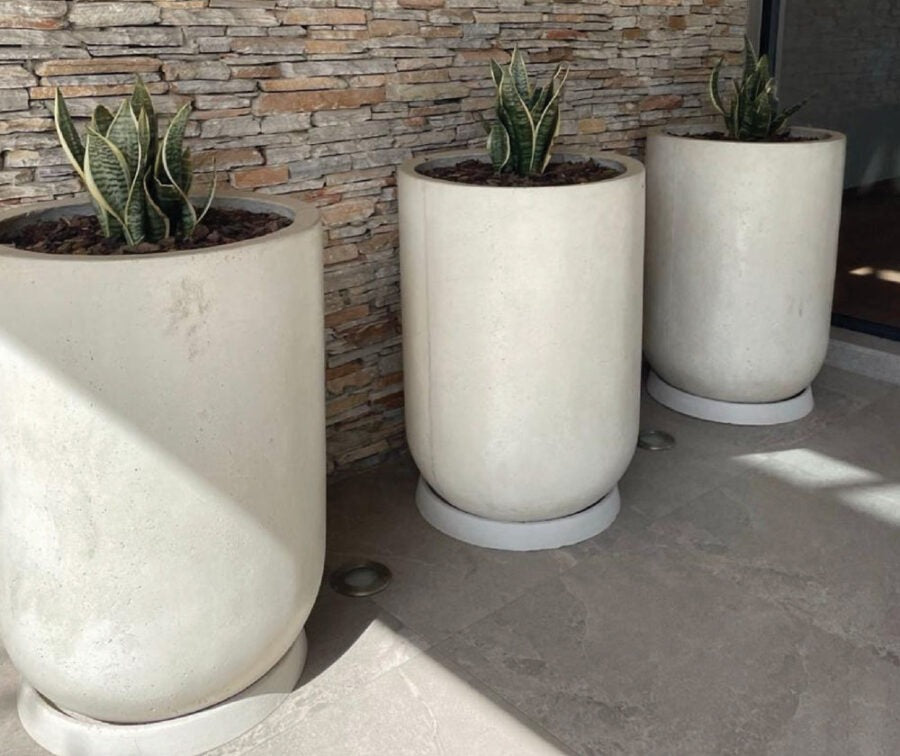
Our pots are sold on their own. The matching drip trays and concrete pot feet are separate, and we get asked why often enough that it deserves a straight answer. Not everyone needs them. A pot standing on gravel in a bed does not need a tray. A pot on a paved stoep, a wooden deck or a tiled floor absolutely does, because concrete pots drain, and the water that comes out will stain paving, rot decking and creep under tiles.
Feet do a different job. They lift the pot off the ground so the drainage hole can breathe. Without them, a pot sitting flat on a smooth surface can seal its own hole shut, and you are back to waterlogged soil and the cracking risk we described above. Feet also stop the base of the pot wicking water up from a wet floor. Our advice is to buy feet for every pot that lives on a hard surface, and a tray for every pot where you care about what is underneath. You will find drip trays in matching finishes and the full set of trays, feet and extras in one place.
Choosing the size
People almost always buy too small. A pot that looks generous in the nursery shrinks the moment it is standing alone on a patio, and a plant that fills it now will be root bound in two summers. Our rule of thumb is to pick the size you think you need, then go one up. For a shrub or small tree, the pot should be at least a third as wide as the plant will eventually be tall, and for a mixed planting, wider than it is deep so the plants have room to spread. For trees specifically, the pot sizes are set out tree by tree in what size pot does a tree need.
The size chart gives you the exact dimensions of every pot from Small to Jumbo, and our biggest stand up to 1800 mm tall. If you find it hard to picture, the free Garden Planner lets you lay out pots and plants in your actual space before you commit. For a deeper dive, read choosing the right size garden pot for your space, and if you are thinking about going big, the large garden pots guide covers everything from filling to positioning. Browse the bigger plant pots and feature pots once you know what you are after.
Finishes and how they age
We finish our pots in a family of colours and textures: Flinted White, Granite, Rock, Chryso Black, Velvet, Antique Rust, Bronze and Charcoal. Some are smooth, some have grain, some are mottled like weathered stone. All of them are meant to age. Concrete picks up a patina over the years, a softening of the colour, a little lichen in a damp corner, a darkening where water runs. We think it looks better at five years than at five days, the way a leather bag does.
One thing to expect on a new pot is a white powdery bloom on the surface, sometimes in patches, sometimes in a faint haze. That is efflorescence, natural salts working their way out of the concrete as it cures and dries. It is harmless. Brush it off with a dry brush, or rinse it and let it dry, and it fades with time. If your pot will sit in full sun, know that pale finishes like Flinted White stay noticeably cooler to the touch than Chryso Black or Charcoal, which is kinder to roots on a west-facing wall. For help putting colours and shapes together, see how to balance pot colours and shapes.
Indoors or out?
Both, happily. Concrete does not mind the cold on a stoep and it does not mind the dry air of a lounge with the heater on. Indoors, the only rule is a tray. Even a plant you water carefully will drain a little, and a concrete pot on a wooden floor or a light tile will leave a ring. Put a matching drip tray under it, or pot feet plus a tray, and you can forget about it.
The other indoor consideration is stairs. A concrete pot that is easy to place on a ground floor patio is a different proposition on the third floor with no lift. For upstairs rooms, balconies and anything you might want to shuffle around when the mood takes you, the Lightweight Décor range is the sensible choice, and our guide to the best pots for a balcony or patio covers weight limits, wind and drip trays.
Concrete against the alternatives
Plastic is cheap and light, and it fades, goes brittle and blows over. Fibreglass looks convincing from a distance, weighs little, and chips to show the fibres underneath. Terracotta breathes beautifully and cracks in the first proper frost. Concrete is heavier than all of them and asks you to plan a little, and in return it stays put, insulates, ages well and lasts. We have laid the whole thing out honestly in concrete vs plastic vs fibreglass pots, including where the alternatives genuinely win.
Furniture and water features too
The same Fibre Concrete Mix that goes into our pots goes into our concrete furniture, so a bench or a coffee table can live outside all year in the same finish as your pots and simply look better as it weathers. We also cast water features, which bring birds and the sound of moving water to a courtyard in a way nothing else does. If a bench is on your list, start with the concrete garden furniture buying guide.
Caring for it over the years
There is not much to it, which is rather the point. Rinse the pot down with a hose when it gets dusty, and use a soft brush and water on any lichen or bloom you would rather not have. Do not use harsh acids or brick cleaners on the surface, they will etch the finish and leave a pale patch that will bother you forever. You do not need to seal or re-seal the pot. The concrete is made to weather as it is, and sealants tend to trap moisture and peel.
In winter, tip the water out of drip trays after rain so the pot is not standing in a puddle that could freeze, and check that the drainage hole is not blocked with roots or compacted soil. Water less in the cold months, because a plant that is barely growing barely drinks. That is the whole maintenance list. Our watering guide goes into the seasonal rhythm in more detail.
What to plant
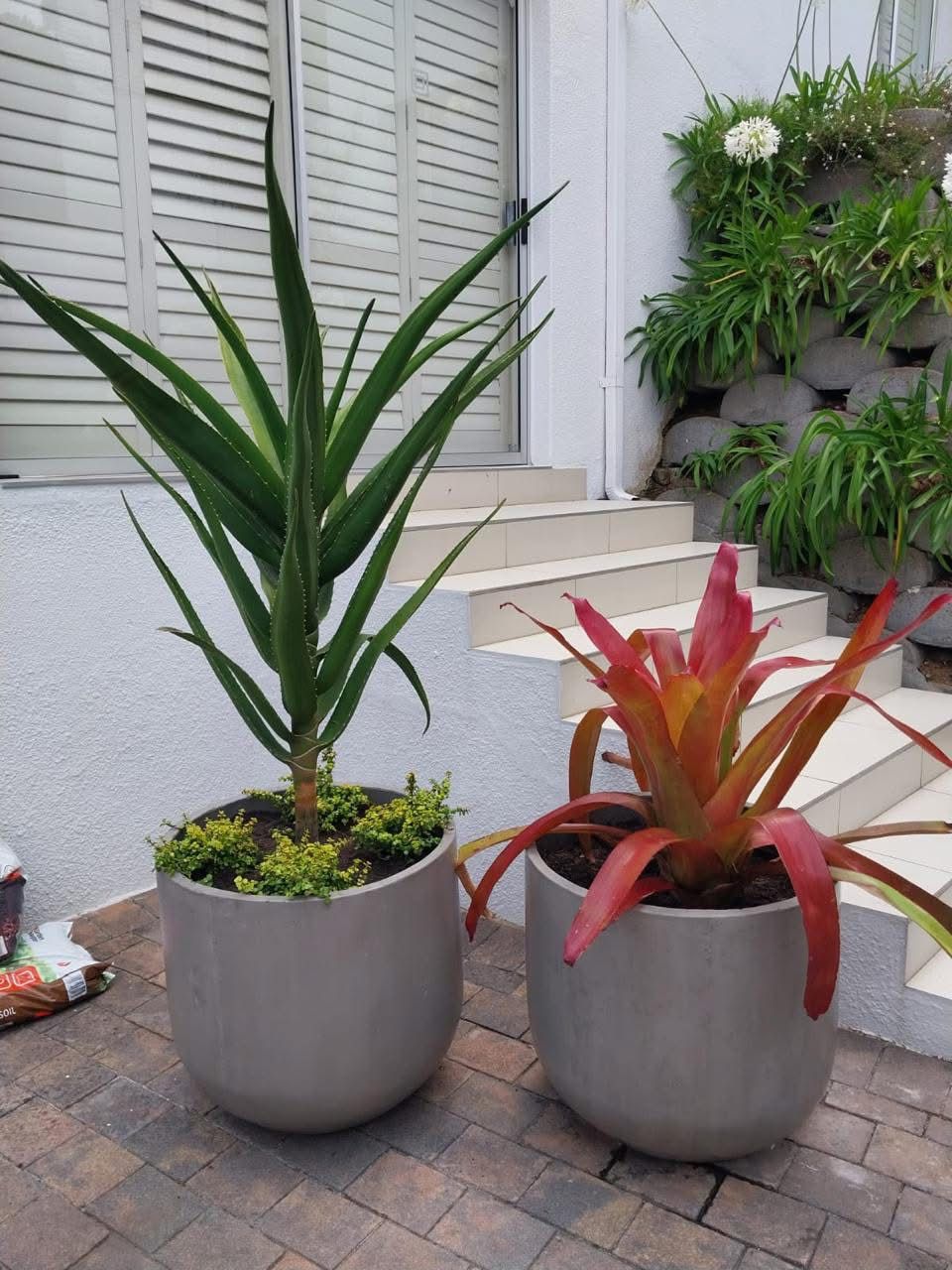
Almost anything, which is why we stock soils and pebbles alongside the pots. A concrete pot in full sun is a natural home for aloes, agaves, lavender, rosemary, olives and citrus, and we have a long list in best plants for full sun pots in South Africa. For kitchen gardens, a trough or big pot of herbs, salad and chillies is one of the most satisfying things you can grow, and the growing food in pots guide will get you started with the right pots for herbs and vegetables. Get the mix right first by reading what is the best type of soil for plants, then match plant to pot with which pot suits your plant and space best. Our plant care guides, the Plant Library and the Plant Compare tool are all free and all there to help you choose well.
So, will it crack? Not if you drain it. Is it heavy? Yes, and that is why it will still be standing after the next storm. Does it need fussing over? Almost none. If that sounds like the kind of pot you have been looking for, have a look through our hand-cast concrete pots, pick a finish you love, and go one size bigger than you think.
Ready for a pot that outlasts the garden?
Browse our hand-cast concrete pots, pick a finish you love, and go one size bigger than you think, your plant will fill it and you will never regret the bigger pot.
Shop concrete pots →Frequently asked questions
Are concrete pots good for plants?
Yes. Thick concrete walls insulate roots against heat and cold, the weight keeps the pot stable in wind, and concrete does not leach anything harmful into the soil. As long as the pot has a clear drainage hole and a free-draining mix, most plants thrive in it.
Do concrete pots crack in frost?
A well-made fibre concrete pot rarely cracks from cold alone. Cracks almost always come from waterlogged soil freezing and expanding inside the pot, so good drainage, pot feet and a layer of Pot Filler or pebbles in the base are the real protection.
How heavy is a concrete pot?
Heavier than plastic, fibreglass or terracotta of the same size, and a large pot filled with soil is a two-person job to move. That weight is what stops it blowing over, so choose the spot first and fill the pot in place. Where weight matters, a lightweight decor range gives the same look at a fraction of the mass.
Do concrete pots need drainage holes?
Yes, every outdoor concrete pot needs a drainage hole. Standing water rots roots and, in winter, can freeze and crack the pot. Stand the pot on feet so the hole stays clear and use a drip tray on paving, decking or indoor floors.
What is the white powder on my new concrete pot?
That is efflorescence, natural salts moving to the surface as the concrete cures and dries. It is harmless and brushes off with a dry brush or rinses away with water, and it fades with time.
Can I use a concrete pot indoors?
Yes. Concrete is happy indoors as long as you place a drip tray underneath to protect wooden floors and tiles from water rings. For upper floors and rooms where you may want to move the pot, a lightweight decor range is easier to live with.
Do concrete pots need to be sealed?
No. A fibre concrete pot is made to weather as it is, and sealants tend to trap moisture and peel. Rinse the pot with water and a soft brush when needed and avoid harsh acids or brick cleaners, which etch the finish.

Leave a comment
This site is protected by hCaptcha and the hCaptcha Privacy Policy and Terms of Service apply.