
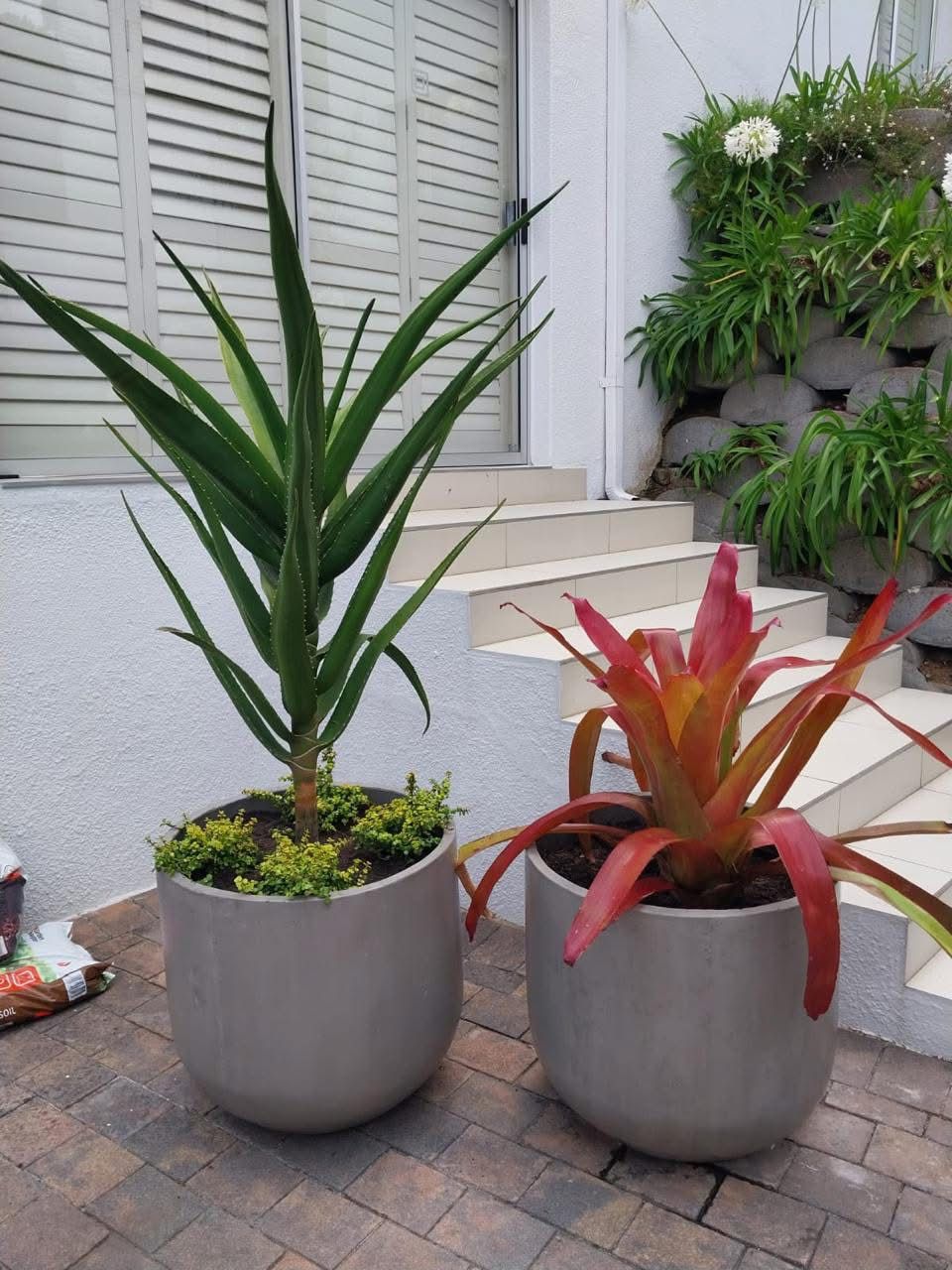
Best plants for full sun in pots in South Africa
The short answer
The best plants for full sun pots in South Africa are the ones that would be happy on a hot, dry hillside anyway: lavender, rosemary and the Mediterranean herbs, agapanthus, aloes such as Aloe arborescens and Aloe ferox, echeverias and other succulents, spekboom, gaura, salvias, indigenous pelargoniums, bougainvillea in a big pot, olive and lemon trees, Strelitzia reginae, gazanias and felicias for colour, and num-num for a clipped shape. Give them well-drained potting mix, water deeply and then let the pot dry out a little before the next drink, and feed the hungry ones like lemons while going easy on the rest. The pot matters too: a big concrete pot in a pale finish keeps roots cooler and dries out slower than a thin plastic one, and a layer of pebbles on top cuts evaporation on a north-facing stoep in January.
There is a particular kind of heat that a north-facing stoep gets in January. The paving is too hot to stand on barefoot by ten in the morning, the wall behind you radiates it back at you all afternoon, and the thunderstorm that was promised for four o'clock drifts past to the east and drops nothing. Put the wrong plant in a pot out there and it will tell you about it within a week.
The trick is not to fight the sun but to choose plants that would be happy on a hot, dry hillside anyway, and South Africa is spoilt for these. Many of the best are indigenous, and the rest come from the Mediterranean or Mexico and feel right at home. Before the plants, a word on the pot, because it matters more than most people think. A thick concrete pot insulates the roots from the swing between a 35 degree afternoon and a cool night far better than thin plastic, which heats right through in minutes. A pale finish such as Flinted White stays noticeably cooler in sun than a dark one. A bigger pot holds more soil and dries out slower. And a layer of pebbles on top shades the soil and cuts evaporation. Get those four things right and every plant below becomes easier. If you want the long version on how concrete behaves in a garden, read Concrete pots, explained.
Lavender, rosemary and the Mediterranean herbs
Lavender is the plant people most want in a sunny pot and most often kill, and it is nearly always kindness that does it. Lavender wants full sun, a gritty free draining mix and a proper drying out between waterings. It comes from rocky, lean ground and hates wet feet, so a pot that drains well is actually a better home for it than heavy Highveld clay. The Margaret Roberts lavender does particularly well here. Rosemary, thyme, oregano and sage want the same treatment, and a wide bowl of mixed herbs at the kitchen door is one of the most useful things you can plant. Trim lavender lightly after flowering and never cut back into the old wood. We have a full guide on how to grow lavender if you want the detail.
Agapanthus
Agapanthus is about as forgiving as a flowering plant gets. Full sun, a good soak once a week in summer, and it rewards you with those blue or white heads from November into January. It is indigenous, it copes with Highveld frost, and it is one of the few plants that actually flowers better when it is crowded in its pot, so resist the urge to divide it every year. The mistake is too much shade. In half shade you get lush leaves and hardly any flowers. The dwarf forms suit a smaller pot, while the big evergreen Agapanthus praecox fills a wide bowl handsomely.
Aloes
If you want a pot plant that flowers in the middle of winter when nothing else does, plant an aloe. Aloe arborescens, the krantz aloe, is a big branching plant with orange candles in June and July that the sunbirds find within days. Aloe ferox, the bitter aloe, is a single stemmed plant that stays neat in a large pot for years and eventually carries a tall spike of red flowers. The many hybrids bred in South Africa give you smaller plants with flowers in yellow, orange, pink and coral over a long season. All of them want full sun and a gritty mix. The one thing to get right is winter water: aloes rot if they are wet and cold, so water sparingly from May to August and make sure the pot drains. Aloe arborescens can be scorched by a hard frost, so on the coldest Highveld sites keep it against a warm wall.
Echeverias and other succulents
Echeverias, crassulas, kalanchoes and their cousins are the easy choice for a shallow bowl in the sun, and they suit a concrete pot better than almost anything, because the pot and the plant both look like they belong on a rocky slope. Water only when the soil is dry right through, then water properly, and keep water out of the rosettes. The honest caveat is that some echeverias, especially the pale blue and lilac ones, can burn in fierce afternoon sun in January. Morning sun with a little afternoon relief gives you the best colour without the scorch marks. Our guide to succulent and water wise plant care covers the detail.
Spekboom
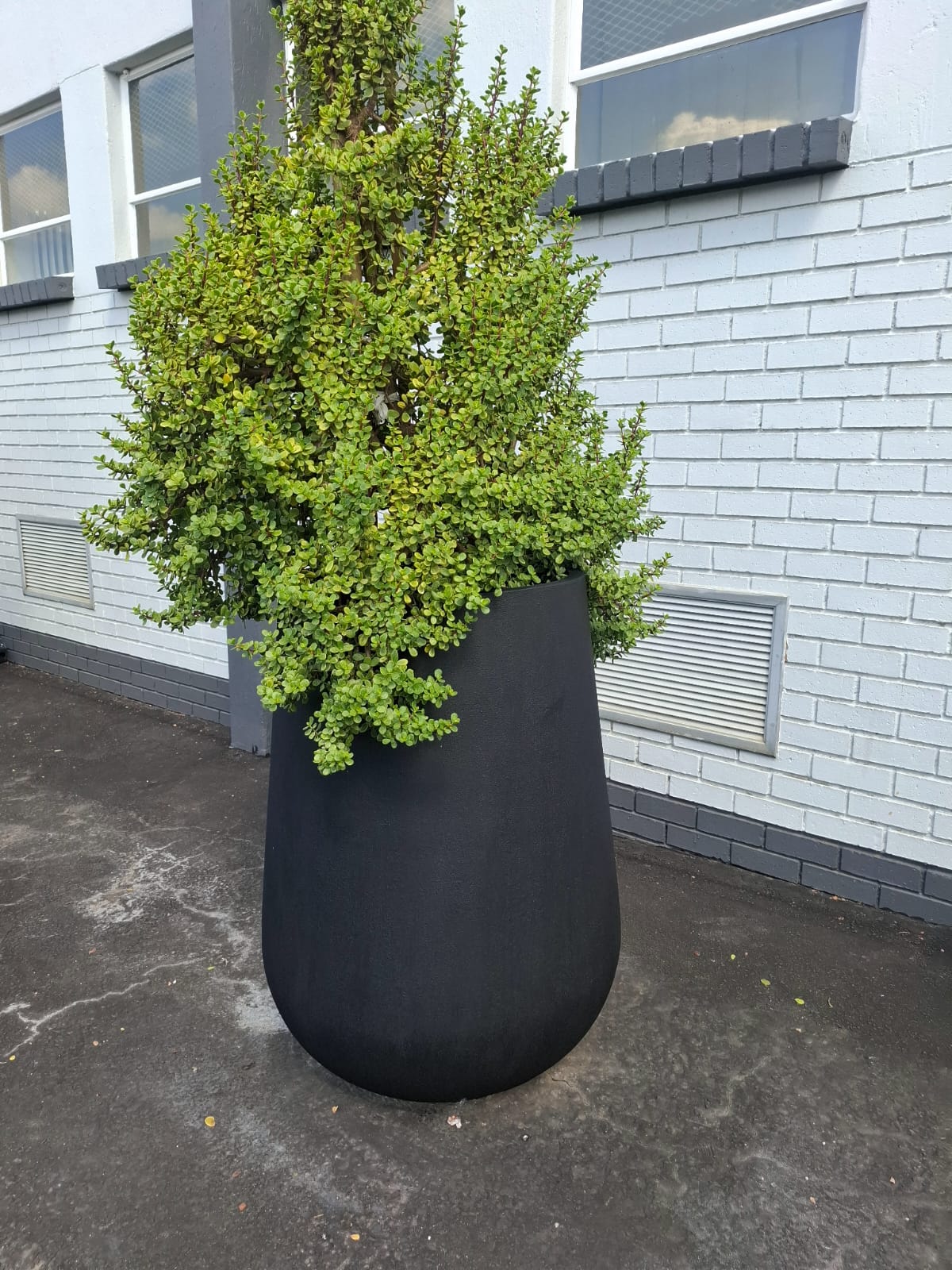
Portulacaria afra, the spekboom, is one of our favourite pot plants and it deserves to be far more common. It is indigenous, tough beyond reason, happy in full sun, and it clips into a neat dome or a small standard if you like a formal look. It survives on very little water, which makes it ideal for a spot you tend to forget about. The one mistake is treating it like a houseplant and watering it every few days. Let it dry out completely between drinks. It will take light frost but a hard Highveld freeze burns the leaves, so a warm wall helps it through July.
Gaura and salvias
For months of flower in blazing sun, these two are hard to beat. Gaura throws up airy stems of white or pink butterfly flowers from spring until the first frost and asks for almost nothing in return. Give it a lean mix and do not overfeed or overwater it, or it grows tall and soft and flops over the side of the pot. Cut it back hard in late winter. Salvias are a huge family and most of the sun lovers are good in pots: the velvety purple Salvia leucantha, the deep blue Salvia 'Amistad', the little Salvia greggii hybrids, and our own indigenous Salvia africana-lutea with its rusty brown flowers. They want full sun, a drink when the top of the soil dries out, and a trim after each flush to keep them going. In a pale wide bowl they look glorious with the late light behind them.
Indigenous pelargoniums
Most of the pelargoniums that fill window boxes across Europe trace their ancestry to plants from South Africa, so it is fair to say they are built for our sun. The trailing ivy leaved Pelargonium peltatum, the scented leaved sorts like the rose scented Pelargonium graveolens, and the bright zonal hybrids all do well in a pot in full sun. The mistake is overwatering. Pelargoniums have fleshy stems that store water, and soggy soil turns those stems black at the base. Water when the pot is dry, deadhead often and pinch the growing tips to keep the plant bushy. They are tender to hard frost, so on the Highveld treat them as summer colour or tuck the pot under cover in June.
Bougainvillea in a big pot
Bougainvillea colours best when it is slightly stressed, which is the opposite of how most people treat it. In the ground it can grow into a monster, but in a large pot its roots are confined and it puts its energy into colour instead of leaves. Give it full blazing sun, water it well and then let it dry out properly, and go very easy on nitrogen feed. The mistake is watering and feeding it like a bedding plant, which gives you a big green thug with three flowers on it. It is frost tender, so in the colder parts of the country expect it to drop leaves in winter and put it against a north facing wall where the heat suits it. Wear gloves, the thorns are serious.
Olive tree
An olive in a big pot is the classic full sun plant and for good reason. It handles heat, drought, wind and Highveld frost, its silver leaves look good every day of the year, and it grows slowly enough to live in the same pot for a decade. Give it the biggest pot you can manage, a gritty free draining mix, and a deep soak every week or two in summer rather than a daily splash. The mistake is a pot with poor drainage, because an olive that sits wet loses its leaves and sulks for months. A light feed in spring, a clip to keep the shape, and it will outlive most of the garden around it.
Strelitzia reginae
The crane flower is one of our great indigenous pot plants. It is slow, architectural, and it produces those orange and blue birds from autumn right through to spring when you least expect colour. Full sun gives the most flowers. It copes with drought once established and tolerates light frost, though a hard freeze will brown the leaf tips. The mistake is repotting it too often. Strelitzia flowers best when its roots are crowded, so plant it in a good sized pot and then leave it alone for years. It is a perfect candidate for a tall planter at an entrance, where its fans of leaves give you height and the flowers arrive at eye level.
Lemon tree
A lemon is the one plant on this list that wants regular attention, but the payoff is a tree that gives you fruit and scent on the stoep. Eureka and Meyer lemons both do well in a large pot in full sun. They are hungry and thirsty, so feed them with a citrus fertiliser every few weeks through the growing season and water deeply and consistently. Consistency is the whole game. The mistake is letting the pot swing between bone dry and soaking, which makes the tree drop leaves and shed its young fruit. A layer of pebbles on top helps enormously here. Young lemons need protection from hard frost, so a warm north facing wall is the right spot on the Highveld. Our article on the easiest fruit trees to grow in pots has more on citrus in containers.
Gazania and felicia for colour
For a pot that simply needs to be cheerful, these two indigenous daisies are the answer. Gazanias open their striped orange, yellow and bronze flowers in full sun and close them on cloudy days, which tells you exactly what they want. Felicia, the blue marguerite, gives you sky blue daisies with yellow centres for most of the year in a warm spot. Both want a lean mix, plenty of light and not much water. The mistake with both is generosity. Rich soil and frequent watering make them leggy and shy to flower. Trim felicia back by a third every few months to keep it compact, and pull out and replace gazanias when they get woody after a couple of seasons.
Num-num for a clipped shape
Carissa macrocarpa, the num-num, is the indigenous answer to buxus for anyone who wants a neat clipped ball or cone in a pot. It has glossy dark green leaves, sweetly scented white flowers, edible red fruit that make a good jam, and it takes full sun, drought, coastal wind and light frost without complaint. It clips beautifully and holds its shape. The one thing to know is that it has forked thorns, so keep it a little away from the path where children run past and wear gloves when you trim it. In a tall pale planter either side of a front door, a pair of clipped num-nums looks smart all year and asks for a drink once a week in summer. Our indigenous plants care guide covers this one and many of the others above.
If you would rather skip the planning, our Pre-Planted Sun Range is exactly this list put into practice: concrete pots planted up for full sun, ready to set down on the stoep and water in. For the rest, the plant guides linked above have the care detail, and our range of hand-cast concrete pots in pale and dark finishes gives the roots the cool, steady home they need to enjoy the sun as much as you do.
Let the sun do the work
Choose a ready-planted pot from our Sun Range, or plant your own favourite in a hand-cast concrete pot.
Shop the Pre-Planted Sun Range →Frequently asked questions
What plants can take full sun in a pot in South Africa?
Lavender, rosemary, agapanthus, aloes, succulents, spekboom, gaura, salvias, pelargoniums, bougainvillea, olives, Strelitzia reginae, lemons, gazanias, felicias and num-num all thrive in a sunny pot with well drained potting mix.
Which plants survive a hot north-facing patio?
Aloes, spekboom, echeverias, gazanias, olives and bougainvillea handle the hottest positions. Use a large concrete pot in a pale finish and mulch the soil with pebbles to keep the roots cooler.
How often should I water pot plants in full sun?
Water deeply, then wait until the top few centimetres are dry. Succulents and aloes may only need a drink every two weeks in summer, while a lemon in a pot may need one twice a week in a heatwave.
Do concrete pots get too hot in the sun?
Thick concrete heats up far more slowly than thin plastic and buffers the soil against temperature swings. Choose a pale finish such as Flinted White for the hottest spots, since dark pots absorb more heat.
Is spekboom a good pot plant?
Yes. Portulacaria afra is indigenous, drought tolerant, happy in full sun and clips into a neat shape. Let it dry out completely between waterings and shelter it from hard frost.

Leave a comment
This site is protected by hCaptcha and the hCaptcha Privacy Policy and Terms of Service apply.