
Indigenous South African plants and how to grow them
There is a special kind of pleasure in growing plants that already belong here. Our indigenous South African plants evolved under this exact sun, in this exact soil, through the same dry spells and sudden downpours we all know, so working with them feels less like a fight and more like a friendship. They ask for so little once they have found their feet, and they give back in colour, structure and the kind of easy resilience that suits real life in this country.
The thread that runs through nearly all of them is the same, and it is a happy one. These are water-wise plants, built to cope when the rain forgets to come. Give them a sunny spot, soil that drains freely so their roots never sit in a puddle, and a light hand with the watering can, and most of them will thank you for the neglect. The one big exception is the arum lily, which likes to have its feet a little damp, and we will get to her.
They are also wonderful in pots, which is where we come in. A row of agapanthus in matching concrete planters lining a path, a single strelitzia standing tall in a big feature pot by the front door, a cluster of smaller pots gathered with clivias for the shady corner, this is how you bring the veld onto a patio. Which ones thrive in a pot depends a lot on where you live, and our regional guides for Cape Town, Johannesburg and Pretoria and Durban and the North Coast suggest indigenous plants for each. Let us walk through the favourites and how to keep each one happy.
Agapanthus
Agapanthus is the workhorse of the South African garden, and for good reason. Those tall blue or white flower heads rise up in early summer and keep coming, and the strappy evergreen leaves look tidy the rest of the year. Give it full sun for the best flowering, though it will forgive a bit of afternoon shade, and water it moderately while it is growing and blooming. The thing people get wrong is being too kind. Agapanthus actually flowers better when its roots are a little crowded, so it is one of the happiest pot plants you can grow. Pack it into a good concrete pot, leave it be for a few years, and let it get on with the show.
Clivia
If agapanthus rules the sun, the clivia is queen of the shade. This is the plant for that dim spot under a tree where nothing else will grow, and in late winter it rewards you with those glorious orange trumpet flowers just when the garden needs cheering up. Keep it out of direct sun, which scorches the leaves, and water sparingly, letting it dry out a good deal in winter to trigger the bloom. Overwatering is the usual killer here, so err on the dry side. Clivias love being pot-bound, so a snug feature pot in a shaded corner or on a covered veranda suits them perfectly.
Plumbago
Plumbago is that soft sky-blue scrambler you see tumbling over walls all over the country, and it flowers its heart out through the warm months. It wants full sun to really perform, and once established it is properly water-wise, shrugging off dry spells with ease. The trick with plumbago is the pruning. Left alone it becomes a leggy tangle, so cut it back hard in late winter and it will come again bushier and more floriferous. In a large pot it makes a lovely loose informal shape, and you can let it spill over the edge or give it a trellis to climb.
Gazania
Gazanias are little pockets of sunshine, those daisy-like flowers in hot oranges, yellows and reds that open wide when the sun is out. They are as tough as they come, thriving in poor sandy soil, coastal wind and blazing heat, which makes them ideal for the spots that defeat fussier plants. Give them full sun, sharp drainage and very little water, because the one way to lose a gazania is to drown it in rich, wet soil. They are perfect for a shallow pot or the sunny front edge of a mixed planter, where they will flower for months on almost nothing.
Bulbine
Bulbine, often called burn jelly plant, is a quiet hero. The succulent leaves hold a soothing gel much like aloe, and the cheerful yellow or orange star flowers with their fuzzy stamens appear more or less all year in a mild spot. It is about as water-wise and forgiving as a plant can be, happy in full sun and utterly unbothered by drought. The only mistake to make is kindness again, since rich soil and too much water make it sulk and rot. Plant it lean, in a well-drained pot, and it will reward you with a long, easy season of colour.
Dietes
Dietes, the wild iris, is the plant landscapers reach for when they want something that simply cannot be killed. The stiff, upright fans of leaves give lovely structure, and the delicate white iris flowers marked with yellow and mauve appear in flushes, often after rain. It handles full sun or light shade, wet or dry, frost or heat, and asks for almost nothing. People sometimes tidy them too eagerly by cutting the spent flower stalks, but those stalks flower again the next season, so leave them. In a tall pot the vertical leaves make a smart, architectural statement.
Strelitzia
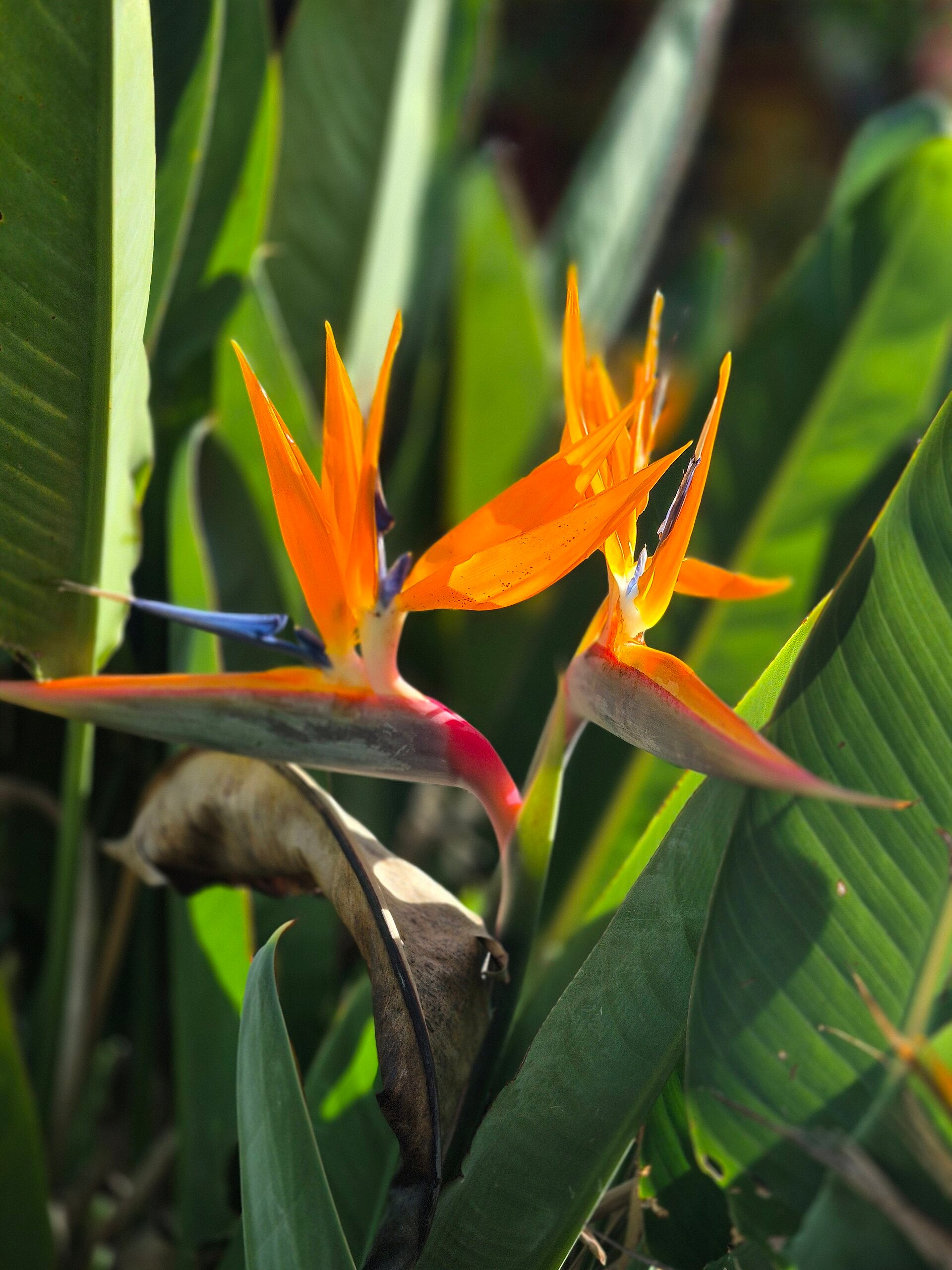
The strelitzia, our famous bird of paradise, is pure drama. Those orange and blue crane-like flowers perched on tall stems are unmistakable, and the big paddle leaves bring an instant tropical feel. It likes a warm, sunny, sheltered position and moderate water, easing right off in winter. Patience is the lesson here, because a strelitzia will not flower until it is a few years old and somewhat root-bound, so resist the urge to keep repotting it. That habit makes it a superb feature plant for a big pot, where confinement actually encourages it to bloom. Give it a generous concrete planter by a sunny wall and let it become the centrepiece it was born to be.
Arum lily
Here is our moisture-lover, the exception to the water-wise rule. The arum lily, with its pure white sculptural spathe, naturally grows in damp ground and along stream banks, so unlike the rest of this list it genuinely likes to stay moist. Give it a spot that gets some sun but does not bake, keep the soil consistently damp through spring and summer, and it will send up those elegant white flowers again and again. Let it dry out completely and it goes dormant and sulks. It grows beautifully in a pot as long as you remember to water it more often than its neighbours, and it is one of the few that will even sit happily in a pot with no drainage hole near a water feature.
Wild dagga
Wild dagga, or leonotis, is a proper indigenous showstopper and a magnet for sunbirds. It sends up tall stems ringed with tiers of furry orange flowers that the birds and bees adore, and it flowers into the cooler months when much else has faded. It wants full sun and is thoroughly water-wise once settled, coping easily with dry Highveld conditions. Give it room, because it grows into a big, loose shrub, and cut it back after flowering to keep it from flopping. In a large, sturdy pot it makes a wonderful wildlife-friendly feature, just place it where you can watch the birds arrive.
Red hot pokers
Red hot pokers, or kniphofia, live up to the name with those flaming spikes of orange and yellow that glow in the garden and, again, pull in the sunbirds. They love full sun and, once established, handle drought with real toughness, though they appreciate a good drink while flowering. The common slip-up is planting them in heavy, wet soil over winter, which rots the crown, so sharp drainage is everything. In a deep pot with gritty, free-draining soil they stand tall and proud, and a group of them together makes a genuinely spectacular seasonal display.
What ties all of these together is how little they ask and how much they give, plants that were made for our climate and simply want to get on with growing. Once you have chosen your favourites, the real difference comes down to the right pot, something with proper drainage for the water-wise crowd and a generous size for the big feature plants like strelitzia and wild dagga. Come and find the concrete pot that will hold your slice of the veld, and let these tough, beautiful South African natives do what they do best.
The right pot makes all the difference
Whatever you are growing, give it a handmade pot with the drainage and room it needs, cast to last through South African sun, rain and frost.
Shop concrete pots →Frequently asked questions
Why grow indigenous plants?
They are adapted to our climate, so they need less water and fuss, and they feed local birds, bees and butterflies.
Are indigenous plants water-wise?
Most are, which makes them ideal for our dry summers. The arum lily is the thirsty exception.
Can I grow indigenous plants in pots?
Yes, many do beautifully in pots. Agapanthus, clivia and dietes even flower better when slightly root-bound.
Which indigenous plants attract birds?
Wild dagga, red hot pokers and bulbine are magnets for sunbirds and bees.

Leave a comment
This site is protected by hCaptcha and the hCaptcha Privacy Policy and Terms of Service apply.