
Succulents and water-wise plants: tough, beautiful and almost impossible to kill
If you have ever killed a fern with kindness, succulents are your redemption story. These are the plants that ask you to do less, not more, and reward you for forgetting about them for a week or two. Out here under our big South African sun, with our dry winters and our long thirsty summers, they are not just easy, they are right at home. Half of them are indigenous, growing wild on our koppies and along our coasts long before anyone thought to pop them in a pot.
What unites nearly all of them is simple. They store water in those plump leaves and stems, so they would far rather be too dry than too wet. The quickest way to lose a succulent is not neglect, it is love expressed as a watering can. Give them bright light, a gritty mix that drains fast, and a pot with a proper drainage hole, and most of these will outlive your good intentions. Our concrete and stoneware pots suit them beautifully, because the material breathes and wicks away the damp that succulents hate. Add a handful of grit or perlite to your soil, water only when the mix is bone dry, and you are most of the way there.
Here are seven of our favourites, from old reliables to proudly local stars, with the honest care each one actually needs.
Aloe vera
The medicine cabinet in a pot. Aloe vera wants the brightest spot you can give it, a sunny windowsill or a patio that catches the morning light, and it will sulk and stretch pale if it is stuck in shade. Water deeply but rarely, letting the soil dry out completely between drinks, and cut right back in winter when it is barely growing. The one thing people get wrong is drowning it in a pot with no drainage, which turns the base to mush. Plant it in a gritty mix in a pot with a good hole, and it will throw out pups you can pot up and gift to friends.
Jade plant (crassula)
The money plant, the lucky plant, the one your gran had on the stoep for thirty years. Jade is a slow, sturdy little tree of a succulent that loves bright light and honestly thrives on being forgotten. Water it properly when the soil is dry, then leave it well alone, because soft, wrinkled or dropping leaves almost always mean too much water, not too little. It gets top heavy as it grows, so a weighty concrete pot keeps it stable and shows off that thick, glossy trunk. Pinch the tips now and then and it bushes out into a proper bonsai shape.
Echeveria
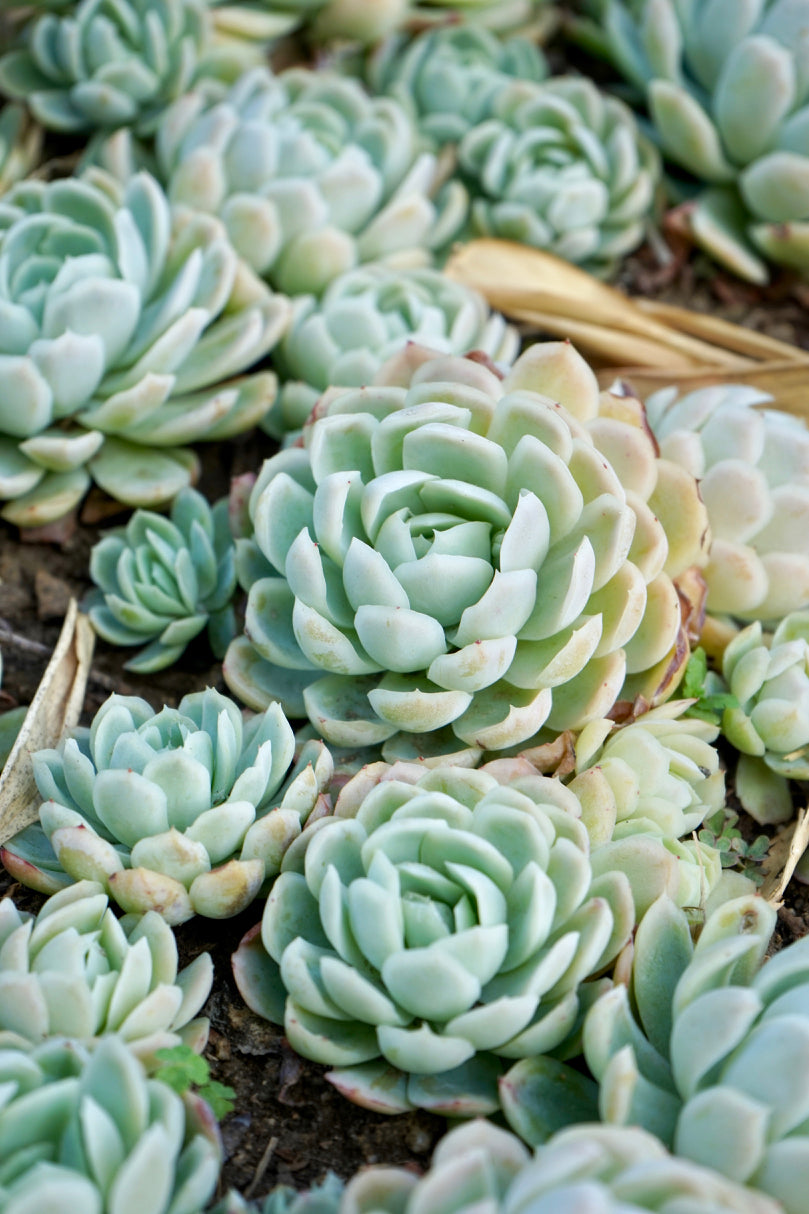
These are the rosettes everyone photographs, tight spirals of powder-blue, pink or lilac leaves that look almost too perfect to be real. Echeveria needs plenty of bright light to hold that colour and stay compact, because in low light it stretches into a leggy, sad thing reaching for the window. Water at the soil level, never over the rosette, since water sitting in the centre invites rot. A shallow, wide pot with sharp drainage suits them perfectly, and lets you plant a few together for that jewel-box look.
Haworthia
One of our own, a little indigenous South African gem that grows wild in the shade of larger shrubs, which makes it one of the few succulents happy with less sun. Haworthia does beautifully on a bright windowsill out of the harshest midday glare, its dark green leaves often striped or pearled with white. It is small, slow and undemanding, wanting only a good soak when fully dry and almost nothing over winter. The usual mistake is overwatering a plant this compact, so err on the dry side and enjoy how neatly it fits a small pot on a desk or shelf.
String of pearls
A waterfall of little green beads spilling over the edge of a pot, and a favourite for a reason. String of pearls wants bright, indirect light rather than harsh direct sun, which scorches those delicate spheres. Water sparingly, letting it dry out between times, and watch for beads that shrivel, a sign it is thirsty, or go mushy, a sign you have overdone it. It looks its absolute best trailing from a raised pot or a hanging planter, so give it some height and let it cascade.
Spekboom (Portulacaria afra)
Proudly local and something of a national hero, spekboom is the little elephant food shrub that soaks up carbon like nothing else and grows from the smallest cutting you simply push into soil. It loves full sun and heat, shrugs off drought, and asks for almost nothing once it is settled. Water it when the soil dries and then forget about it, because this is a plant built for our toughest conditions. In a generous pot it makes a lush, edible green hedge in miniature, and yes, the lemony leaves are good in a salad.
Vygies
Our dazzling mesembs, the ground-hugging succulents that erupt into sheets of neon pink, orange and purple daisy-like flowers across the Cape in spring. Vygies are proudly indigenous, thrive in blazing sun and poor, sandy soil, and want as little water as you can bring yourself to give. Too much shade or too rich a soil and you get lush leaves but no flowers, which defeats the whole point. Give them a sunny, well-drained pot and a hot spot, hold back on the watering, and they will pay you back with a show that stops people in the street.
The thread running through all of these is the same. Bright light, a gritty mix, and a pot that lets water run clean through rather than pooling at the roots. Get the pot right and you have solved most of the problem before you have even planted, which is exactly why the vessel matters as much as the plant. Have a wander through our succulent planters and concrete pots, find the one that fits your spot and your plant, and let these tough, beautiful things do what they do best, which is thrive while you barely lift a finger.
The right pot makes all the difference
Whatever you are growing, give it a handmade pot with the drainage and room it needs, cast to last through South African sun, rain and frost.
Shop succulent planters →Frequently asked questions
How often should I water succulents?
Rarely. Only once the soil has fully dried out, roughly every one to two weeks in summer and much less in winter. Overwatering is the main killer.
What soil do succulents need?
A gritty, free draining mix. Add coarse sand or perlite so it dries quickly between waterings.
Why is my succulent going soft or mushy?
Too much water. Let it dry out fully and make sure the pot drains freely.
Which of these are indigenous to South Africa?
Haworthia, spekboom and the vygies are all indigenous, which is exactly why they thrive so easily in our climate.

Leave a comment
This site is protected by hCaptcha and the hCaptcha Privacy Policy and Terms of Service apply.