
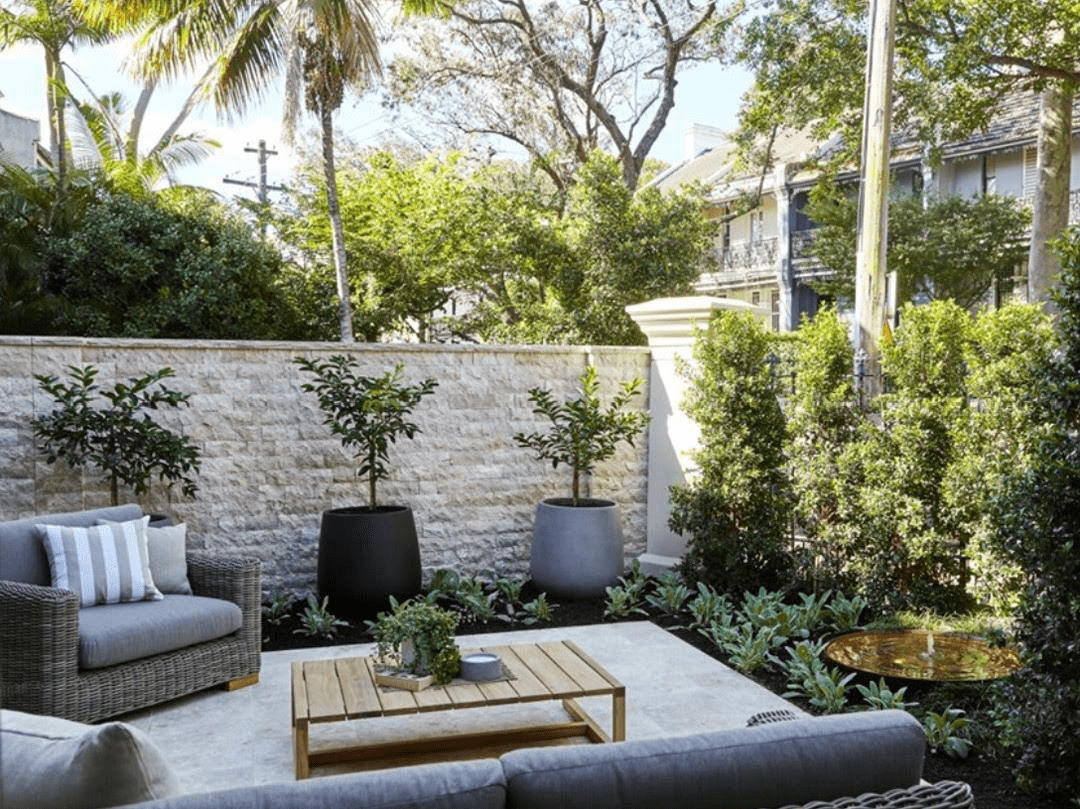
Pots and water features for a Johannesburg or Pretoria garden: frost, hail and summer storms
The short answer
Johannesburg sits on the Highveld and Pretoria shares most of its weather, which means summer thunderstorms, hail from roughly mid November to February, and dry, sunny winters with frost on the coldest nights. Frost is what cracks pots, and it does it through trapped water, so every pot needs a clear drainage hole and should stand on pot feet, with saucers taken away before winter. Choose frost proof concrete and heavy, wide pots that hold steady in storm gusts, and plant tough, frost hardy plants such as wild olive and Dietes. Keep watering through the dry winter, because pots still dry out. Water features run happily all year, but keep them topped up in winter. We deliver across Gauteng for R650, and you can see the range at our Fourways Mall and Randburg stores.
There is a particular kind of Highveld afternoon every gardener here knows. The morning is bright and hot, the clouds stack up after lunch, and by four o'clock you are watching hail bounce off the paving and wondering whether the new pots on the stoep will survive. Then winter arrives, dry and clear, with nights cold enough to freeze the birdbath. Gardening in Johannesburg and Pretoria is about planning for both.
This guide is for gardens across Gauteng, from Pretoria and Centurion down through Midrand, Sandton and Fourways to Randburg and the East and West Rand. It covers frost, hail and storms, the long dry winter, and how to choose pots, plants and water features that take all of it in their stride.
What the Highveld does to a garden
The Highveld is the part of the inland plateau that sits above roughly 1,500 m, and its rain comes in summer, with substantial afternoon thunderstorms typical from November to January. Winter is the opposite. Johannesburg is dry and sunny for most of the year, winter is its sunniest season, and on the coldest nights the temperature drops below freezing and brings frost.
Hail is the other Highveld signature. A study of South African hail using satellite data, published in Natural Hazards and Earth System Sciences in 2023, found that hail events concentrate along the Highveld and the eastern slopes, are most frequent from mid November through February, and peak in the afternoon. Pretoria sits a little lower and runs a few degrees warmer than Johannesburg, but it has the same pattern of summer storms and dry winters. If you have lived here a while, none of that will surprise you, but it is worth planning around.
Frost, and why pots crack
When a pot cracks in a Highveld winter, water is almost always the cause. If a pot cannot drain, water collects in the soil at the bottom, freezes on a cold night, expands, and pushes the pot apart from the inside. The same thing happens when a drainage hole clogs, or when a pot spends July sitting in a saucer of water.
The RHS advice is clear on both points. Its guide to containers in winter says to raise pots off the ground on pot feet or bricks to aid drainage and help prevent the freezing conditions that cause pots to crack, and its advice on growing plants in containers is to choose frost proof pots rather than merely frost resistant ones, and to remove trays and saucers before winter. Our pots are cast from our Fibre Concrete Mix, which is made to take Highveld frost, but even the toughest pot will struggle if it spends the winter full of frozen water. A set of pot feet under each pot is the cheapest insurance you can buy. We go through the planting steps that keep a pot draining in how to plant a concrete pot so it drains well and lasts.
Hail, storms and heavy pots
Heavy concrete pots cope with hail far better than the plants in them do. Plants are another matter, and a bad storm can strip soft leaves and flatten young growth in a few minutes. The advantage of growing in pots is that you can plan for it. Keep your most tender plants in pots that can sit under the eaves, a pergola or a patio roof, and group them there through the peak hail months if you have lost plants before. Tough, leathery and fine leaved plants tend to come through a storm better than big, soft ones.
The winds that come with summer storms are the other risk. A light pot with a tall plant in it is easily tipped by a gust, while a heavy concrete pot with a wide base stays put. For anything tall, choose width, keep it close to a wall, and see our guide on what size pot a tree needs if you are planting a small tree. There are more ideas for protecting pots and plants through wild weather in how to protect your garden pots from unexpected weather.
The dry winter, and keeping pots watered
Because Highveld winters are so dry, pots keep drying out long after the lawn has gone dormant. Evergreen plants in pots still lose water through their leaves, and the RHS notes that trees in containers dry out far more quickly than those in the ground. So keep an eye on your pots through June and July and water them properly when the top few centimetres of soil feel dry, ideally in the morning so the soil is not cold and wet overnight. A layer of pebbles on top slows evaporation, and our guide to watering outdoor potted plants covers the rest.
Plants that take the Highveld in their stride
The easiest pots to live with on the Highveld are planted with things that are already made for it. SANBI describes the wild olive as slow growing and resistant to frost, drought and wind, which makes it one of the best small trees for a Highveld pot. Dietes grandiflora, the large wild iris, is both frost and drought hardy and will grow in sun or shade, so it copes with almost any corner. Agapanthus make good pot plants and, according to SANBI, tolerate light frost, so on the coldest Highveld sites give them a spot under an overhang.
Citrus are the ones to be careful with. A lemon in a pot is a lovely thing on a Pretoria patio, but citrus are frost tender, so plan a sheltered spot against a warm north facing wall or under cover for June and July. For more on choosing plants for your conditions, our guides to plants for full sun pots and indigenous South African plants are good places to start.
Water features through summer and winter
A water feature on the Highveld runs happily all year, with two seasonal habits worth building in. In summer, a heavy afternoon storm can fill an open basin to the brim, which does no harm, but it is a good moment to clear out the leaves and debris the storm has dropped in. In winter, the dry air and wind mean evaporation carries on even when it is cold, so top it up regularly, and never let the water drop below the pump. Moving water is slower to freeze than still water, but if you are going away in the middle of winter, it does no harm to switch off and empty a small feature.
Many of our features are self contained, with water recirculating from a basin, so there is no plumbing involved, just a power point. Shapes like the Shanghai and Beijing come with their pump included, and the Millstone and Boulder suit a garden bed as well as a patio. Our guide to choosing a water feature helps you pick a style, and how to set up a water feature covers power, pumps and upkeep.
Delivery, and seeing the pots in person
We deliver across Gauteng, including Johannesburg, Pretoria and the East and West Rand, for R650. Online orders are made to order and ready to leave us in 10 to 15 business days, then usually arrive within a few days after that. If you would rather see the sizes and finishes first, our stores at Fourways Mall and at 277 Church Street in Randburg carry a range of pots, and seeing a finish in real Highveld light is often the quickest way to decide.
If you are still deciding on materials, our honest guide to concrete pots covers weight, strength and how they age. And if you have family or a second home at the coast, our Cape Town guide and Durban and North Coast guide cover how different gardening is down there.
Pots made for Highveld frost
Browse frost proof concrete pots, pot feet and water features, delivered across Gauteng for R650.
Shop concrete pots →Frequently asked questions
Will a concrete pot crack in a Johannesburg frost?
Not if it drains. Frost cracks pots when water trapped in the soil freezes and expands, so keep the drainage hole clear, stand the pot on feet and take saucers away before winter.
How do I protect potted plants from hail?
Move tender plants in pots under eaves, a pergola or a patio roof during the peak hail months, roughly mid November to February, and choose tough, fine or leathery leaved plants for exposed spots.
Which plants suit pots on the Highveld?
Frost and drought hardy plants such as wild olive and Dietes grandiflora are easy choices. Agapanthus tolerate light frost, and citrus need a sheltered spot in winter.
Do I need to water pots in winter?
Yes. Highveld winters are dry, and pots keep losing moisture even when plants are growing slowly. Water when the top few centimetres feel dry, ideally in the morning.
How long does delivery take in Gauteng?
Online orders are made to order and ready to leave us in 10 to 15 business days, then usually arrive within a few days. Delivery across Gauteng is R650.

Leave a comment
This site is protected by hCaptcha and the hCaptcha Privacy Policy and Terms of Service apply.