
Large garden pots: how to choose, fill, move and plant a big pot
The short answer
A large garden pot, anything from a 600 mm bowl to a 1800 mm tall planter, gives you scale, cooler roots and far less watering than a cluster of small pots. Choose the size for the plant first: a pot roughly a third of the finished height for a small tree, a wide bowl for spreading plants, a tall planter for presence at an entrance. Decide the spot before you fill it, because a filled big pot does not move. Check it is level and stand it on pot feet so water drains and the paving stays clean. Fill the base with Pot Filler for drainage and to save soil, then use good potting mix, never garden soil. Plant an olive, lemon, bay, strelitzia, agapanthus or grasses, water deeply but less often, mulch with pebbles, and keep it out of standing water in winter to avoid frost cracks.
There is a moment in almost every garden when you realise the problem is not the plants, it is the pots. Six little pots along a wall never quite add up to anything. They dry out by lunchtime in December, they blow over in an August wind, and the whole arrangement looks busy rather than considered. One big pot fixes all of that in a single move. It gives a stoep, a courtyard or an entrance a proper anchor, and it is honestly easier to look after.
We hand-cast large concrete pots in Centurion and we have carried more of them across more driveways than we care to count, so this is the practical version. How to pick the right size, where to put it, how to fill it without buying a small mountain of potting soil, what actually thrives in one, and how to move the thing without hurting your back or the pot. If you want the background on how our pots are made and why concrete behaves the way it does, our guide Concrete pots, explained covers that side of it.
Why one big pot beats a cluster of small ones
Scale is the obvious reason. A garden reads from a distance, and a single pot of real size gives the eye somewhere to land. A row of small pots does the opposite, it fragments the space. The less obvious reasons are horticultural. A big pot holds a big volume of soil, and a big volume of soil dries out slowly. On a 34 degree Highveld afternoon a small pot can go from wet to bone dry in a few hours, while a large one will still be moist below the surface the next morning.
Roots are happier in a large pot too. Soil temperature in a small container swings wildly between a hot day and a cold night, and roots hate that. In a big pot the mass of soil buffers the swing, and thick concrete walls buffer it further. Plants simply grow more evenly, with less stress, less leaf drop and less of that sulking that potted plants do when they are unhappy.
How big is big?
People are often surprised by what counts as large once a pot is standing in the garden. A pot that looks enormous on the nursery floor can look perfectly modest against a double storey wall. As a rough guide, anything from about 600 mm across or tall starts to feel substantial on a normal stoep, and from 800 mm upward you are into proper feature territory.
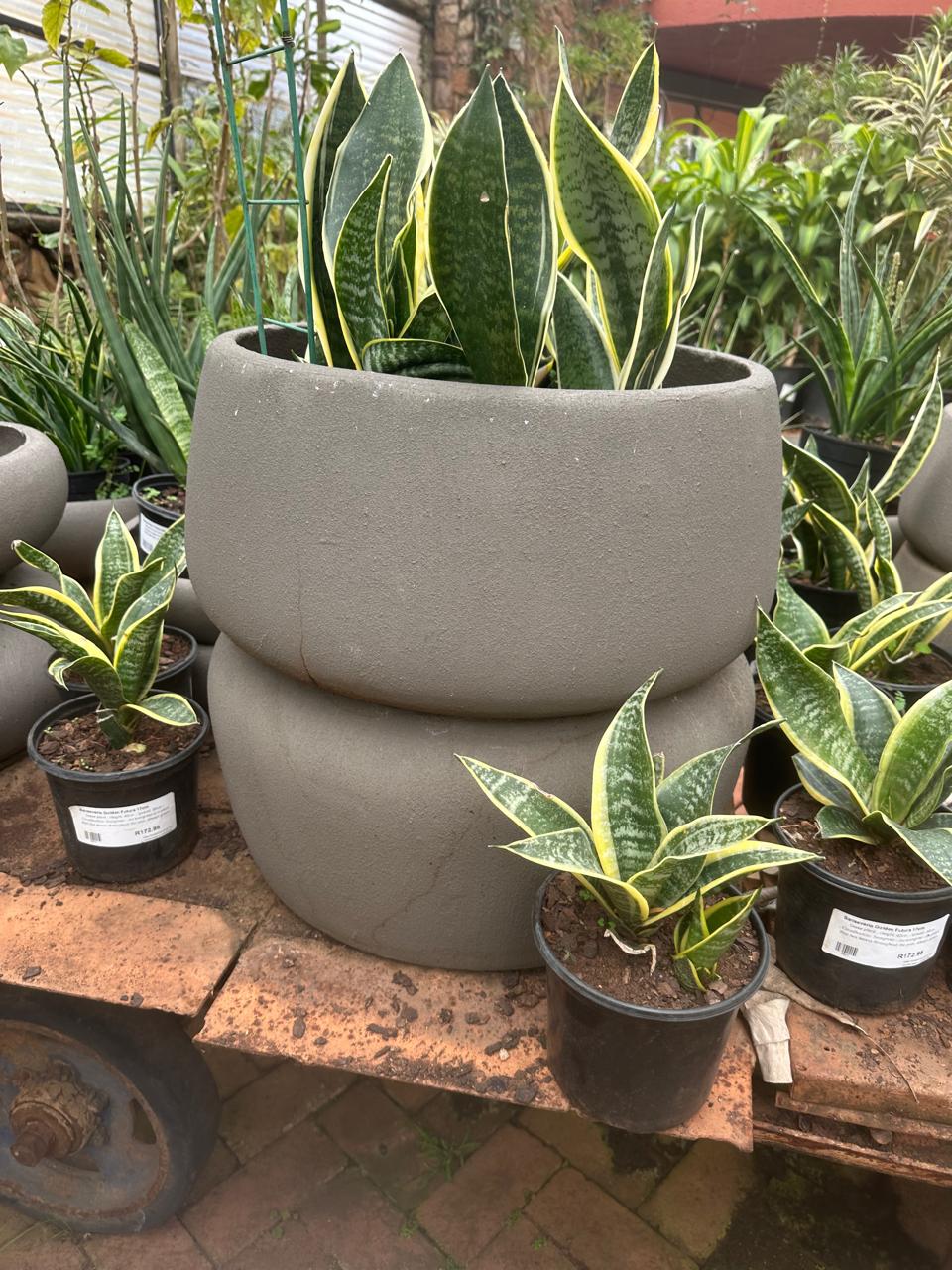
To give you a sense of our range, the Pafuri is 800 by 670 mm and already a serious pot. The Nebraska wide bowl goes up to 1140 mm across, which is wide enough for a whole planting rather than a single plant. The Mexican tall pot reaches 1500 mm, and the Nevada tall planter tops out at 1800 mm, which is taller than most people. When you are comparing sizes it helps to measure your space with a tape and then check the numbers against our size chart rather than guessing from a photo.
Choosing the size for the plant and the spot
Start with the plant, because the plant decides the shape. For a small tree the rule of thumb we use is a pot roughly a third of the finished height of the tree, so a 3 m olive wants a pot around a metre tall or wide, and a lemon that you plan to keep at 2 m is happy in something around 600 to 700 mm. We go tree by tree, with the reasons behind each size, in what size pot does a tree need. A spreading plant, ornamental grasses, a mixed planting of succulents or a mound of agapanthus, wants width more than depth, which is where a wide bowl earns its keep. Height at an entrance is a different job again. A tall planter with a clipped shrub or a strelitzia gives you presence at eye level, and a pair of them either side of a front door does more for a house than almost anything else you can buy for it. Where a round pot simply will not fit, along a narrow path or under a window, a trough does the job, which is a large part of why the Curo Trough is our best seller.
Then look at the spot. Stand where you will see the pot from most often, usually the kitchen window or the braai, and imagine the scale from there. A pot should be in proportion to the wall or the space behind it, not to the plant on its own. If you are torn between two sizes, go bigger. Nobody has ever told us they regret it.
Decide the spot before you fill it
This is the one thing we cannot say often enough. An empty large pot is a two person job. A filled one is a job for a forklift. Decide exactly where it is going before a single scoop of soil goes in, and treat the decision as permanent. Check the spot with a spirit level, because paving that looks flat often is not, and a tall planter that leans even slightly will look wrong forever and hold water on one side.
Stand the pot on concrete pot feet from the start. Feet lift the base a few centimetres off the paving so the drainage hole can actually drain, air moves underneath, and you do not get that damp ring on the tiles that never quite comes off. If the pot is on a wooden deck or a covered patio, a drip tray under it catches the run through. You will find trays, feet and extras together in one place, and it is far easier to add them now than to lift a planted pot later.
How to fill a big pot without buying a mountain of soil
A Nevada or a Mexican holds an alarming amount of soil if you fill it to the brim, and most of that soil would do nothing useful. The roots of an olive or a clipped shrub occupy the top 400 to 500 mm, so the bottom of a tall planter is really there for stability and drainage. Fill that bottom section with Pot Filler, which is broken pieces of our own concrete. It is heavy enough to keep a tall pot stable, it lets water run straight through to the drainage hole, and it saves you buying bags of potting mix that would only ever sit there compacting.
Lay a piece of shade cloth or weed fabric over the filler so the soil does not wash down into the gaps, then fill with a good quality potting mix. Please do not use soil dug out of the garden. Garden soil compacts into a brick inside a pot, drains badly, and brings weed seeds and cutworm with it. A proper potting mix stays open and drains freely, and you can improve it with a little compost and a slow release fertiliser. Leave a few centimetres at the top for watering and for a layer of pebbles.
What to plant in a large pot
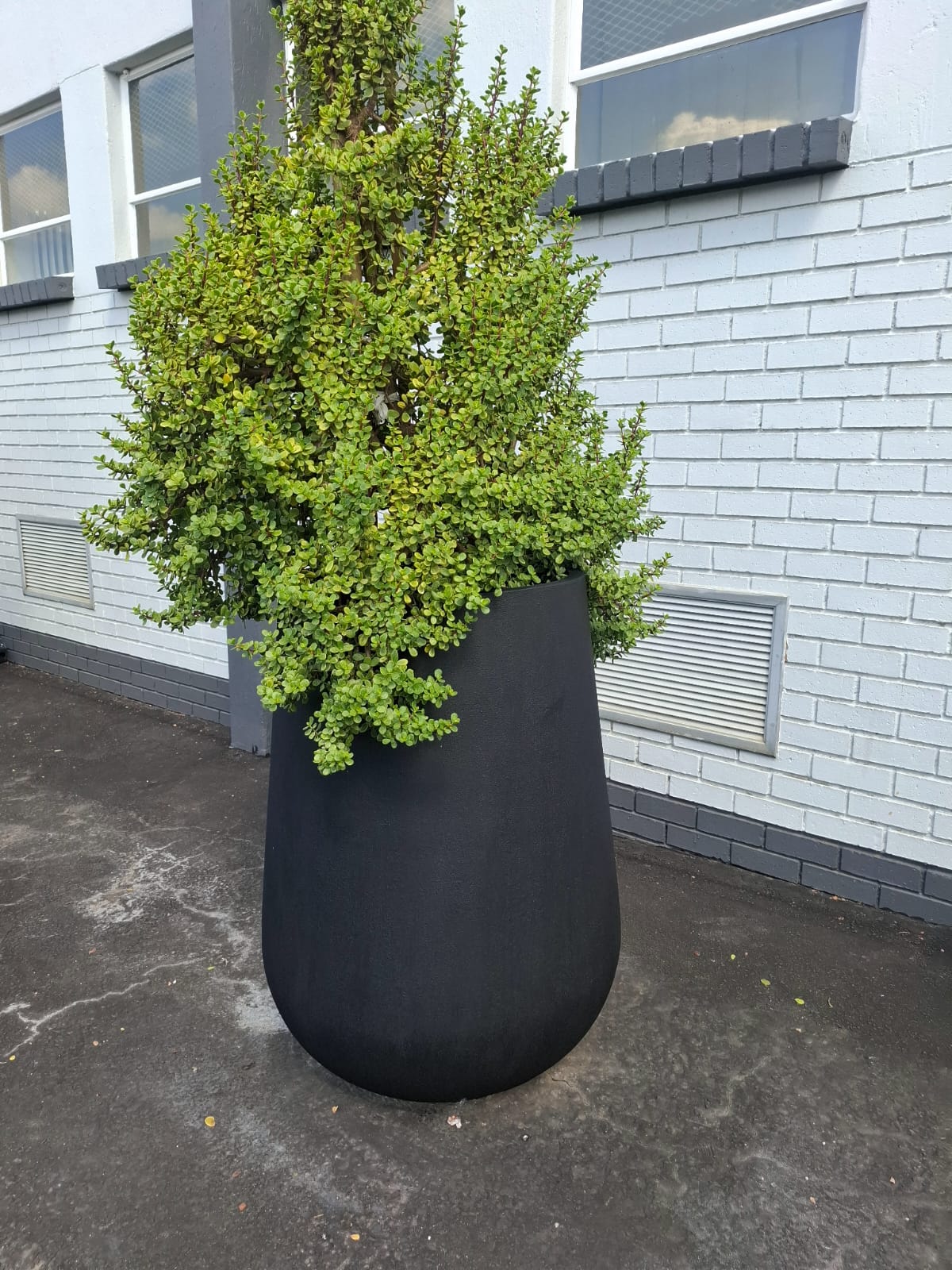
The plants that suit a big pot are the ones that make a statement on their own. Small trees are the classics: an olive for silver leaves and that Mediterranean feel, a lemon for fruit and scent, a bay tree that clips into a neat lollipop. All three are happy in full sun and will live in a large pot for many years. Strelitzia reginae is a wonderful pot plant, slow, architectural and indigenous, and it flowers better when it is a little crowded. Clipped shrubs such as num-num, buxus or a clipped Eugenia give you a formal green shape that suits a tall planter at a front door.
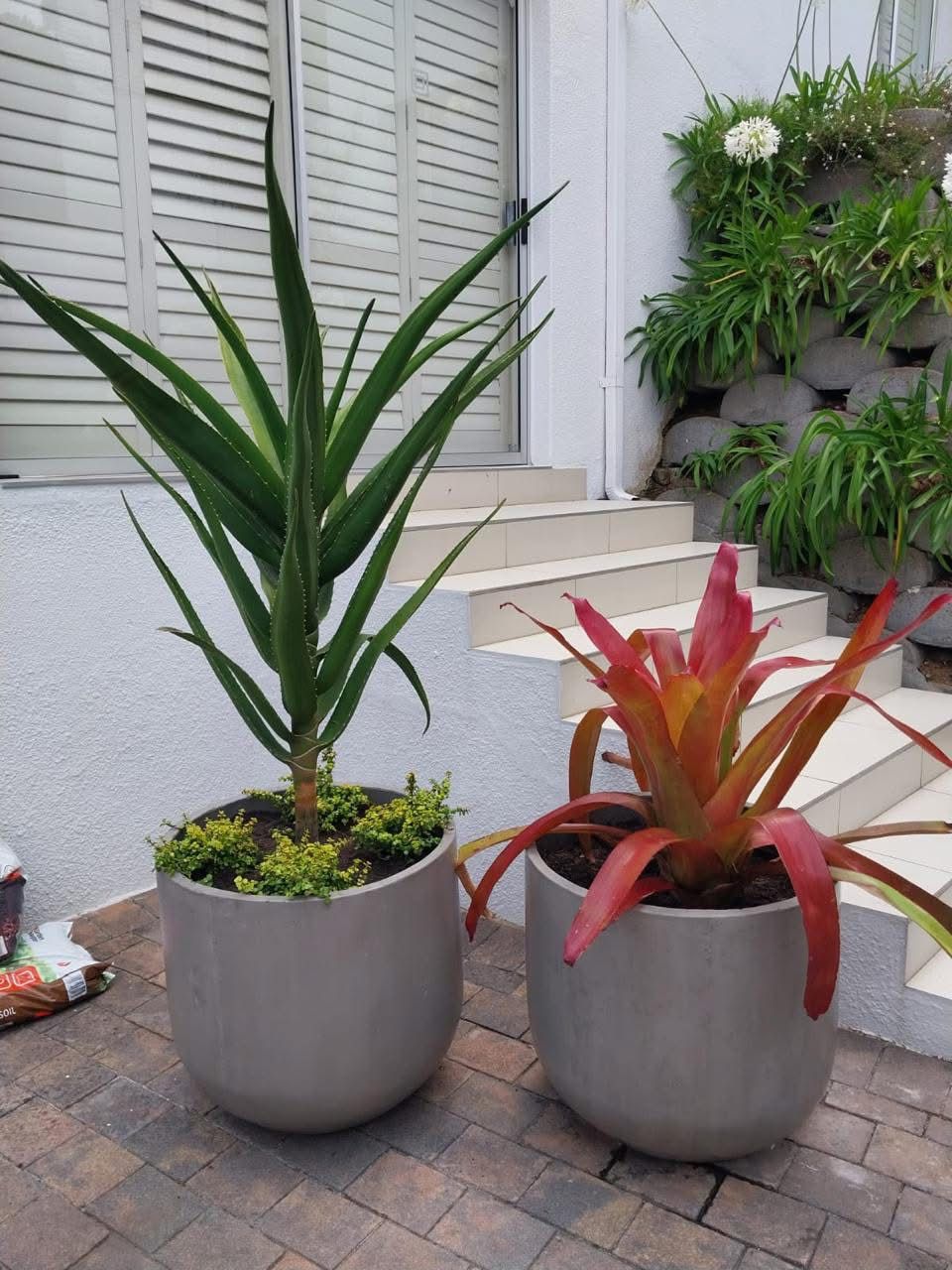
For a wide bowl, think in layers. Agapanthus fills a bowl beautifully and flowers for weeks in early summer, and a mixed planting of indigenous grasses, Aristida and Melinis in particular, catches the light in the late afternoon. If you have a tree in a big pot, underplant it. A skirt of gazanias, felicia or trailing succulents around the base of an olive makes the whole thing look established from day one and shades the soil, which cuts down on watering.
Watering a big pot
The habit to break is the daily sprinkle. A large pot wants a deep soak that wets the whole root zone, then a pause until the top few centimetres have dried out. In midsummer on the Highveld that may mean twice a week for a thirsty lemon and once a week for an olive, and in winter it may mean every two or three weeks. Push a finger into the soil to the second knuckle before you water. If it is still damp down there, wait.
A layer of pebbles on the surface does more than look tidy. It shades the soil, slows evaporation, stops the top from crusting and keeps hose water from splashing soil up the sides of the pot. Water in the early morning rather than the evening so the leaves dry before dark, and water slowly enough that it soaks in rather than running off the top.
Moving a heavy pot without hurting yourself or the pot
If a big pot absolutely has to move, empty it first. Take the plant out, bag the soil, tip out the filler, and only then move the pot. Two people, always, with one at each side and the weight held low against the body, not lifted from the rim. Concrete is very strong in compression and weaker in tension, so the rim is the one part of the pot you should never lift or drag from, and never tilt a tall planter onto the edge of its rim and roll it.
For anything beyond a couple of metres, a sack trolley with the pot padded and strapped is the best option. Failing that, an old piece of carpet or a thick blanket under the pot lets two people slide it across paving without scraping the base or the tiles. Go slowly across steps and thresholds, and put the feet down before you set the pot in its final position rather than lifting it again afterwards.
Frost, drainage and cracking
Our pots are cast from our Fibre Concrete Mix, which is fibre reinforced and noticeably stronger than ordinary concrete, and they live outside through Highveld winters without trouble. When a concrete pot does crack in winter it is almost never the cold on its own. It is water. Wet soil that freezes expands and pushes outward on the walls, and a pot standing in a saucer of water freezes from the base up. Good drainage is the whole answer: a clear drainage hole, Pot Filler in the base, pot feet so water can escape, and no saucer full of water in June and July.
The same logic applies to planting. A pot filled with open, free draining mix and not overwatered in winter will sit happily through frost for years. We put the practical steps together in how to plant your concrete pot to reduce cracks, and it is worth ten minutes of reading before you plant anything big.
A large pot is one of those purchases that changes how a whole garden feels, and once it is planted and settled it asks for less of you than a shelf of small pots ever did. If you are ready to go big, have a look through our trees and large plant pots, pick your finish, and decide on the spot before it arrives.
Ready to go big?
Browse our hand-cast large planters, pick your finish, and choose the one big pot your garden has been missing.
Shop large pots →Frequently asked questions
What is considered a large garden pot?
Anything from about 600 mm across or tall starts to feel large on a normal stoep, and pots from 800 mm upward are feature pieces. Our biggest planters, the Mexican at 1500 mm and the Nevada at 1800 mm, are taller than most people.
What do you put in the bottom of a large planter?
Fill the lower part with Pot Filler, broken concrete pieces that keep the drainage hole clear, add stability and save soil. Lay shade cloth over it, then fill with good quality potting mix rather than garden soil.
What are the best plants for a large pot?
Small trees such as olive, lemon and bay, Strelitzia reginae, clipped shrubs like num-num, agapanthus, and ornamental grasses in a wide bowl all do well. A tree with a skirt of underplanting looks established from day one.
Will a large concrete pot crack in frost?
Our Fibre Concrete Mix is made for Highveld frost. Cracks come from wet soil freezing and expanding, so keep the drainage hole clear, stand the pot on feet and never let it sit in a saucer of water in winter.
How do you move a heavy concrete pot?
Empty it first, then move it with two people using a sack trolley or a piece of carpet to slide it on. Never lift or drag a concrete pot by its rim.

Leave a comment
This site is protected by hCaptcha and the hCaptcha Privacy Policy and Terms of Service apply.