
Concrete vs plastic vs fibreglass vs terracotta pots: which lasts in South Africa?
The short answer
Concrete is the garden pot material that lasts longest in South Africa. Terracotta breathes well but dries out fast, chips easily and cracks in Highveld frost. Plastic is cheap and light, but our UV fades it and makes it brittle within a few years, it blows over in wind and dark plastic cooks roots. Fibreglass is light and good for very large or rooftop pots, but it dents, the gel coat fades and it costs more. Concrete is heavy, which is the trade-off, but that weight keeps it upright in wind, it insulates roots from heat swings, it is frost-safe when cast well with drainage, and a good pot lasts decades. A white bloom called efflorescence can appear and simply brushes off. For balconies, rooftops or pots you move indoors, a lightweight decor pot is the sensible middle ground. Whatever you choose, drainage decides whether the plant thrives.
Every week someone stands in our yard in Centurion, taps a pot with a knuckle and asks the same question in a slightly different way. Is concrete really better than plastic? What about those big fibreglass ones? Are my terracotta pots going to survive another winter? It is a fair question, because a pot is the one thing in the garden you expect to outlast the plant in it, and most of them do not.
We make concrete pots, so you know where we sit. But we also sell a lightweight range and fibreglass ponds, and we have killed enough plants in enough containers over the years to give you the honest version of each material, the good and the annoying. Here it is, one material at a time, and then a straight answer for your particular situation.
Terracotta: beautiful, thirsty and fragile in frost
Terracotta is fired clay, and it is lovely. It breathes, which means the walls of the pot let moisture and air move through, and that is genuinely good for roots that hate sitting wet, like succulents, lavender and rosemary. The colour is warm and it ages gracefully with a bit of moss and lime on the outside.
The breathing is also its weakness in our climate. On a hot Highveld or Karoo afternoon a terracotta pot dries out from the sides as well as the top, so you water twice as often as your neighbour with a glazed or concrete pot. Then winter comes. Terracotta soaks up water, the water freezes on a frosty Pretoria night and the pot spalls or splits. Rims chip when you knock them with the wheelbarrow, and a dropped one is finished. Thin imported terracotta is worse for all of this than good thick pieces, but none of it truly loves frost.
Plastic: cheap and light, until the sun gets it
Plastic pots are cheap, weigh nothing and come in every colour. For seedlings, for a nursery bench, for a plant you are going to move into the ground within a season, they are perfectly sensible and we use them ourselves.
As a permanent garden pot in South Africa they struggle. Our UV is fierce, and within a few years most plastic fades to a chalky version of itself and goes brittle. The rim cracks when you lift it, the base splits, and it ends up in a skip. Plastic is also light, which sounds good until a Cape southeaster or a Highveld storm front comes through and your tall pot is on its side with the plant snapped. And because plastic is thin and often dark, the soil inside heats up quickly in direct sun. Roots do not enjoy being cooked, and that is where a lot of mysteriously unhappy plants on north-facing patios come from.
Fibreglass: light and large, at a price
Fibreglass is resin and glass fibre with a coloured gel coat over the top. Its big advantage is that you can have a very large pot that one person can carry. That makes it the right answer for rooftops, upstairs balconies and anywhere the structure or the lift dictates what you can bring in. We sell fibreglass ponds for exactly that reason, because a big water feature that a person can carry into a courtyard is a useful thing.
The trade-offs are cost and surface. Good fibreglass is pricier than you expect, and the gel coat fades and chalks in the sun over time, especially in darker colours. It also dents and scuffs, and once the coat is cracked the fibres underneath can show. It does not insulate roots much better than plastic does. If you need big and light, it is a good option. If the pot is going on the ground, concrete is usually the better long-term buy.
Concrete: heavy, honest and built for decades
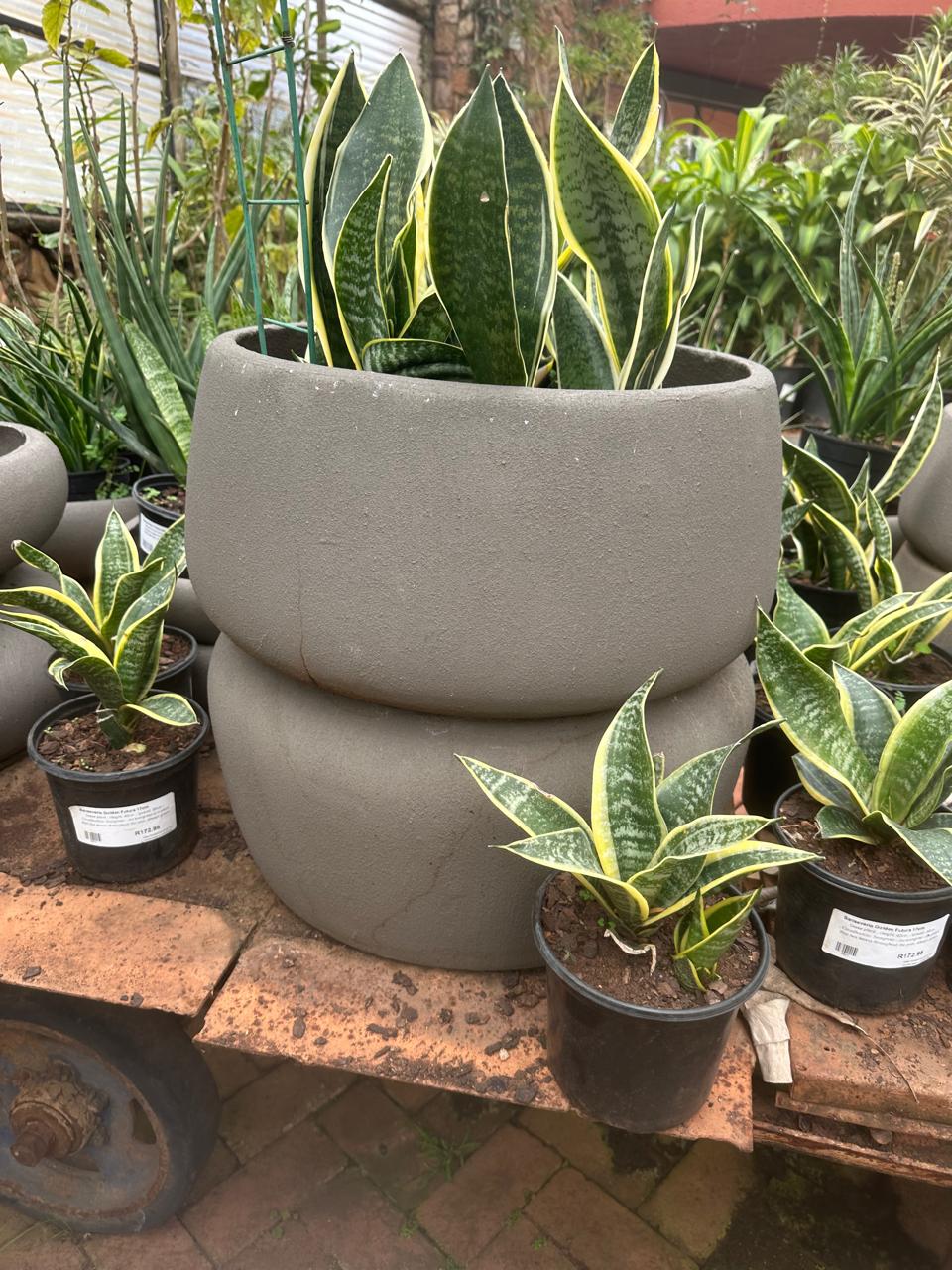
Concrete is the pot that stays. Its weight, the very thing people hesitate over, is what keeps a tall pot upright in wind, keeps it out of the hands of anyone who fancies it, and gives a garden a settled, permanent look that thin materials never quite manage. Thick concrete walls also insulate the root ball from the daily heat swing, so the soil stays cooler on a hot afternoon and warmer on a frosty morning. Plants notice.
Frost is the question we get most, and the answer is that concrete is frost-safe when it is cast well and drained properly. Our pots are hand-cast from our Fibre Concrete Mix, which is fibre-reinforced and noticeably stronger and more durable than ordinary concrete, made for full sun, rain and Highveld frost, indoors or out. The thing that cracks a concrete pot is not cold, it is waterlogged soil freezing and expanding inside it, which is why every pot needs a clear drainage hole and a layer at the bottom to keep it open. We wrote a whole piece on how to plant a concrete pot to reduce cracks, and it comes down to drainage every time.
Two honest notes. First, a concrete pot is heavy to move, so like furniture, decide where it lives before it arrives and think about a spot you can water easily. Second, you may sometimes see a white, powdery bloom on the surface of a newer pot. That is efflorescence, natural salts from the concrete migrating to the surface as it cures, and it brushes off with a dry brush or fades on its own after a few rains. It is not a defect and it does no harm to plants. For the full story on finishes, sizes and how the material behaves over the years, our guide Concrete pots, explained is the place to start.
The lightweight middle ground
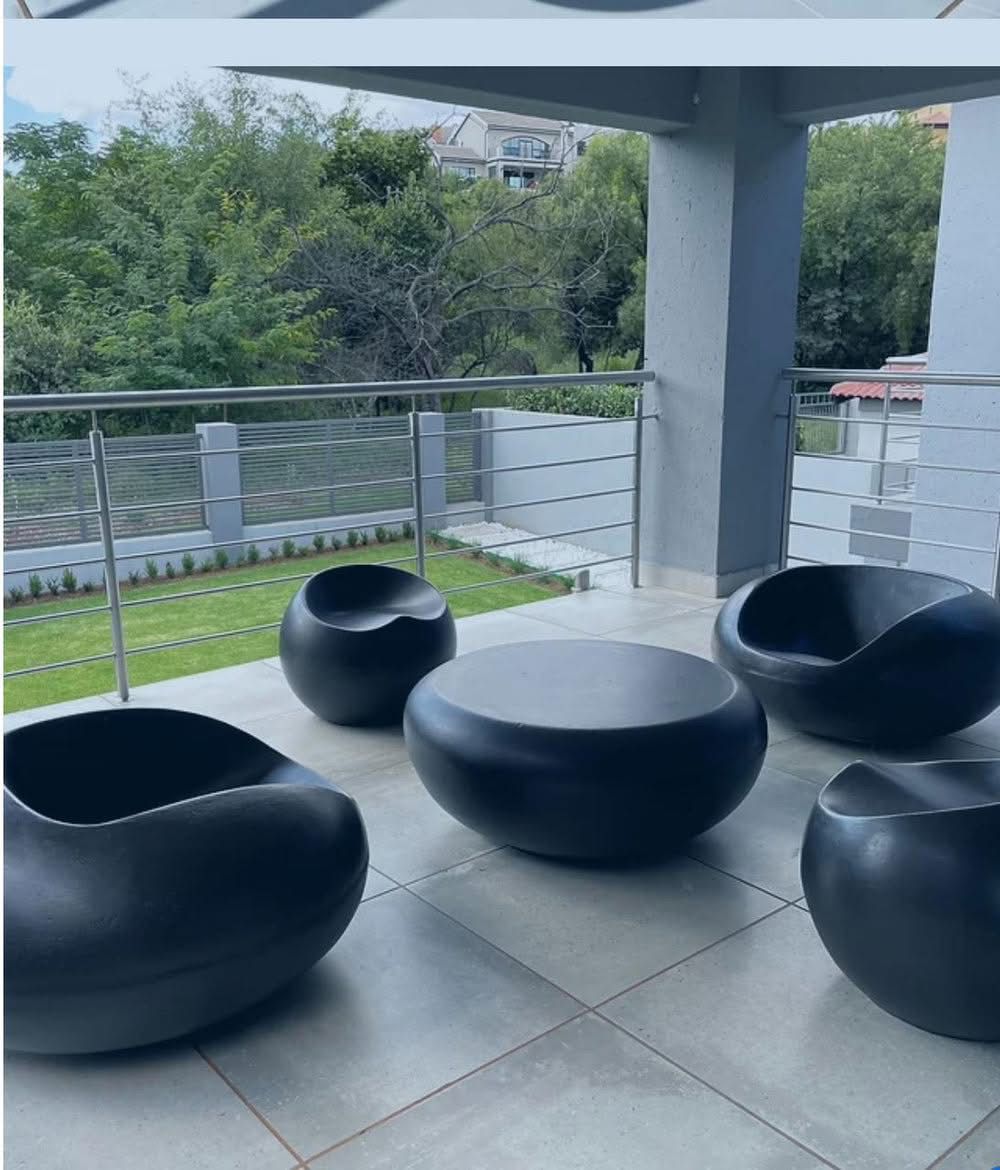
Not every spot can take concrete. A third-floor balcony, a rooftop garden, a rented flat you will leave one day, or plants you want to shuffle indoors when the frost warning comes through all call for something lighter. That is why we carry a Lightweight Décor range, pots with the look and finishes of our concrete at a fraction of the weight, that one person can lift and move. They are the sensible answer for balcony gardens, and they let you keep the same look across a whole property, heavy concrete on the ground floor and lightweight up top.
Which should you buy? A straight answer by situation
On a balcony or rooftop, go lightweight, and check what the slab is rated to carry if you are going big. If you truly need a very large pot up there, fibreglass or our lightweight range are the only sensible options.
In a windy Cape garden, concrete wins, full stop. A heavy pot with a wide base is the only thing that stays standing through a proper southeaster, and it will not chalk in the sea air the way plastic does. Choose a wider, lower shape rather than a tall narrow one for anything exposed.
In Highveld frost, concrete cast well with good drainage is the safe choice, and thick-walled concrete protects roots better than any of the thin materials. Keep terracotta for sheltered spots under the eaves, and lift anything precious in plastic under cover before June.
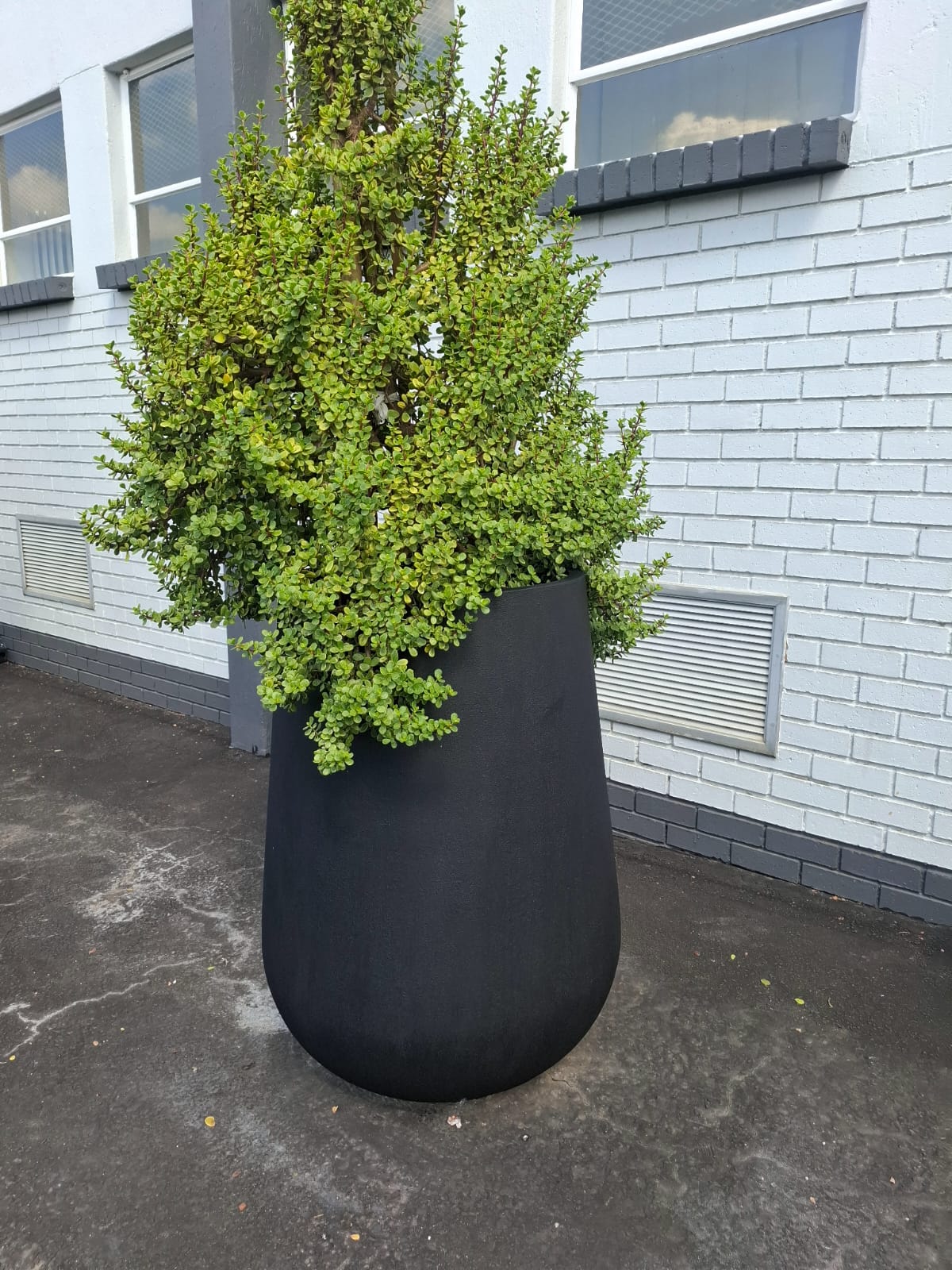
For a big statement pot at a front door or the end of a path, concrete gives you the presence and the permanence. Nothing else looks quite as intentional at that scale, and it will not walk. Have a look at the feature pots for the bigger shapes.
Indoors, anything goes on weight terms, but drainage and floors matter. A concrete pot indoors needs a tray under it and a floor that can take it. Lightweight pots are easier to move for cleaning and to chase the light through the seasons.
Whatever the pot, drainage decides
Here is the truth that sits under all of this. We have seen plants die in every material on this list, and almost every time the cause was the same: water with nowhere to go. A pot with a clear drainage hole, a layer of stone or pot filler at the bottom, and a saucer or pot feet so the hole is not sealed against the paving will grow a healthy plant in terracotta, plastic, fibreglass or concrete. Block that hole and the finest pot on earth becomes a bucket. Our drip trays and pot feet exist for exactly this reason, and they are the simplest insurance you can give a plant.
So which lasts? Concrete, honestly, and by a long way, with lightweight for the spots that cannot carry it. If you want to see what a pot that outlasts the plant looks like, wander through our concrete pots and pick a finish that suits your paving. Your grandchildren may well end up arguing over who inherits it.
Buy the pot once
Choose a finish that suits your paving and plant it for life in a hand-cast concrete pot.
Shop concrete pots →Frequently asked questions
Are concrete pots good for plants?
Yes. Thick concrete walls insulate roots from heat swings, the weight keeps tall plants upright in wind, and with a clear drainage hole a concrete pot grows healthy plants for decades.
Do concrete pots crack in frost?
Well-cast concrete with proper drainage does not. Cracking almost always comes from waterlogged soil freezing inside the pot, so keep the drainage hole clear and raise the pot on feet.
Why is there white powder on my concrete pot?
That is efflorescence, natural salts moving to the surface as the concrete cures. It is harmless to plants, brushes off with a dry brush and fades with rain.
Are plastic pots bad in the South African sun?
Plastic fades and goes brittle under our UV within a few years, blows over in wind and heats the soil quickly. It is fine for seedlings but poor as a permanent pot.
What is the best pot material for a balcony?
A lightweight pot. It gives you the look of concrete at a fraction of the weight, is kinder to a slab and can be moved indoors when frost threatens.

Leave a comment
This site is protected by hCaptcha and the hCaptcha Privacy Policy and Terms of Service apply.