
Best pots for a balcony or patio in South Africa
The short answer
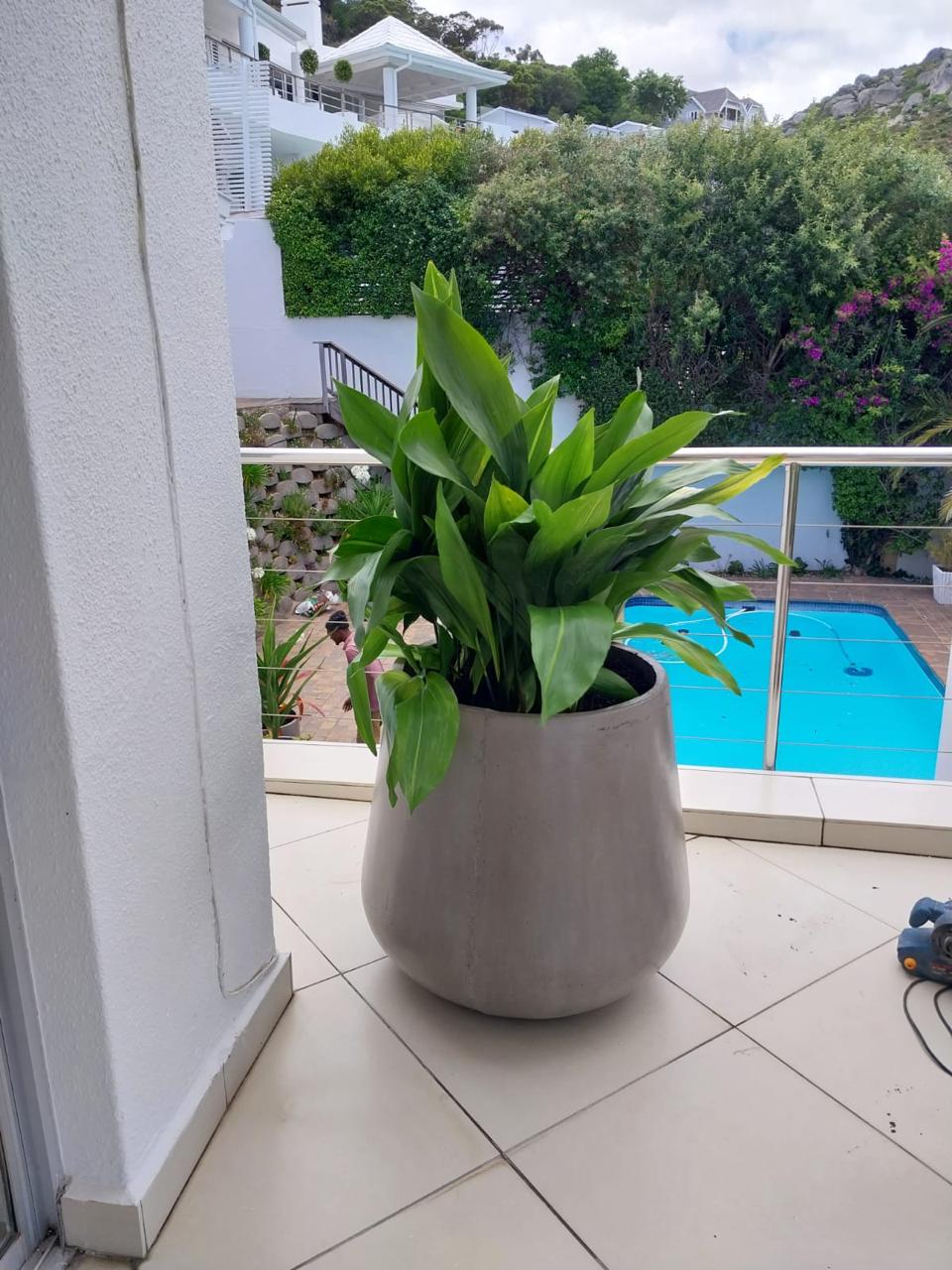
The best pots for a South African balcony are the ones that respect three things: weight, wind and heat. Balconies have load limits, so keep heavy concrete pots against the wall near the building's structure, check with your body corporate or an engineer before adding anything very heavy, and use a lightweight decor range where weight matters. Low, wide and heavier pots resist gusts far better than tall thin plastic ones. On a north or west facing balcony, choose pale finishes and bigger pots that dry more slowly, and top the soil with pebbles. Always stand pots on drip trays to protect your tiles and the neighbours below. Troughs along a railing, one statement pot in a corner and a matching pair beside a door do more than a clutter of small pots, and herbs, a lemon tree, succulents and ferns cover most balconies from sunny to shady.
A balcony is the most honest garden there is. There is nowhere to hide a mistake, no lawn to distract the eye, and everything you put out there has to earn its space. It is also, in our experience, the garden people care about most, because they see it from the couch every single day. We have helped a lot of flat dwellers and townhouse owners get theirs right, and the same few questions come up every time.
So this is our practical, slightly opinionated guide to choosing pots for a balcony or patio in South Africa. It covers the boring but important stuff about weight and wind, the pleasurable stuff about shapes and plants, and the thing nobody thinks about until there is a puddle in the neighbour's washing, which is drainage. Read it before you buy and you will save yourself at least one trip back.
Start with weight
Every balcony was designed to carry a certain load, and that load includes you, your furniture, your braai and every pot you add. Most balconies can take a normal collection of planters without any trouble at all, but a row of big concrete pots filled with wet soil is a different matter. If you are planning anything very heavy, or a lot of heavy things, ask your body corporate what the slab is rated for, and if nobody knows, a structural engineer can tell you in an afternoon. It is a small step that protects you and everyone below.
Where you put the weight matters as much as how much there is. A balcony slab is strongest where it meets the building, so stand your heaviest pots against the wall, close to the structure, and never cluster them in the middle of the span or right at the outer edge. Spread heavy pots out rather than lining them up in one spot. And where weight is a genuine concern, this is exactly what our Lightweight Décor range is for. You get the look of a cast pot at a fraction of the weight of concrete, which also means you can carry it up the stairs yourself and rearrange it whenever you feel like it.
Wind
Balconies are windier than gardens. Wind speeds up as it climbs a building and whips around corners, and a Highveld thunderstorm or a Cape south-easter will find the one pot you did not think about. The pots that survive are low and wide, with a broad base and a low centre of gravity, and they are heavy enough not to be bothered. This is where a modest amount of concrete earns its keep. A heavy pot against the wall is a pot you never have to chase.
What blows over is tall, thin and light. Tall plastic pots with a top-heavy plant are the classic casualty, and fibreglass is not much better. If you love a tall shape, put it in a corner where two walls shelter it, plant something that does not act like a sail, and weigh the base down with a good layer of pebbles over the soil. Our piece on how to choose garden pots that last goes into storm-proofing in more detail, and concrete vs plastic vs fibreglass pots explains why the material matters so much up high. If your balcony faces the south-easter, our guide to pots in a Cape Town garden covers wind in more depth, and on the coast, our Durban and North Coast guide deals with salt air and humidity.
Sun and heat on a north or west facing balcony
A north or west facing balcony in South Africa is a small oven from early afternoon until sunset, and the pots feel it before the plants do. Dark pots absorb heat and pass it straight to the roots. Pale finishes like Flinted White stay noticeably cooler to the touch, so if your balcony bakes, lean pale. Bigger pots also help, because a larger volume of soil dries more slowly and does not swing from soaked to bone dry in a single afternoon, which is what really stresses a plant.
Finish the surface of the soil with a layer of pebbles. It shades the soil, slows evaporation, stops the top crusting and looks a great deal tidier than bare potting mix. For plants that will actually enjoy that heat rather than merely survive it, have a look at best plants for full sun pots in South Africa.
Protect your tiles, and the neighbours below
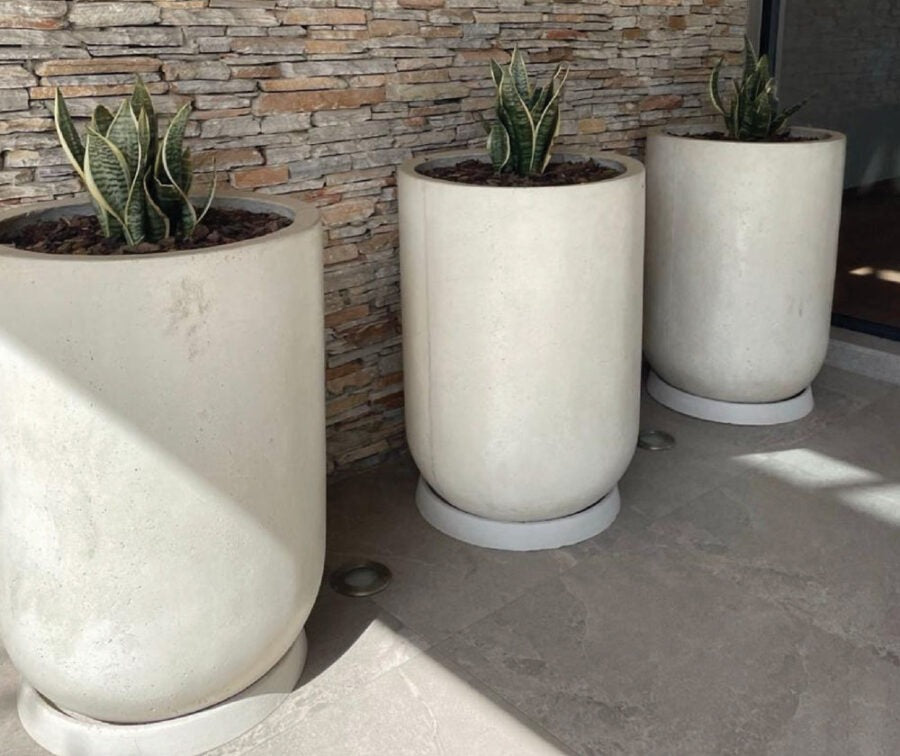
On a balcony, drip trays are not optional. Every pot with a drainage hole will let water out when you water it or when it rains, and that water will stain your tiles, work its way into the grout and, sooner or later, drip through the slab onto the balcony below. Nothing sours a relationship with a downstairs neighbour like brown water on their washing. A matching tray under every pot solves it completely.
Pair the tray with pot feet if you can. Feet lift the pot so the drainage hole can breathe and the base stays dry, which keeps the soil from going sour and stops the pot wicking water back up from the tray. You will find drip trays in finishes to match your pots and the full range of trays, feet and extras together. Empty trays after heavy rain in winter so nothing sits in standing water.
The shapes that work
The biggest mistake on a small balcony is a clutter of small pots. It looks busy, every pot dries out at a different rate, and you spend your weekends watering. Fewer, bigger pots always look calmer and are easier to look after. One generous statement pot in a corner does more for a balcony than a dozen little ones, and it gives a single plant the root room to actually grow. Our guide to choosing the right size garden pot for your space will help you judge how big to go.
Along a railing or a low wall, a trough is the answer. It uses the edge, where the sun usually is, without stealing floor space, and it gives you a long run of one plant for a clean line or a mixed run of herbs for the kitchen. Our troughs are designed for exactly this. At the door onto the balcony, a matching pair of pots either side frames the opening and makes the whole space feel deliberate. Our guide to balancing pot colours and shapes will help you pick a finish that ties it all together, and the free Garden Planner lets you try the layout before you buy.
What to grow
Match the plant to the corner. In a trough that gets morning sun, grow herbs and salad: basil, parsley, rocket, spring onions, a chilli or two. Our pots for herbs and vegetables collection is a good place to start and the growing food in pots guide covers the how. In the big statement pot, plant something with presence. A lemon or an olive tree will live happily in a large pot for years and gives you fruit and fragrance for your trouble.
The hot west corner belongs to succulents, aloes and agaves, which shrug off heat and forgive a missed watering. The shady corner under the balcony above is for ferns, begonias, clivias and plectranthus, which would scorch anywhere else. If you are not sure what suits your light, the free Plant Library and Plant Compare tools let you check before you plant, and our plant care guides take it from there.
Use the walls, the railings and the ceiling
On a small balcony the floor fills up fast, so think of the space in three dimensions. Walls, railings and even the ceiling can carry plants, as long as you respect the same weight and wind rules as everything else. A few trailing plants in a hanging pot bring the green up to eye level and leave the floor free for a chair, and our macramé plant hangers take a small, light pot, which is exactly what you want above your head. Keep anything heavy on the floor and close to the wall.
A simple way to plan a mixed pot is to give it something upright for height, something bushy to fill the middle, and something that trails over the edge. On a sunny balcony that could be an ornamental grass, a pelargonium and a trailing succulent. In the shade, impatiens, begonias and ferns do the same job. Before you buy, watch how the light moves across the balcony for a week, because the sun sits much lower in winter, and a corner that gets full sun in December can look completely different in June. If you like the idea of borrowing space visually as well, our guide to making a small garden look bigger has tricks that work just as well on a balcony, and how to plant a shade container covers the darker corners.
Watering on a balcony
Pots up high dry out faster than pots on the ground. There is more wind, more reflected heat off walls and tiles, and no cool earth underneath. In summer that can mean daily watering for small pots, which is one more argument for going bigger. Water deeply, until it runs into the tray, rather than a little sprinkle every day, and do it in the morning so the plant is stocked up before the heat and the leaves are dry by night.
Check with a finger before you water. If the top of the soil is still damp, wait. Overwatering on a balcony is as common as underwatering, especially in winter when growth slows and the pot takes far longer to dry. Our watering guide has the full seasonal picture, and what is the best type of soil for plants will help you choose a mix that holds water without going soggy.
A word on patios
A ground floor patio plays by easier rules. It is sitting on the earth, so weight is barely a concern and you can go as big and as heavy as the look demands. In fact you should. Patios are usually bigger spaces and small pots disappear in them, so choose from the bigger plant pots, plant in place and let the pot become a piece of the architecture. The large garden pots guide covers filling and positioning, and how to plant your concrete pot to reduce cracks shows you how to set it up so it lasts.
A patio is also where concrete furniture comes into its own. A cast concrete bench or coffee table in the same finish as your pots lives outside all year, never needs to be carried in before a storm and looks better as it weathers. Have a look at the concrete furniture range and the concrete garden furniture buying guide before you decide.
Get the weight where it belongs, choose pots that can stand up to the wind and the sun, put a tray under every one of them, and go bigger and fewer than your instinct says. That is most of what there is to know. When you are ready to choose, our balcony collection pulls together the pots, troughs and lightweight pieces that we know work up high.
Give your balcony one good pot
Explore the balcony collection for troughs and lightweight planters, then treat that empty corner to a proper pot.
Shop balcony pots →Frequently asked questions
Are concrete pots too heavy for a balcony?
Not necessarily, but placement matters. Keep heavy pots against the wall near the building's structure rather than mid-span, and check with your body corporate or an engineer before adding anything very heavy. Where weight is a concern, a lightweight decor range gives the same look at a fraction of the mass.
What are the best pots for a windy balcony?
Low, wide pots with a broad base and some weight to them. Concrete resists gusts far better than tall, thin plastic or fibreglass, and a layer of pebbles on the soil adds stability. Shelter tall shapes in a corner between two walls.
Do I need a drip tray on a balcony?
Yes. Every pot with a drainage hole releases water when you water it or when it rains, and on a balcony that water stains tiles and drips onto the neighbours below. A matching drip tray under each pot, ideally with pot feet, prevents it.
What can I grow in pots on a balcony in South Africa?
Herbs and salad greens in a trough with morning sun, a lemon or olive tree in one big pot, succulents and aloes in the hot west corner, and ferns, begonias and clivias in shade. Match the plant to the light each corner actually gets.
How often should I water balcony pots?
More often than ground level pots, because wind and reflected heat dry them quickly. Water deeply in the morning until it runs into the tray, check the soil with a finger first, and cut back in winter when plants are barely growing.

Leave a comment
This site is protected by hCaptcha and the hCaptcha Privacy Policy and Terms of Service apply.