
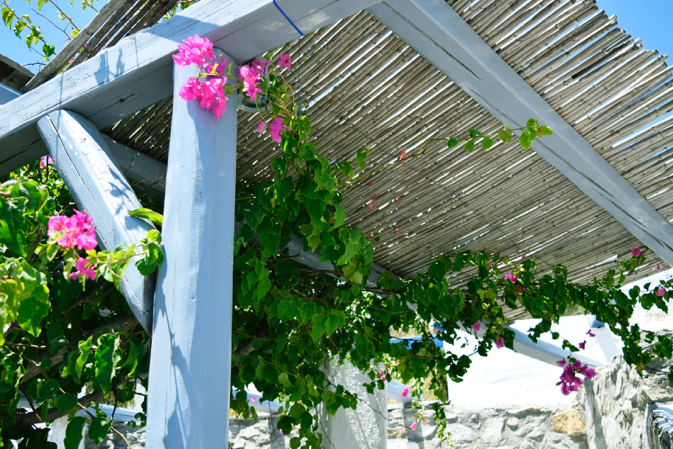
Planting up a patio: what to think about before you buy the pots
The short answer
Before you buy pots for a patio, work out four things. Track where the sun actually lands across a full day, because a north-facing patio in South Africa bakes from mid morning and a west wall throws brutal heat from three in the afternoon. Check the wind, since corners between walls funnel it and a tall plant in a light pot becomes a sail. Decide where run-off goes, because water off a pot stains paving and holds damp against the slab, which is what trays and pot feet solve. Then check weight if the patio sits over a garage or on a suspended slab. Once those are settled, go bigger than feels sensible. One large pot planted well beats six small ones that dry out by lunchtime and clutter the space you sit in.
A patio is the piece of garden you actually use. It is where the coffee happens on a Saturday, where the braai gets lit, where somebody ends up sitting on the step because there was nowhere else to put a chair. So when you start planting one up, the plants are almost the last decision you make. The first ones are about light, wind, water and weight, and getting those four right is the difference between a patio that looks good in March and one that still looks good three winters later.
We see the same story at the nursery most weeks. Someone falls for a pot, takes it home, fills it with whatever was flowering near the till, and by the second summer the plant has cooked against a west wall or drowned in a corner that never dries out. That is not bad luck. It is just information nobody gathered first. Here is what we would want to know about your patio before we sold you anything.
Spend a week watching where the sun lands
Most people can tell you which way their patio faces. Far fewer can tell you what happens on it at eleven in the morning versus four in the afternoon, and that second answer is the one that decides what lives. A north-facing patio here gets sun for most of the useful day, which is glorious in July and punishing in January. West-facing is the tricky one, because the wall soaks up heat all afternoon and keeps radiating it long after the sun has gone, so plants sitting against it are effectively in an oven with a fan off. South-facing patios get gentle light and stay cool, which suits far more plants than people expect.
Take a photo at nine, at noon and at four for a few days and you will have a proper picture. Do it in summer and again in winter if you can be bothered, because the sun angle shifts a long way and a spot that is shaded by the roof overhang in December can be in full sun by June. The Garden Planner is built for exactly this kind of mapping, and the long-term climate records from the South African Weather Service are worth a look if you want to know how many really hot days your town actually gets rather than how many it feels like.
Wind breaks more pots than frost ever will
Frost gets all the attention on the Highveld, but wind is the quiet destroyer. The gap between a house wall and a boundary wall funnels air and speeds it up, so the corner that seems sheltered is often the worst spot on the patio. A tall grass or a young tree in a light plastic pot becomes a sail, and one October gust puts the whole thing on its side, usually across the paving and usually when nobody is home.
Weight is the simple fix. Our pots are hand-cast from Fibre Concrete Mix, which is fibre-reinforced concrete rather than plain concrete, and they stay where you put them through a summer thunderstorm. If a spot is genuinely exposed, keep the plants low and wide rather than tall and narrow, and put the height somewhere with a wall behind it. Adding Pot Filler to the base of a large pot helps too, because it takes up volume without turning the whole thing into a slab of wet soil you can never move.
Think about where the water goes when it runs out
Every pot with proper drainage sends water somewhere, and on a patio that somewhere is your paving. Over a season you get a dark ring around each pot, a slick of algae in the shaded spots, and if the pot sits flat on the slab you also get moisture trapped underneath, which is how you end up with a permanent pale mark you cannot scrub off. It is not a disaster, it is just avoidable.
Two small things solve it. A tray under the pot catches the run-off so it evaporates instead of running across the paving, and our drip trays are sized to match the pots rather than being a generic saucer that looks wrong. Concrete pot feet lift the base a few centimetres so air moves underneath, which keeps the drainage hole clear and stops that trapped damp entirely. Both are sold separately from the pots, which sounds like a sales line but is genuinely useful, because a pot standing on gravel or grass does not need either one.
Weight matters if you are above a garage
Ground-level patios can take almost anything. A suspended slab over a garage, a balcony, or a rooftop terrace cannot, and the number that catches people out is not the pot, it is the wet soil. A big planter full of saturated potting mix after a Highveld storm is heavy in a way that dry soil never suggests, and stacking several of them along one edge concentrates all that load in the worst possible place.
If you are unsure about a slab, keep the big pots near the structural edges where the beams run, spread the load rather than clustering it, and consider our Lightweight Decor range for the pieces that only need to look substantial. Our full guide to choosing pots for a balcony or patio goes further into this, including which sizes are sensible when you are carrying everything up a flight of stairs.
One big pot beats six small ones
This is the advice people resist most and thank us for later. Small pots dry out fast, and on a hot patio a two litre pot can go from watered to wilting inside a single day. A large pot holds enough soil to buffer that, so the plant sits in a stable root environment instead of a daily drought and flood cycle, and you water twice a week instead of every evening. There is also the look. Six scattered pots read as clutter. One generous pot with a good plant in it reads as a decision.
If you have space for exactly one statement piece, make it big and put it where the eye lands when you step outside. Our guide to large garden pots covers the sizing, the planting and the honest logistics of moving something that heavy. Fill the bottom third of a very large pot with Pot Filler, use Bark Outdoor Potting Soil above that, and you get the presence without paying for soil the roots will never reach.
Leave room for people, not just plants
A patio has to work as a room. Measure the path from the door to the chairs and keep it clear, because a pot that sits in the walkway will be knocked, moved, and eventually resented. Corners are usually the right home for the big pieces, and the space beside a bench or against a low wall suits a trough that gives you greenery at seated eye level without eating floor space.
Furniture and pots should feel like they belong to each other. Concrete seating and a concrete table alongside cast concrete planters look settled in a way that a mixed set of materials rarely does, and our concrete garden furniture buying guide works through the sizing and the practical side of living with pieces that are not going to blow away.
What actually holds up on a hot South African patio
For the baking side, think of plants that expect that treatment. Rosemary, lavender, agapanthus, aloes, plectranthus for the shadier half, dietes along a hot wall, and pelargoniums that do not mind a missed watering. The Royal Horticultural Society guidance on container gardening is sound on the mechanics of feeding and watering, and NC State Extension has a thorough chapter on plants grown in containers that explains why container soil behaves so differently from garden soil.
For the shaded end of a patio, our own flora is hard to beat. Spur flower does the job that people usually try to give an impatiens, flowering into autumn and asking almost nothing, and SANBI has a good profile of Plectranthus ecklonii if you want to see what it does through the season. Group things by water need rather than by colour, because a pot that needs daily water sitting next to one that resents it is a problem you have built for yourself.
None of this takes long. An afternoon of watching the light, a tape measure, and an honest look at how you actually use the space will tell you the size, the number and the position of every pot you need. Once you know that, the choosing is the fun part, and our patio and small garden favourites are the sizes and shapes that work hardest in a compact space.
Pots sized for a patio
Once you know your light, your wind and your walkways, our patio and small garden favourites cover the sizes that do the most work in a compact space.
Shop patio pots →Frequently asked questions
How many pots does a small patio need?
Fewer than most people buy. Two or three well sized pots usually look better and need less watering than eight small ones, because larger volumes of soil hold moisture for longer and the space stays uncluttered.
Do concrete pots need drip trays on a patio?
On paving, yes, or pot feet at the very least. Run-off stains slabs and trapped moisture under a pot leaves a permanent mark, and trays and feet both solve it. On gravel or grass neither is necessary.
What is the best direction for a patio garden in South Africa?
North-facing gives the most usable winter sun and the most summer heat. South-facing stays cooler and suits shade plants. West-facing is the hardest because the wall radiates heat well into the evening.
Can I put heavy concrete pots on a balcony?
Only if you know the slab can take it, and remember that wet soil is far heavier than dry. Keep large pots near structural edges, spread the load, and use lightweight pieces where you only need the look.
What soil should I use in patio pots?
A proper container mix rather than garden soil. Bark Outdoor Potting Soil drains and holds air the way roots need, and Pot Filler in the base of very large pots saves both soil and weight.

Leave a comment
This site is protected by hCaptcha and the hCaptcha Privacy Policy and Terms of Service apply.